

KEY POINTS
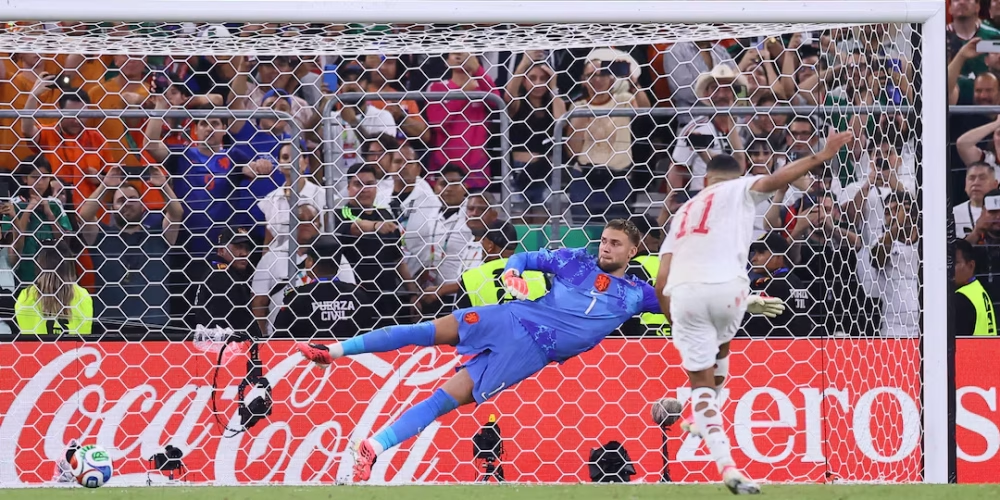
- Morocco secured a spot in the next round of the 2026 World Cup after defeating the Netherlands in a tense penalty shootout.
- The two heavyweight teams remained deadlocked after regular time and extra periods, forcing the dramatic spot-kick decider.
- The outcome underscores Morocco’s continued elite status on the global soccer stage following their historic semifinal run four years ago.
The Moroccan national football team has advanced to the next stage of the 2026 FIFA World Cup after a dramatic penalty shootout victory over the Netherlands on Tuesday. Following a grueling, high-intensity match that remained tied through 120 minutes of regular and extra time, the Atlas Lions demonstrated superior composure from the penalty spot to eliminate the Dutch squad. The victory sends shockwaves through the tournament brackets, solidifying Morocco’s reputation as a lethal knockout-stage competitor.
What You Need to Know
To understand the magnitude of this Morocco penalty shootout win, one must look at the recent trajectory of both football programs. Morocco captured the hearts of global sports fans during the 2022 World Cup in Qatar, where they became the first African and Arab nation to ever reach a World Cup semifinal. That historic performance was built on a foundation of defensive resilience, tactical discipline, and an unwavering team spirit—traits that were on full display once again during Tuesday’s encounter. Entering the 2026 tournament, the Atlas Lions were no longer viewed as underdogs but as legitimate contenders capable of dismantling Europe’s elite squads.
The Netherlands, conversely, entered this tournament looking to re-establish themselves at the absolute pinnacle of international football. Under heavy tactical scrutiny, the Dutch side brought a blend of youthful Eredivisie talent and seasoned European league veterans to North American soil. Historically, the Oranje have experienced a complicated relationship with penalty shootouts at major tournaments, frequently falling short in high-pressure spot-kick scenarios. This round-of-16 clash carried immense historical weight for both nations, with the eyes of millions of supporters focused on the pitch.
As the 2026 tournament expanded to a 48-team format, the physical and mental demands on players reached unprecedented levels. Navigating the grueling group stage and the subsequent initial knockout rounds required profound squad depth and physical endurance. Facing a tactical mastermind on the Dutch bench, Morocco’s coaching staff spent days perfecting a defensive blueprint designed to neutralize the fluid, attacking style traditionally associated with Netherlands football. The resulting match became a masterclass in strategic chess, culminating in the ultimate test of soccer nerves.
Heavyweights Clash in North America
The narrative of the match was established in the opening minutes, characterized by a fierce battle for midfield supremacy. The Netherlands attempted to dictate the tempo early through short, rhythmic passing sequences, utilizing their wing-backs to stretch the Moroccan defensive shape. However, Morocco’s disciplined backline, anchored by veteran leadership, consistently closed down passing lanes and restricted the Dutch attackers to low-probability shots from distance. The Atlas Lions looked dangerous on the counter-attack, exploiting transitional moments with explosive speed down the flanks to keep the opposition’s defense retreating.
As the second half progressed, the physical toll of the North American summer heat became increasingly evident. Both managers utilized their experimental substitution windows to inject fresh energy into their respective lineups. The Netherlands adjusted their tactical shape, pushing an extra attacker into the penalty box to challenge the aerial dominance of the Moroccan center-backs. Despite creating several clear-cut scoring opportunities in the final fifteen minutes of regulation time, the Dutch frontline was repeatedly denied by spectacular, acrobatic interventions from the Moroccan goalkeeper, who emerged as the central figure of the match.
Extra time failed to break the agonizing stalemate, despite both squads exchanging golden opportunities to seal a victory. Fatigue led to minor structural breakdowns on both sides, creating a frantic, end-to-end spectacle for the capacity crowd in attendance. A late defensive stand by Morocco during a series of Dutch corner kicks ensured the match would be decided by the narrowest of margins. When the referee blew the final whistle to conclude extra time, the stadium collective held its breath, shifting the responsibility entirely to the individual duel between penalty takers and keepers.
During the shootout, the psychological advantage clearly favored the North African side, whose supporters filled the stadium with deafening cheers. The Moroccan shot-stopper correctly guessed the direction of two crucial Dutch penalties, diving low to deny the European attackers. Meanwhile, Morocco’s penalty takers executed their assignments with clinical precision, calmly slotting their strikes past the outstretched arms of the Dutch goalkeeper. The decisive final kick ignited ecstatic celebrations across the pitch and in the stands, bringing a definitive end to a classic World Cup battle.
Why This Matters
This high-stakes sporting event carries profound implications for global soccer fans and sports media landscapes across the United States and international markets. For the millions of football enthusiasts watching the tournament unfold across North American time zones, Morocco’s victory reinforces the reality that the traditional hierarchy of international soccer has permanently shifted. The dramatic nature of a penalty shootout generates unprecedented engagement across digital platforms, driving massive television ratings and commercial interest for a sport that continues to experience exponential growth among American consumers.
Furthermore, the exit of a traditional European powerhouse like the Netherlands alters the competitive dynamics and viewing patterns for the remainder of the tournament. Casual sports fans are drawn to compelling narratives of resilience and historic breakthroughs, elements that Morocco provides in abundance. As local communities celebrate this landmark victory in major metropolitan areas across the West, the tournament continues to demonstrate its unique capacity to connect diverse global populations through shared athletic drama.
NCN Analysis
From an editorial perspective, Morocco’s triumph over the Netherlands is not a mere stroke of luck; it is the logical result of long-term structural investment in football infrastructure and tactical development. The Atlas Lions have perfected a tournament-style brand of football that prioritizes defensive structural integrity without sacrificing the creative flair necessary to punish opposition mistakes. Their ability to maintain physical intensity and mental focus through 120 minutes of high-stakes competition suggests they possess the foundational qualities required to make another deep run toward the championship final.
Moving forward, future opponents will have to re-evaluate how they approach a matchup against this highly disciplined Moroccan side. Teams can no longer afford to assume that controlling possession will naturally wear down the Moroccan defense. The tactical blueprint demonstrated in this match will likely be studied by analytics departments worldwide, as it highlights how a cohesive defensive unit can systematically neutralize elite individual attacking talent. Football enthusiasts should closely monitor how the Moroccan squad manages the physical recovery process, as the emotional and physical energy expended in a penalty shootout can often impact performance in subsequent tournament rounds.
The journey of the Atlas Lions continues to redefine modern international football standards.
Reported by the NCN Editorial Team









