

KEY POINTS
- Thousands of soccer fans loudly booed a mandatory cooling break during the highly anticipated England and Croatia group stage match in Santa Clara.
- Extreme summer temperatures forced tournament officials to pause play mid-game to protect the physical well-being of the athletes on the pitch.
- The logistical decision sparked fierce debate online and in the stands regarding player safety versus the natural entertainment flow of the sport.
A high-profile soccer match between European powerhouses devolved into structural frustration on Wednesday as stadium spectators voiced their anger over modern weather protocols. As summer temperatures soared at Levi’s Stadium, refereeing staff halted the match to enforce a mandatory cooling interval. The brief stoppage, designed to prevent heat exhaustion, triggered a chorus of boos from traveling supporters who believed the pause severely compromised the competitive rhythm of the contest.
What You Need to Know
The implementation of cooling breaks has become an increasingly standardized policy for global sports organizations operating in extreme climates. Under established governing guidelines, match officials must introduce these mandatory three-minute intervals if the wet-bulb globe temperature—a composite measure taking into account heat, humidity, wind speed, and solar radiation—exceeds a specific safety threshold. The rules are engineered strictly to shield elite athletes from severe physiological distress, including heatstroke and acute dehydration.
However, the intersection of player safety and traditional fan expectations frequently generates intense friction. For decades, international soccer has prided itself on continuous, uninterrupted play across two distinct 45-minute halves, separating it from the commercial-heavy structures of major American sports leagues. Many traditionalist fans view any artificial interruption as an unwelcome departure from the sport’s fundamental identity, arguing it offers coaches an unearned tactical timeout.
The environmental conditions across North American host cities during the summer months have long been a focal point of logistical concern for team doctors and tournament organizers. With matches staged in regions prone to severe heat waves, managing the microclimate inside open-air stadiums is an ongoing challenge. The backlash in California highlights a growing cultural divide between administrative safety compliance and the passionate desires of paying match attendees.
Momentum Interrupted at Levi’s Stadium
The confrontation between tournament policy and crowd sentiment unfolded during a critical juncture of the Group L encounter. Both England and Croatia had displayed intense tactical energy from the opening whistle, engaging in rapid transition play that kept the 65,000-seat stadium highly engaged. The high-tempo nature of the game had created several near-miss opportunities, building a tense, captivating atmosphere on the field.
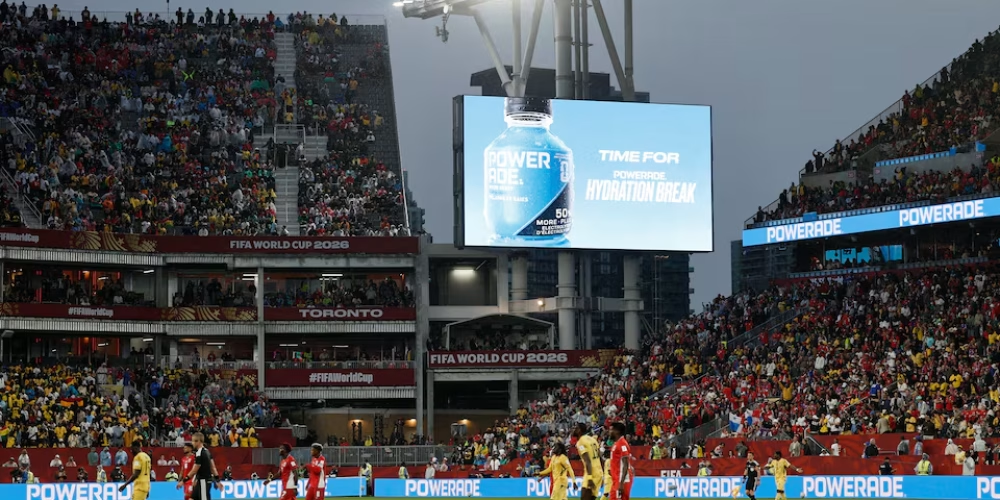
Precisely around the 30th minute, as the digital stadium thermometers registered oppressive conditions, the head referee signaled for the pre-determined hydration pause. Players immediately migrated toward their respective technical zones to consume fluids and utilize wet towels provided by training staff. Almost instantly, a wave of loud whistling and booing echoed from the stands, cascading down from both the English and Croatian fan sections.
The vocal frustration stemmed primarily from the belief that the interruption actively penalized the offensive momentum building on the pitch. While coaching staffs utilized the unexpected window to rapidly adjust defensive alignments and deliver tactical instructions, fans expressed annoyance at the sudden loss of sporting tension. The game eventually resumed, but the underlying irritation among spectators remained palpable for the remainder of the first half, demonstrating how structural changes to game flow can alienate live audiences.
Why This Matters
This incident highlights a major operational challenge for modern sports business, stadium management, and international athletics. As global temperatures continue to shift, sports leagues are forced to restructure traditional game formats to preserve player health. This evolution requires fans to adjust their expectations regarding sports entertainment, recognizing that rigid, uninterrupted formatting may no longer be viable during peak summer seasons.
Furthermore, the stadium friction carries significant implications for corporate sponsors, broadcasting networks, and media executives. While traditional fans despise the stoppages, television networks frequently view these brief intervals as highly lucrative windows for localized advertising blocks and real-time data analysis. Balancing the financial interests of broadcasters with the visceral experience of live stadium crowds will remain a complex puzzle for organizers as the tournament progresses.
NCN Analysis
From our perspective at NextClickNews, the fan backlash in California represents a short-sighted reaction to an absolutely necessary medical protocol. The physical demands placed on modern soccer players are higher than ever, and forcing athletes to sprint at maximum intensity in extreme heat without regulated hydration is a recipe for medical disaster. While the interruption of game momentum is frustrating, it is a minor concession to ensure the tournament’s best talents remain healthy and functional.
Moving forward, tournament organizers must do a significantly better job of educating the public on weather-related policies before kickoff. Utilizing stadium video boards to clearly display real-time climate data and explaining the medical necessity of the break could defuse crowd frustration. Treating these intervals as transparent safety measures rather than sudden administrative surprises will help bridge the gap between fan passion and human welfare.
Live audiences must ultimately accept that as the global sporting calendar adapts to changing environmental realities, the preservation of human health will always take precedence over fluid entertainment.
Reported by the NCN Editorial Team









