

KEY POINTS
- Lionel Messi delivers a masterful performance to anchor Argentina’s perfect launch.
- Erling Haaland and Kylian Mbappe establish early tournament authority for their respective nations.
- Expanded tournament structure shifts tactical pressure onto group-stage competitors.
The highly anticipated global soccer tournament has burst into life with the game’s premier goal scorers immediately validating their world-class reputations. In a series of electrifying opening fixtures, the sport’s elite triad—Lionel Messi, Erling Haaland, and Kylian Mbappe—engineered flawless starts for their respective national teams, reassuring fans that the grandest stage belongs to the brightest talents. For millions of viewers across the globe, the rapid-fire success of these marquee individual icons has instantly escalated the tournament’s competitive drama.
What You Need to Know
Entering this summer’s campaign, soccer pundits debated whether a grueling domestic league season across Europe and the Americas would drain the world’s most elite goal scorers. Navigating congested schedules for clubs like Real Madrid, Manchester City, and Inter Miami often leaves elite athletes vulnerable to fatigue during international windows. However, the initial wave of fixtures has decisively answered those physical concerns, as tactical shapes were completely dismantled by individual moments of brilliance.
Furthermore, this edition of the tournament introduces structural modifications that reduce the margin for error during initial group play. With an expanded field of nations competing across North America, established powerhouses face heightened pressure to secure definitive early results to command favorable seeding in subsequent knockout rounds. The immediate goal-scoring output from the tournament’s most recognizable icons serves as a crucial tactical shield, lowering collective anxiety for their squads.
Historically, tournament openers can be notoriously cagey affairs as teams prioritize defensive preservation over offensive risks. The willingness of these legendary figures to assert dominance within the opening minutes of their matches signals a significant departure from historical trends. Rather than feeling out the opposition, the modern era’s most elite target men are hunting for immediate advantages.
Superstars Deliver on the Big Stage
The initial competitive window was highlighted by an immaculate exhibition of finishing that captivated audiences worldwide. In Group J, legendary forward Lionel Messi put on a masterclass for Argentina, exposing defensive frailties in the opposition’s structure with surgical precision. Operating in a fluid playmaker role, Messi orchestrated the offense while remaining lethal in the final third, finding the back of the net three separate times to register a spectacular hat-trick during a comprehensive 3-0 victory over Algeria. His goal-scoring precision kept opposing defenders completely off-balance throughout the 80 minutes he was on the pitch.
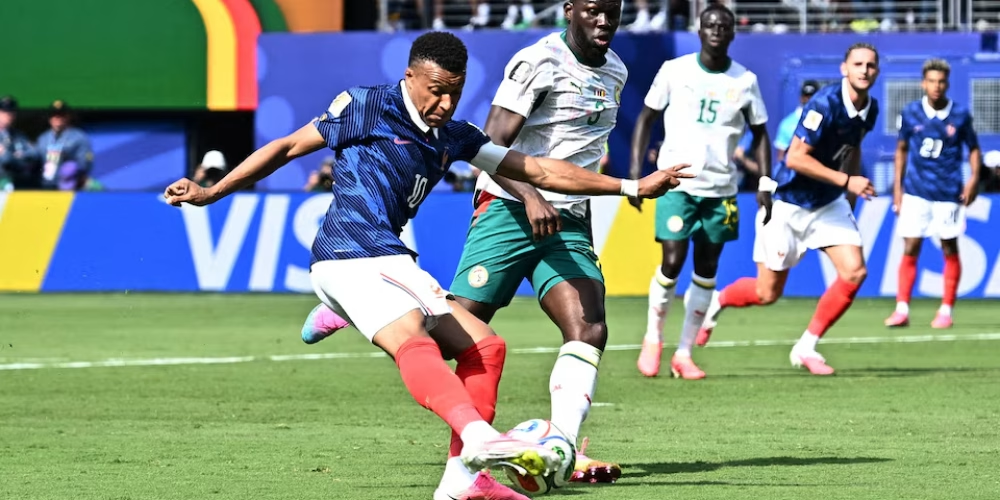
Simultaneously, Norwegian powerhouse Erling Haaland translated his record-breaking club form into international success, overpowering defenders with his trademark physicality and ruthless penalty-box efficiency. Haaland’s clinical contributions ensured Norway avoided any potential opening-day stumbles, reinforcing his status as the premier pure striker of his generation. Not to be outdone, French talisman Kylian Mbappe ignited France’s offensive charge with a display of terrifying acceleration and technical composure, guiding Les Bleus to a flawless introductory victory.
The synchronization of these world-class performances has provided a dramatic narrative anchor for the opening week of play. Tactical game plans designed to neutralize these individual threats were rendered obsolete by moments of unparalleled athleticism. The relentless offensive pressure exerted by these goal-scoring icons has set a historically high baseline for the rest of the competing field.
Why This Matters
For sports enthusiasts and media executives across the United States, the immediate impact of these elite performers provides massive commercial momentum. With soccer’s cultural footprint expanding rapidly in the American market, dominant performances from household names like Messi, Mbappe, and Haaland drive unprecedented viewer metrics and digital engagement. Casual sports fans are far more likely to tune into group stage matches when the world’s most recognizable athletes are actively rewriting record books.
Additionally, this early offensive explosion directly benefits domestic businesses, from sports bars experiencing sustained patronage to digital media networks capturing peak advertising revenue. As the tournament progresses deeper into the summer, the sustained brilliance of global icons ensures that soccer remains at the forefront of the cultural conversation. This cultural relevance provides a powerful foundation for grassroots sports growth throughout North America.
NCN Analysis
The explosive introductory performances by Messi, Haaland, and Mbappe point toward a tournament that will likely favor bold, attacking strategies rather than conservative defensive low-blocks. When the highest-paid, most tactically scrutinized players in the world find their rhythm this early, it forces opposing managers to alter their entire structural approach. Future opponents will be forced to choose between committing multiple defenders to double-team these threats or risking total isolation at the back.
Moving forward, the primary factor to monitor will be physical sustainability. While these opening salvos were undeniably spectacular, the tournament is a marathon requiring immense depth and physical durability. The coaching staffs for Argentina, France, and Norway must carefully manage the minutes of their prized assets to ensure they retain peak explosiveness when the high-stakes knockout rounds arrive later this July.
The quest for the prestigious Golden Boot award is officially underway, with the world’s finest talents setting a ferocious pace.
Reported by the NCN Editorial Team









