

KEY POINTS
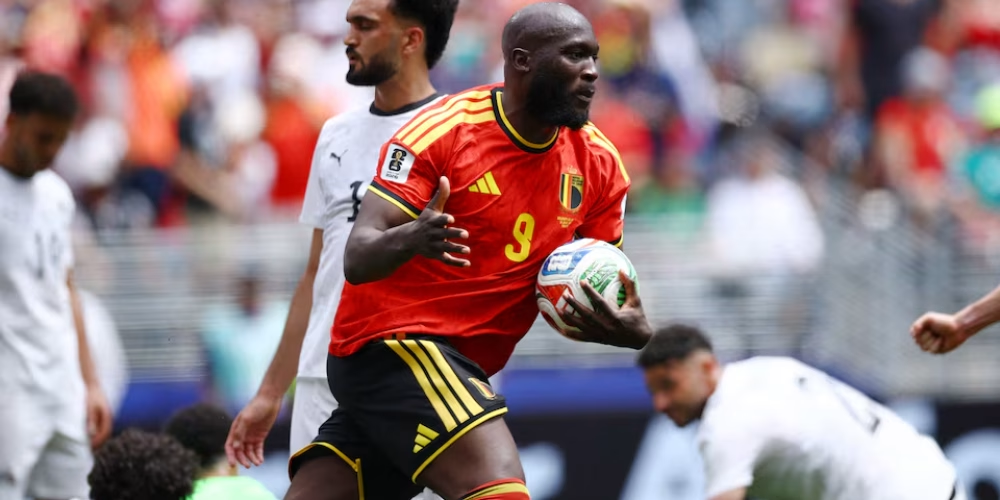
- Egypt executed a masterful defensive strategy to secure a 1-1 draw against a heavily favored Belgian side.
- The Pharaohs rebounded quickly after conceding an early penalty, equalizing just before the halftime whistle.
- This unexpected result dramatically shifts the qualification dynamics within the tournament’s group stage.
The Egyptian national football team delivered a resilient performance to hold a star-studded Belgium squad to a 1-1 draw in their opening tournament fixture. Despite falling behind early in the match, the African giants showcased remarkable tactical discipline to neutralize one of Europe’s most potent attacking lineups. For global soccer fans watching the opening round of games, the intense encounter provided the first major tactical surprise of the competition.
What You Need to Know
Historically, matches between top-tier European teams and emerging African powerhouses have been defined by contrasting styles of play. Belgium entered the tournament carrying high expectations, boasting a golden generation of talent playing in the world’s most competitive domestic leagues. Their possession-heavy style and quick passing networks have made them a perennial threat on the international stage for the better part of a decade.
Egypt, conversely, arrived at the tournament relying on a blueprint of compact defensive blocks and lethal counter-attacking speed. The Pharaohs have a rich history of continental success, but translating that dominance to the global stage has often proven challenging. Under their current coaching staff, the team has developed a rigid structural identity that prioritizes defensive solidity and collective work rate over individual flair.
The buildup to this fixture was dominated by discussions surrounding individual player matchups and tactical formations. Analysts widely expected the European side to dominate possession and comfortably secure three points to start their campaign. However, the unique environmental conditions of the host venues and the intense pressure of an opening match often act as great equalizers in international tournament football.
Tactical Discipline Restrains European Powerhouse
The match began at a frantic pace, with Belgium immediately asserting control over the midfield and pinning the Egyptian defense deep within their own penalty area. The early pressure paid dividends when a swift attacking combination resulted in a defensive foul inside the box, allowing the European side to convert a penalty and take an early lead. Rather than collapsing under the early deficit, the Egyptian players responded by tightening their defensive lines and increasing their physical intensity in midfield battles.
As the first half progressed, Egypt began finding success by exploiting spaces left behind by Belgium’s overlapping full-backs. A precise long-range pass from the midfield unlocked the Belgian defense, allowing an overlapping Egyptian forward to calmly finish past the rushing goalkeeper right before the break. The equalizer entirely altered the emotional momentum of the match, sending the two teams into the locker rooms on equal footing.
The second half turned into a tactical chess match, with the European side introducing fresh attacking options from the bench to break the deadlock. Egypt’s defensive unit, anchored by a spectacular performance from their veteran goalkeeper, continuously frustrated their opponents by blocking passing lanes and winning crucial aerial duels. Despite sustaining heavy pressure during the final fifteen minutes of play, the Pharaohs held firm until the final whistle to secure a vital point.
Post-match reactions from the camp reflected a sense of immense pride and tactical vindication. The coaching staff praised the players for sticking to the game plan under intense pressure, noting that the point earned against a top-tier seed provides a massive psychological boost for the remaining group fixtures.
Why This Matters
For soccer fans and analytical observers across the United States, this result underscores the shrinking competitive gap in international soccer. The ability of disciplined, tactical teams to frustrate elite, star-heavy rosters demonstrates that structural unity often triumphs over individual market value. This evolving parity makes the tournament far more unpredictable and highly entertaining for a rapidly growing North American television audience.
From a commercial and media perspective, unexpected results involving global heavyweights generate significant digital engagement and viewership spikes. Sports bars, fan zones, and digital streaming platforms across major markets thrive on the drama of tournament underdogs upsetting the established hierarchy. This captivating narrative will undoubtedly drive higher consumer engagement as casual viewers tune in to see if more surprises are on the horizon.
NCN Analysis
This 1-1 draw is a massive achievement for Egypt and a sobering wake-up call for a highly rated Belgian squad. The European side controlled the tempo for large stretches but looked distinctively vulnerable whenever their central midfielders failed to track back during defensive transitions. If they hope to deep-run into the knockout stages, their coaching staff must quickly address these structural gaps before facing more aggressive opponents.
For the Pharaohs, the challenge now shifts from playing as a defensive underdog to managing games where they are expected to control the ball. Securing a point against the toughest opponent in the group creates a fantastic foundation, but historical data shows that teams often falter in subsequent matches due to physical emotional exhaustion. Fans should watch how well Egypt rotates its starting lineup to maintain this high-intensity style in the coming days.
The battle for qualification out of the group stage has become an absolute scramble, promising high drama in the matches ahead.
Reported by the NCN Editorial Team









