

KEY POINTS
- Francesca Albanese, the UN Special Rapporteur, is operating under police protection following a wave of targeted threats against her life.
- The intimidation campaign accelerated after she presented a formal report to the UN Human Rights Council alleging genocidal acts in Gaza.
- Global legal organizations are raising alarms over the erosion of diplomatic immunity and the safety of independent human rights monitors.
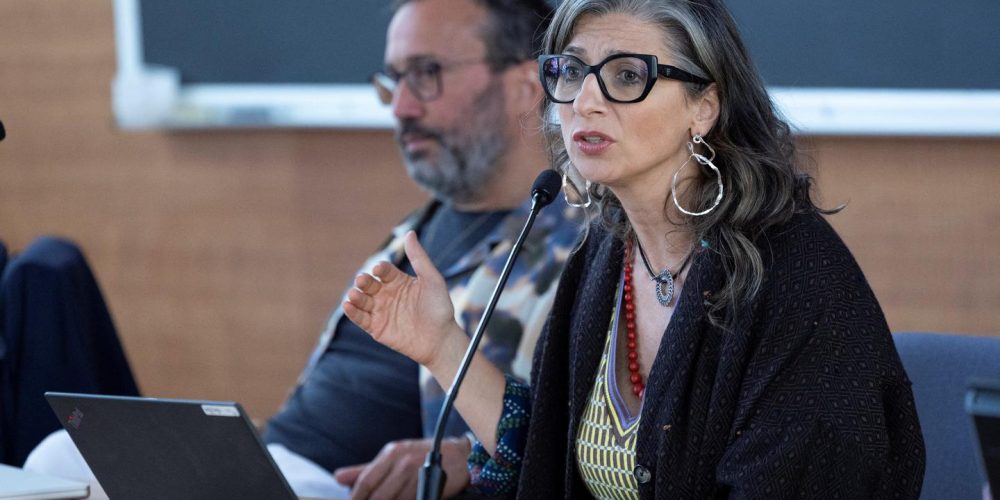
A prominent United Nations official has seen her personal and professional life transformed into a high-security operation following her public accusations of international law violations. Francesca Albanese, the UN special rapporteur on the occupied Palestinian territories, currently lives under constant surveillance and police guard after receiving a deluge of death threats. For Americans observing the intensifying diplomatic friction at the UN, this development represents a chilling escalation in the personal risks faced by those tasked with investigating global conflicts.
What You Need to Know
The role of a UN Special Rapporteur is both prestigious and precarious. These individuals are independent experts appointed by the Human Rights Council to monitor and report on specific country situations or thematic issues. While they are not UN staff members and do not receive a salary for their work, they are granted diplomatic immunity to ensure they can speak truth to power without fear of legal or physical retribution.
Francesca Albanese, an Italian international lawyer and academic, was appointed to her position in 2022. Since the outbreak of major hostilities in late 2023, her mandate has become one of the most scrutinized in the world. Her work focuses on the legal complexities of the Palestinian territories, a subject that has historically polarized the international community and generated intense lobbying efforts from various geopolitical actors.
The current atmosphere of dread surrounding her office is part of a broader trend of increased hostility toward international legal bodies. In early 2026, as the legal proceedings at the International Court of Justice (ICJ) continue to grind forward, the pressure on individuals like Albanese has shifted from diplomatic disagreement to personal intimidation. This shift highlights the fragile nature of international law when it intersects with high-stakes national security interests.
The Personal Toll of UN Human Rights Advocacy
The campaign against Albanese reached a fever pitch in the spring of 2026, following the release of her report titled “Anatomy of a Genocide.” In this document, she argued that there are reasonable grounds to believe the threshold of genocidal acts has been met during the military campaign in Gaza. While the report was welcomed by many in the Global South and human rights circles, it drew fierce condemnation from Israel and its staunchest allies, including several prominent members of the U.S. Congress.
The backlash has moved far beyond the halls of the United Nations in Geneva. Albanese has described her existence as a “rollercoaster” of dread, where everyday activities are now dictated by security protocols. The threats she receives are not merely insults; they are specific, violent, and often directed at her family. This level of harassment is designed to produce a “chilling effect,” potentially discouraging other experts from pursuing sensitive investigations that might upset powerful nations.
Critics of Albanese often point to her previous social media comments and her critical stance on Zionism as evidence of bias, arguing that her reports are ideologically driven rather than purely legal. The Israeli government has consistently dismissed her findings, labeling her an antisemite and calling for her resignation. However, the Special Rapporteur maintains that her work is strictly a technical legal analysis of the evidence on the ground, emphasizing that she is obligated to report on violations regardless of the political fallout.
The institutional response from the United Nations has been one of public support for her mandate, yet the physical protection of rapporteurs often falls to their home countries. As an Italian citizen, Albanese relies on European security services to manage the risk. The situation has sparked a heated debate within the UN about whether the organization needs to implement its own robust security apparatus for independent experts who find themselves in the crosshairs of state-sponsored or extremist vitriol.
Why This Matters
The situation surrounding Francesca Albanese is a bellwether for the future of free speech and independent oversight in American and international politics. For the American public, this case illustrates how deeply the conflict in the Middle East influences domestic security and the safety of officials even thousands of miles away from the front lines. It raises critical questions about whether the U.S. government—as a primary funder of the UN—will defend the safety of rapporteurs whose findings may be at odds with Washington’s foreign policy.
Furthermore, this matters because it signals a potential breakdown in the international rules-based order. If a UN-mandated investigator can be intimidated into silence or forced to live in hiding, the credibility of every international monitoring body is compromised. This has a ripple effect on global businesses and organizations that rely on UN human rights reports to conduct ethical due diligence. When the messengers are under fire, the reliability of the information they provide becomes a casualty of the conflict.
NCN Analysis
The intimidation of Francesca Albanese is a symptom of a world where the lines between political activism and legal fact-finding have become dangerously blurred. At NextClickNews, we see this as part of a growing trend where international law is increasingly viewed not as a neutral arbiter, but as a weaponized tool used in hybrid warfare. If death threats become a standard consequence for presenting unwelcome legal findings, the UN’s ability to prevent future atrocities will be effectively neutered.
Looking forward, readers should watch for the Human Rights Council’s upcoming sessions, where the renewal of various mandates will be debated. There is a high likelihood that the U.S. and its allies will push for stricter codes of conduct for special rapporteurs, while other nations will argue for enhanced protections. The fate of Albanese’s mandate will serve as a crucial test: will the UN double down on its independent monitors, or will it retreat in the face of escalating personal danger?
The safety of those who monitor the world’s most brutal conflicts is the ultimate litmus test for the strength of global justice.









