

KEY POINTS
- Brent crude and US oil prices rose nearly 3 percent following new threats from Tehran.
- Iran signaled its forces are ready to confront American troops despite ongoing peace talks.
- The average cost of gasoline in the US reached 3.98 dollars per gallon this Sunday.
Energy markets reacted sharply on Sunday as tensions between the United States and Iran escalated further. Oil prices climbed steadily after Iranian officials issued a stern warning against a potential ground invasion. Tehran indicated that its military forces are currently waiting for American troops to enter the region. This aggressive stance comes as the conflict enters its fourth week of significant disruption.
Brent crude, the international standard for oil pricing, saw a 2.6 percent increase to 115.50 dollars. Simultaneously, West Texas Intermediate, the US benchmark, rose nearly 3 percent to reach 102.61 dollars. These gains reflect growing investor anxiety over the stability of global energy supplies. Many analysts now fear that the war could lead to a prolonged period of high fuel costs.
The latest market move contradicts recent efforts to find a diplomatic solution to the crisis. President Donald Trump stated on Friday that negotiations were still active and moving forward. He also extended a deadline for an ultimatum regarding the reopening of the Strait of Hormuz. Despite these comments, the threat of direct ground combat has overshadowed hope for a quick resolution.
The closure of the Strait of Hormuz remains the single largest disruption in the history of oil. Approximately 20 percent of the world’s daily oil supply typically passes through this narrow waterway. With the passage effectively blocked, global markets are struggling to find alternative sources for crude. This bottleneck has caused a massive supply vacuum that continues to drive prices upward.
Recent military strikes have also targeted critical energy infrastructure across the Middle East. These attacks have disabled key refineries and pipelines, further limiting the amount of fuel available for export. Repairing this infrastructure could take years, according to state-owned energy companies in the region. This suggests that the economic impact of the war will linger long after the fighting stops.
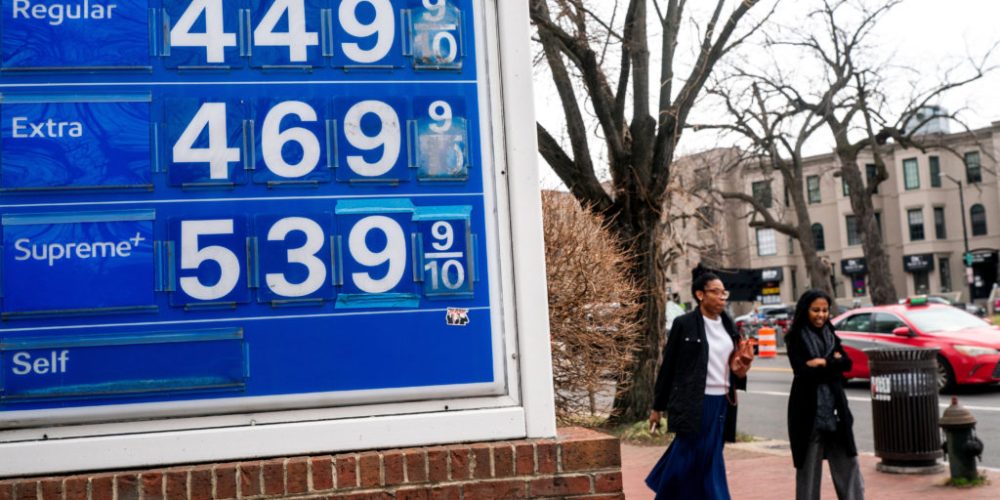
Consumers in the United States are feeling the direct effects of these geopolitical shifts at the pump. The national average price for a gallon of gasoline hit 3.98 dollars on Sunday. Some states are seeing even higher prices as regional supply chains feel the strain of the blockade. Many American families are now adjusting their budgets to account for the rapid increase in transportation costs.
Stock futures also trended downward as the business community weighed the risks of a wider war. Dow Jones futures dropped more than 240 points during Sunday trading sessions. Other major indices, including the S&P 500 and Nasdaq, also posted declines. Investors are moving away from riskier assets as the possibility of a global recession grows more likely.
Foreign ministers from several nations are meeting to facilitate talks between the warring parties. Officials from Pakistan, Saudi Arabia, and Turkey described recent discussions as productive and helpful. These diplomatic channels represent the best hope for avoiding a full-scale ground war in the region. However, the immediate outlook for energy prices remains tied to military developments on the ground.









