

KEY POINTS
- Dame Sarah Mullally has officially become the 106th Archbishop of Canterbury, the first woman to lead the Church of England.
- The ceremony at Canterbury Cathedral featured a unique blend of centuries-old tradition and modern global symbolism.
- The new spiritual leader faces the task of uniting a divided Anglican Communion while addressing past safeguarding failures.
Dame Sarah Mullally made history on Wednesday as she was enthroned as the 106th Archbishop of Canterbury. The ceremony took place at the ancient Canterbury Cathedral, marking a milestone in the Church of England’s 1,400-year existence. More than 2,000 guests attended the service to witness the installation of the first female leader of the Anglican Church.
High-profile attendees included Prince William, Princess Catherine, and Prime Minister Sir Keir Starmer. Religious representatives from 165 countries also traveled to Britain for the event. The 90-minute service combined traditional rites with diverse cultural elements to reflect the global reach of the 85-million-member Anglican Communion.
Mullally’s installation occurred on the Feast of the Annunciation, a day celebrating the biblical account of Mary. This theme of responding to a divine calling resonated throughout the service. The ceremony included prayers in multiple languages, such as Urdu, and featured vibrant African choruses.
A former chief nursing officer for England, Mullally included personal nods to her medical background during the service. She secured her ceremonial cope with a clasp modeled after her former National Health Service nurse’s belt buckle. She also invited several frontline healthcare workers to join the congregation as her personal guests.
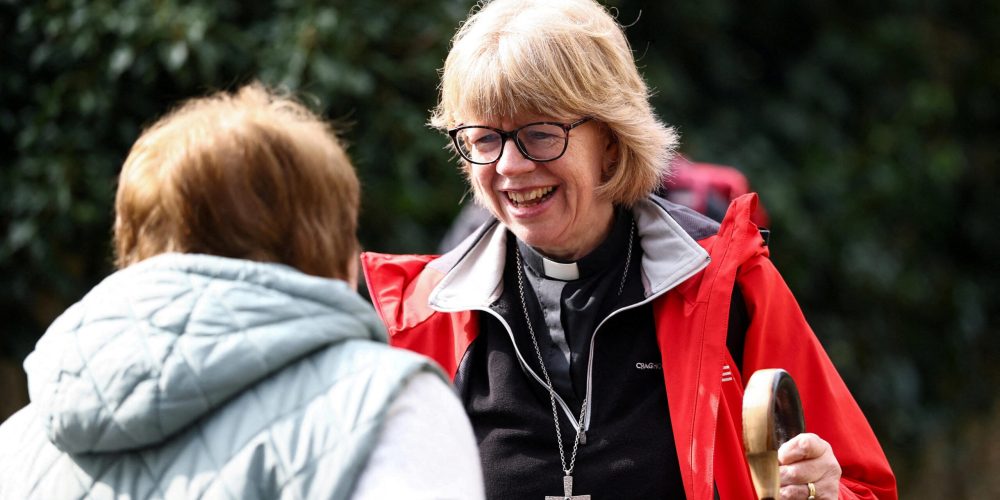
To prepare for the installation, the 63-year-old theologian completed a 140-kilometer pilgrimage from London to Canterbury. She walked the ancient Becket Camino route over six days, stopping at schools and local churches along the way. This journey symbolized her commitment to a ministry rooted in community and prayer.
The new Archbishop inherited two symbolic seats during the service: the Quire Cathedra and the 13th-century Chair of St Augustine. These placements signify her roles as the Diocesan Bishop of Canterbury and the Primate of All England. She also swore an oath on the hand-illuminated St John’s Bible, a modern Benedictine masterpiece.
Despite the celebratory atmosphere, Mullally takes office during a period of significant internal and external challenges. She succeeds Justin Welby, who resigned following criticism over the handling of historic abuse allegations. Mullally has pledged to shine a light on church actions and prioritize the voices of abuse survivors.
The appointment has also highlighted existing rifts within the global Anglican church regarding gender and sexuality. Some conservative groups have expressed opposition to a female leader, though a planned rival leadership council was recently abandoned. Mullally has emphasized a message of unity in diversity as she begins her tenure.
Mullally’s rise to the highest office in the Church follows the 1994 decision to ordain female priests. She was later among the first women consecrated as bishops in 2015. Her elevation represents the final removal of a glass ceiling in one of Britain’s most historic institutions.
The Archbishop will now begin her public ministry by engaging with the 16,000 parishes across England. She aims to foster a more confident and inclusive conversation within the faith. Her leadership marks a definitive new chapter for the global Anglican community and the British national identity.









