

KEY POINTS
- President Donald Trump explicitly urged Iranian Kurds to launch attacks against the Tehran government.
- The appeal follows a significant expansion of military hostilities between the United States and Iran.
- Regional experts warn that the move could spark widespread internal unrest and further destabilize the Middle East.
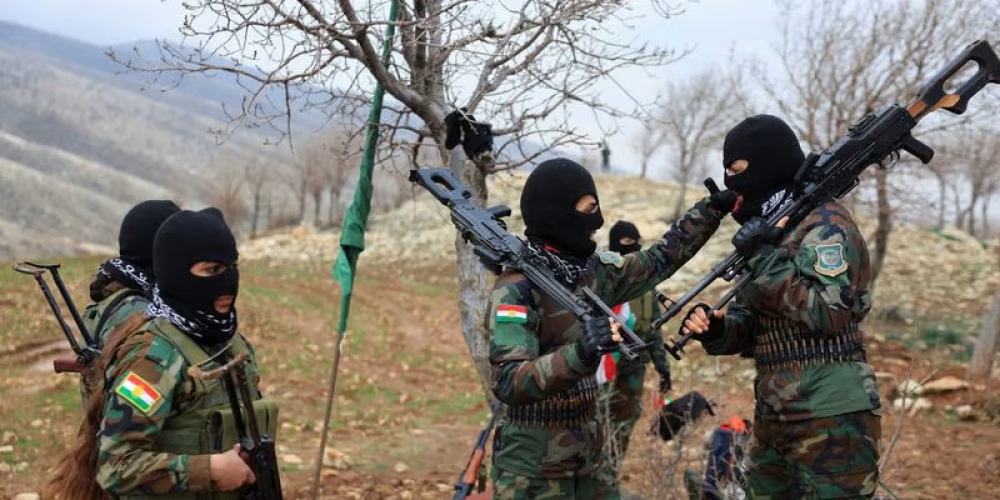
President Donald Trump addressed the Iranian Kurdish population on Friday with a direct call to arms against the ruling regime in Tehran. Speaking during a period of rapidly escalating military tension, the President encouraged these groups to take an active role in the conflict. He suggested that the current instability provides a unique opportunity for them to challenge the central government’s authority. This statement marks a dramatic shift toward encouraging domestic insurgencies within Iranian borders.
Kurdish populations in the Middle East have a long history of complex relationships with their respective central governments. In Iran, these groups have frequently faced political marginalization and security crackdowns. By reaching out to them directly, the White House is attempting to create multiple internal fronts for the Iranian military to manage. Analysts believe this strategy aims to overstretch Tehran’s resources and weaken its defensive capabilities.
International reactions to the President’s call have been immediate and varied. Some regional allies view the move as a necessary tactical escalation to bring a swift end to the war. However, several European diplomats have expressed deep concern over the potential for a humanitarian crisis. They warn that inciting ethnic or sectarian conflict could lead to long-term instability that persists far beyond the current military operation.
The Iranian government responded with a stern warning, accusing the United States of blatant interference in its internal sovereignty. Tehran characterized the President’s appeal as a desperate attempt to incite terrorism and civil war. Iranian security forces have reportedly increased their presence in Kurdish-majority provinces in anticipation of potential unrest. The regime remains defiant, stating that its borders and internal order will be defended at all costs.
Military observers are watching for any signs of mobilization following the President’s remarks. While some Kurdish factions have long opposed the central government, the risks of open rebellion are immense. The success of such an insurgency would likely depend on the level of direct support provided by American forces. The administration has not yet specified what kind of logistical or tactical aid might be offered to these groups.
The widening scope of the war has already led to significant shifts in global energy markets and maritime security. President Trump’s latest diplomatic move adds a new layer of complexity to an already volatile situation. It signals that the White House is prepared to use every available tool to achieve its strategic objectives in the Middle East. The global community remains on edge as the conflict enters this more aggressive phase.









