

KEY POINTS
- The Tunisian Football Federation has named 45-year-old manager Moïn Chaabani as head coach of the senior national team on a four-year agreement running until summer 2030.
- Chaabani replaces Frenchman Hervé Renard following Tunisia’s disappointing group-stage exit at the 2026 FIFA World Cup.
- The former Espérance and RS Berkane tactician brings extensive continental hardware, including two CAF Champions League titles and a CAF Confederation Cup crown.
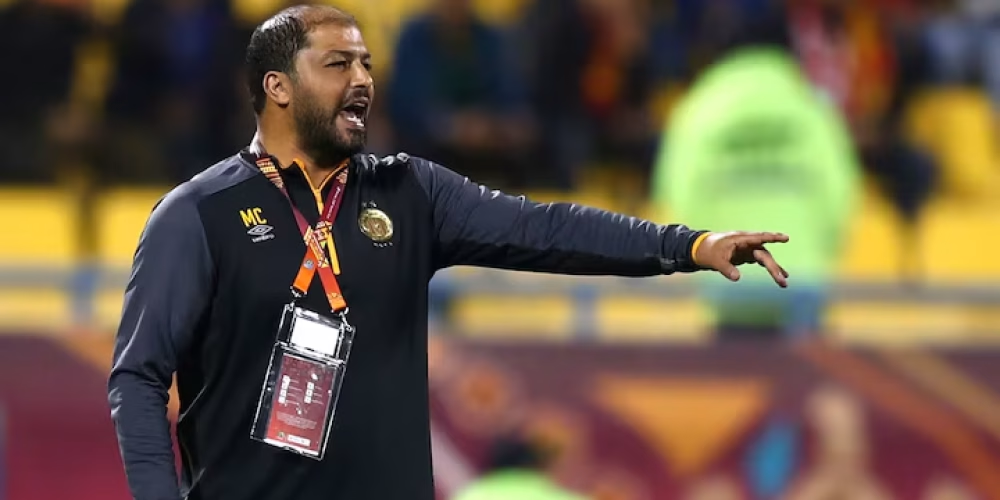
The Tunisian Football Federation has officially hired former Espérance de Tunis manager Moïn Chaabani as the head coach of the senior men’s national team on a four-year contract extending through the 2030 FIFA World Cup. The 45-year-old native takes charge following a tumultuous summer campaign that saw the North African side exit in the opening phase of the international tournament. Executive officials confirmed that Chaabani will lead a comprehensive structural rebuild across all levels of the national team program ahead of upcoming continental qualification cycles.
What You Need to Know
Tunisian soccer experienced one of its most turbulent tournament runs in recent history during the 2026 FIFA World Cup in North America. The national team opened its group stage fixtures under former manager Sabri Lamouchi, but a heavy 5-1 defeat against Sweden prompted the federation to terminate Lamouchi’s contract immediately after the first match. In an effort to stabilize the squad mid-tournament, football leadership appointed veteran French coach Hervé Renard on a short-term basis to navigate the remaining group matches.
Renard’s brief tenure failed to salvage the campaign as the Carthage Eagles suffered consecutive losses to Japan and the Netherlands, conceding seven goals across two games while scoring just once. The group-stage exit marked the first time in Tunisia’s tournament history that the team failed to secure a single point across three matches. The defensive frailties and tactical inconsistency exposed during the tournament highlighted systemic issues within the squad, prompting widespread calls from supporters and analysts for a complete overhaul of the coaching infrastructure.
Following Renard’s planned departure at the conclusion of the tournament, the federation prioritized securing a long-term domestic manager capable of rebuilding the roster identity. Chaabani emerged as the unanimous choice among board members due to his extensive track record of managing high-pressure environments across North African club football. Having previously turned down initial approaches while under contract with Moroccan club RS Berkane, Chaabani agreed to terms after his former club released him from his contract to serve his home country.
Moïn Chaabani Takes Over Tunisia National Team
Moïn Chaabani steps into the national team role with one of the most decorated managerial resumes in contemporary African football. He first earned international recognition during his stint with Tunisian powerhouses Espérance de Tunis, where he orchestrated back-to-back CAF Champions League titles in 2018 and 2019. In addition to his success on the continental stage, Chaabani guided Espérance to three consecutive domestic league championships and two Tunisian Super Cup victories, establishing a tactical blueprint built on defensive discipline and rapid transition play.
Following his success in Tunis, Chaabani expanded his managerial footprint into the Egyptian Premier League, taking charge of Al Masry and Ceramica Cleopatra before making the move to Moroccan side RS Berkane in early 2024. During his two-year tenure in Morocco, he led RS Berkane to their first-ever domestic Botola Pro league title in the 2024–25 season while simultaneously securing the 2025 CAF Confederation Cup trophy. His ability to deliver hardware across multiple leagues cemented his reputation as a master tactician in knockout competition formats.
The national federation has assembled a robust technical staff to support Chaabani’s vision through the 2030 tournament cycle. Mourad El Maliki and Saifallah Hosni have been appointed as assistant coaches, while veteran trainer Khaled El Meghzaoui will oversee the goalkeeping department. Fitness preparation will be led by Hatem Boulila, supported by tactical analyst Wissem Safwat. This backroom unit has been tasked with modernizing the squad’s sports science protocols and integrating younger talent from Europe and domestic academies into the senior setup.
Chaabani’s immediate priority will be reshaping a squad that struggled with age, depth, and tactical organization during the summer showcase. Key senior figures who anchored the national team over the past decade are expected to transition out of the squad as the new coaching staff begins scouting emerging talent. With the next Africa Cup of Nations and regional qualifiers on the horizon, Chaabani must construct a resilient squad capable of restoring Tunisia’s status as a dominant power in African football.
Why This Matters
For soccer fans and international sports followers across the United States and Europe, Tunisia’s appointment of Moïn Chaabani offers a compelling look at the rapid evolution of international coaching strategies outside Western Europe. As global football becomes increasingly interconnected, national federations are moving away from short-term foreign hires in favor of domestic managers who possess deep cultural insight and proven tactical success within their home regions. Chaabani’s four-year commitment signals a structural shift toward long-term developmental stability rather than quick fixes.
Additionally, American and European sports executives monitoring international talent development will closely follow Tunisia’s squad transformation. With several North African players earning key roster spots across Major League Soccer, the English Premier League, and European domestic leagues, Chaabani’s rebuilding project could elevate new talent onto the international stage. A revitalized Tunisian squad strengthens the overall competitiveness of African soccer on the world stage as preparations begin for the expanded 2030 tournament hosted across three continents.
NCN Analysis
The appointment of Moïn Chaabani represents a pragmatic and necessary shift for the Tunisian Football Federation. Cycling through multiple coaches in a single calendar year compromised squad cohesion and led directly to the defensive collapses seen on the pitch in North America. By committing to a four-year deal with a proven winner who understands local football dynamics, the board has given Chaabani the authority and timeline required to execute a root-and-branch overhaul of the team.
Moving forward, the primary challenge for Chaabani will be balancing immediate competitive expectations with the necessity of roster modernization. The transition away from aging stars toward inexperienced domestic and European-based youth will inevitably involve growing pains during early qualification fixtures. However, if Chaabani can instill the same tactical rigidity and big-match composure that defined his championship runs at Espérance and RS Berkane, Tunisia will be well-positioned to re-establish itself as an elite continental contender by 2030.
Moïn Chaabani’s appointment marks the beginning of a critical long-term rebuilding phase aimed at restoring pride and stability to Tunisian international football.
Reported by the NCN Editorial Team









