

KEY POINTS
- Over 62 million American television viewers tuned in to watch Spain defeat Argentina in the 2026 FIFA World Cup final, establishing a new domestic broadcast milestone for soccer.
- The combined English and Spanish telecast surpassed viewership for major American sporting events, including the NBA Finals and the MLB World Series.
- Strong overall tournament ratings delivered massive streaming growth for network partners and validated the sport’s long-term commercial potential across North America.
The 2026 FIFA World Cup final set an all-time United States broadcast audience record as nearly 63 million viewers watched Spain secure a 1-0 extra-time triumph over Argentina. Transmitted live from East Rutherford, New Jersey, the championship match captivated audiences nationwide and delivered single-day rating metrics previously reserved for the NFL postseason. The staggering turnout signals a defining shift in the American media landscape, confirming that soccer has officially crossed into mainstream sports culture.
What You Need to Know
For three decades, domestic sports executives have debated when soccer would gain a permanent foothold alongside traditional American pastimes like football, baseball, and basketball. The United States previously hosted the men’s World Cup in 1994, an event that set tournament attendance records but occurred when domestic television coverage of international soccer remained relatively niche. Subsequent decades saw steady growth fueled by expanded grassroots participation, the establishment of Major League Soccer, and increased access to European league broadcasts via cable and digital streaming services.
By the time FIFA expanded the 2026 tournament to 48 nations and selected the United States, Canada, and Mexico as joint hosts, media companies recognized the commercial stakes involved. Network executives invested over $1 billion combined to secure long-term media rights, anticipating that localized kickoff times and multi-city host venues would drive unprecedented domestic interest. The 2022 World Cup in Qatar, held during late autumn to accommodate local weather conditions, generated solid domestic interest but faced awkward morning broadcast schedules for American viewers.
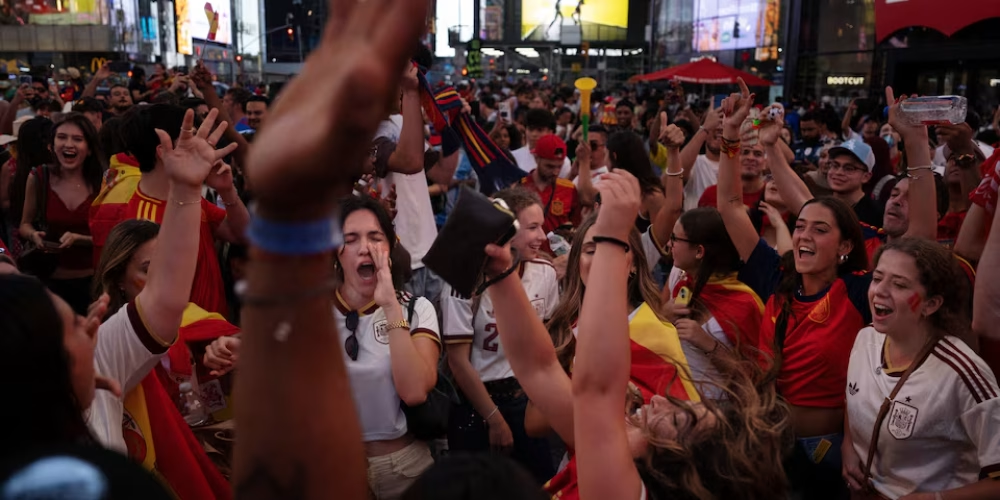
The 2026 tournament benefited immensely from prime afternoon and evening broadcast slots designed specifically for time zones across North America. Across 104 matches, fan fest gatherings, and sold-out stadium atmospheres in 16 host cities, public engagement surged throughout June and July. Combined with dramatic storylines—including potential final international appearances for legendary stars like Lionel Messi and Cristiano Ronaldo—the summer tournament provided a continuous media spectacle that culminated in Sunday’s record-setting final.
Breaking Down the 2026 World Cup US Viewership Numbers
The championship fixture between Spain and Argentina delivered historic metrics across both major domestic broadcast partners. English-language coverage on Fox Sports generated an average audience of 38.9 million viewers, with rating spikes peaking above 51 million during the dramatic final minutes. On Spanish-language television, Telemundo and its companion streaming platform Peacock attracted an additional 23.9 million viewers. Together, the match reached an aggregate audience of nearly 63 million people, almost tripling the 22.3 million American viewers who watched the 2022 final.
Sunday’s final remained scoreless through 90 minutes of tense regulation play before Spanish forward Ferran Torres scored the decisive goal in the 106th minute of extra time. The dramatic outcome delivered the highest non-NFL sports audience on American television since the 2016 World Series and generated higher domestic viewership than any non-football sporting event since the 1994 Winter Olympics. Throughout the knockout rounds, earlier fixtures had already demonstrated broad audience appeal, with the Round of 16 clash between England and Mexico drawing nearly 45 million viewers—easily outperforming recent NBA Finals and MLB World Series clinching games.
The tournament as a whole proved transformational for network distributors and digital subscription services. Fox Sports finished the month-long competition averaging 7.74 million viewers per telecast, representing a 116 percent increase compared to the 2022 tournament in Qatar. Telemundo achieved similar growth, recording a tournament-wide average audience delivery of 6.3 million viewers per match. Digital platforms experienced parallel surges, with subscription analytics revealing that English and Spanish streaming platforms generated millions of new account sign-ups throughout June and July, surpassing previous record performance set during the NFL playoffs.
What This Means for Americans
The unprecedented television ratings will directly influence how major media networks and corporate sponsors allocate advertising budgets in the coming years. Premium brand advertisers paid record rates for commercial inventory during the tournament, recognizing that soccer audiences skew younger and more multicultural than traditional sports demographics. As broadcast networks prepare for future rights negotiations, the massive success of the 2026 World Cup will accelerate investment in soccer programming across linear networks and direct-to-consumer streaming products.
For American sports consumers, this rating boom guarantees expanded national coverage for domestic and international soccer properties. Major League Soccer and European domestic leagues are positioned to capture heightened consumer interest as newly engaged fans continue following the sport beyond the World Cup cycle. Municipalities that hosted matches are already reporting increased local investment in community fields, youth academies, and sports tourism infrastructure, ensuring that the legacy of the tournament extends well beyond broadcast metrics.
NCN Analysis
The domestic success of the 2026 FIFA World Cup represents a structural breakthrough for soccer in North America rather than a temporary rating anomaly. Having demonstrated that a domestic World Cup can draw television audiences rivaling the Super Bowl, media partners now possess clear proof that soccer holds elite commercial power in the American marketplace. This reality will strengthen FIFA’s leverage as it prepares to market broadcast packages for upcoming international tournaments in 2030 and 2034.
Looking forward, the primary challenge for domestic sports executives will be maintaining audience momentum between major international tournaments. While national team events generate intense civic pride and broad spectator appeal, domestic leagues must work to convert casual tournament viewers into weekly season supporters. If sports networks and regional franchises can successfully capture a fraction of Sunday’s 63 million viewers for regular club competitions, soccer will permanently solidify its standing among America’s top Tier-1 sports properties.
The record-breaking viewership for the 2026 World Cup final marks a historic turning point that redefines soccer’s place in the American sports media landscape.
Reported by the NCN Editorial Team









