

KEY POINTS
- A massive weather phenomenon known as a “heat dome” is settling over the central and eastern United States and parts of Canada as the knockout rounds progress.
- Forecasters warn that heat indices could skyrocket to between 105 and 115 degrees Fahrenheit, creating hazardous environments in several open-air host venues.
- Mandatory cooling measures, including three-minute hydration breaks per half, are being utilized by tournament organizers to mitigate severe player and fan exhaustion.
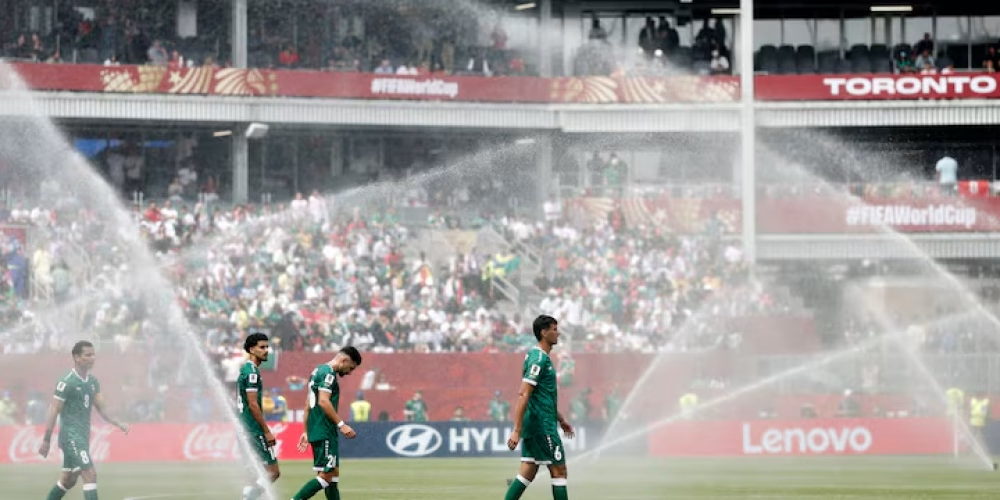
A formidable and expansive weather system is rapidly developing into one of the most significant operational challenges of the 2026 FIFA World Cup. As national teams battle through the high-stakes knockout stages across North America, meteorologists have warned that an intense “heat dome” is settling directly over the central and eastern United States, as well as portions of eastern Canada. The massive high-pressure system threatens to trap suffocating humidity and extreme temperatures across multiple host cities, threatening the physical well-being of elite athletes on the pitch and millions of traveling international spectators.
What You Need to Know
A heat dome occurs when a persistent region of high pressure traps sweltering summer heat over a massive geographic area, preventing cooler air masses from penetrating the region and causing temperatures to climb progressively higher day after day. According to the U.S. National Weather Service, this current meteorological pattern is projected to drive heat indices up to a dangerous 105 to 115 degrees Fahrenheit across the Midwest and the Atlantic seaboard. The timing is particularly challenging for local municipalities, as these sweltering conditions are expected to persist throughout the busy Fourth of July holiday weekend, coinciding with major tournament matches.
The geographic scope of the heat wave encompasses several prominent World Cup host venues that lack retractable roofs or climate-controlled interiors. Key tournament cities including Toronto, Kansas City, Philadelphia, and East Rutherford, New Jersey, are all positioned directly within the path of the advancing high-pressure system. Weather analysts from AccuWeather have noted that the sheer strength of this atmospheric block means that even evening matches will offer little relief, as temperatures are expected to remain exceptionally high long after sunset, maintaining intense thermal stress inside concrete stadium structures.
Historically, the scheduling of major soccer tournaments during the peak of the Northern Hemisphere’s summer has frequently drawn sharp criticism from sports scientists and medical professionals. The extreme conditions currently unfolding across North America echo previous warning signs, such as the intense heat waves that impacted players during last summer’s Club World Cup in the United States. While organizations like the global players’ union, FIFPRO, have long advocated for stricter environmental thresholds to protect players from heat stroke and cardiovascular strain, the rigid nature of international broadcasting schedules leaves tournament organizers with very little flexibility to delay matches.
Severe Weather Impacts Tournament Venues
The developing weather pattern is transforming upcoming Round of 16 fixtures into grueling tests of physical endurance rather than purely tactical showcases. In New Jersey, which is scheduled to host a highly anticipated knockout match on July 5, regional temperatures are tracking toward their highest recorded levels since 2013. The absence of indoor air conditioning systems at open-air facilities like Lincoln Financial Field in Philadelphia and MetLife Stadium in East Rutherford means that both fans in the stands and operational stadium staff will face prolonged exposure to hazardous heat indices.
To combat the immediate threats of dehydration and heat exhaustion, soccer’s global governing body is enforcing mandatory three-minute cooling breaks midway through each half of every match. These short periods allow players to lower their core body temperatures, rehydrate, and receive chilled towels from medical personnel. While player safety advocates view these brief intervals as an absolute necessity given the extreme forecasts, some traditionalist commentators and tactical analysts have argued that the forced pauses disrupt the natural flow, momentum, and strategic rhythm of high-stakes knockout football.
Beyond the athletes on the field, the heat dome places an immense burden on stadium infrastructure and emergency medical services. Hundreds of thousands of fans traveling to match venues must navigate fan zones and transit networks that are vulnerable to extreme thermal buildup. Local organizing committees are scrambling to deploy emergency mitigation assets around stadium perimeters, including high-capacity misting stations, shaded cooling tents, and free water distribution points to prevent widespread medical emergencies among spectators waiting to enter the venues.
Why This Matters
For soccer consumers, corporate sponsors, and local communities across the United States, Ireland, Sweden, and global English-speaking markets, this severe weather event underscores the escalating intersection of climate change and mega-sports infrastructure. The reality of conducting a multi-national tournament during an unprecedented heat wave forces a massive re-evaluation of how future sports facilities must be constructed. Open-air stadiums without advanced cooling technology or shade structures are increasingly becoming operational liabilities during peak summer months, potentially shifting future hosting privileges exclusively toward fully climate-controlled domes.
Additionally, the situational hazards extend far beyond the ninety minutes of play, directly affecting the low-wage workers, security personnel, and first responders tasked with managing the event. Working multi-hour shifts in direct sunlight under a 115-degree heat index presents profound occupational health risks. As global sports organizations continue to generate billions of dollars in revenue from summer tournaments, the ethical responsibility to protect the health of stadium staff and traveling international consumers will likely become a central point of legal and corporate accountability.
NCN Analysis
From our editorial perspective, this developing weather crisis highlights a fundamental disconnect between FIFA’s commercial scheduling and the realities of global climate shifts. While moving the 2022 World Cup in Qatar to the winter was a radical logistical shift, the recurring heat emergencies in North America suggest that summer tournaments in traditional formats are becoming unsustainable. The mandatory three-minute hydration breaks are a helpful temporary fix, but they do not solve the broader issue of asking elite athletes to perform at maximum intensity when the ambient environment poses a direct risk to human health.
Looking forward, tournament organizers must prepare for potential contingency plans, including shifting training schedules entirely to late-night windows and significantly expanding stadium medical staff. Pundits and fans should watch closely to see if the extreme humidity levels result in an uptick of muscular injuries, cramping, and exhaustion-related substitutions during the upcoming Round of 16 matches. As the heat dome establishes a firm grip on the East Coast, the teams that have prioritized sports science, deep roster rotation, and superior hydration protocols will hold a massive competitive advantage over those relying solely on tactical execution.
The ability to survive the elements is rapidly becoming just as critical as the ability to defeat the opponent on the pitch.
0









