

KEY POINTS
- Officiating crews are implementing a deliberate policy of a “lighter whistle” to reduce unnecessary match interruptions.
- The intentional reduction in soft foul calls has significantly increased the overall tempo and effective playing time.
- Physical intensity and player compliance have risen as teams adapt to the more fluid officiating standard.
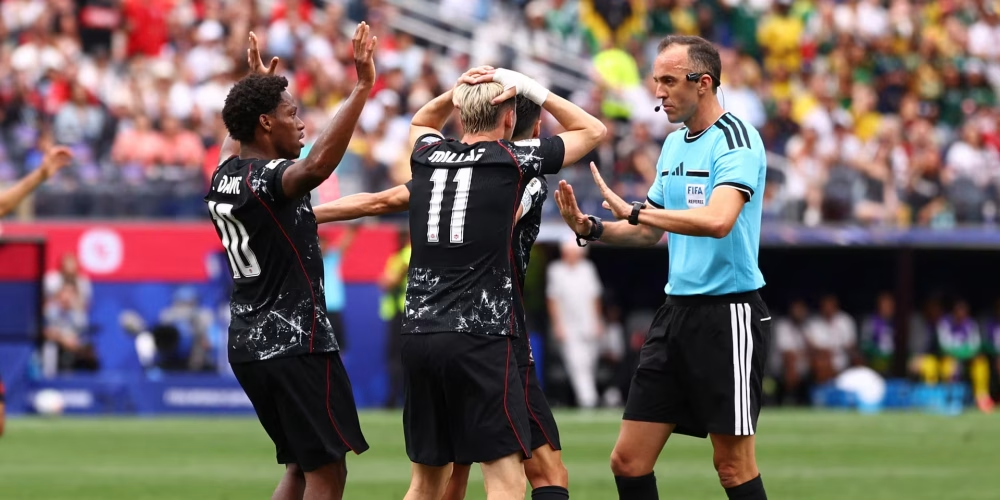
The 2026 FIFA World Cup is captivating global audiences with an open, high-velocity style of football that has transformed the rhythm of the tournament. International officiating committees have enacted strict directives encouraging referees to let the game flow, deliberately minimizing marginal foul calls that traditionally stall match momentum. This structural shift has successfully ushered in a faster, fiercer brand of soccer across North American venues, catching many tactical squads by surprise.
What You Need to Know
In previous editions of the global tournament, matches were frequently plagued by tactical fouling, simulated injuries, and over-refereeing, which dramatically reduced the actual minutes the ball remained in active play. Fans and broadcasters long lamented the fragmented nature of high-stakes knockout games, where teams would intentionally disrupt the flow of their opponents by exploiting soft whistle thresholds. Recognizing that a stop-and-start product alienates casual observers and diminishes athletic display, soccer governing bodies quietly prioritized pace of play ahead of the 2026 tournament cycle.
The implementation of this modern standard represents a significant departure from domestic league officiating in various regions. Many elite players accustomed to drawing easy whistles in European or South American domestic campaigns are finding that international referees are instructing them to stand back up and continue playing. This systematic adjustment requires deep psychological adaptation from competing squads, who can no longer rely on drawing cheap defensive fouls to relieve sustained pressure in their defensive thirds.
Crucially, the directive does not mean referees are abandoning player safety or ignoring malicious challenges. Severe fouls, dangerous high-boot tackles, and tactical shirt-pulling that halts clear goalscoring opportunities are still met with immediate disciplinary action. Instead, the “lighter whistle” focuses heavily on marginal, low-impact upper-body contact and minor lower-body tangles that naturally occur when two elite athletes contest possession at maximum speed.
A Faster, Fiercer Brand of Football
The practical results of this officiating shift have been immediately visible across the opening phases of the competition. Matches that historically would have dissolved into a sequence of endless free kicks and prolonged arguments are instead developing into breathless, end-to-end spectacles. By keeping the ball in continuous motion, the directive has forced tactical units to rely much more on raw physical conditioning and collective structural discipline, rather than waiting for structural resets.
This fluid atmosphere was highly evident in recent high-stakes group encounters, where teams like England, Croatia, and Argentina had to adjust their defensive strategies mid-game. Rather than slowing down the tempo after taking a lead, teams are discovering that the continuous flow makes protecting a narrow margin incredibly demanding. The increased speed of play has naturally led to a spike in late-game drama, as fatigued defensive lines struggle to cope with relentless waves of transition attacks that are no longer broken up by arbitrary whistles.
Furthermore, player behavior on the pitch has shown an unexpected, positive evolution. When athletes realize that theatrical falls and simulated agony are being systematically ignored by the officiating crew, the incentive to engage in gamesmanship rapidly evaporates. Players are recovering faster, complaining less to the refereeing staff, and focusing their energies entirely on retrieving possession or executing counter-attacks. This cultural shift has substantially enhanced the aesthetic value of the tournament for millions of viewers.
Why This Matters
For the expanding American soccer audience and sports entertainment consumers, this faster brand of football provides an infinitely more engaging introduction to the sport. Historically, domestic sports fans raised on high-scoring, continuous-action disciplines like basketball or hockey expressed frustration with soccer’s perceived slow pace and frequent stoppages. By removing unnecessary dead-ball periods, the current World Cup presentation offers a highly dramatic, athletic spectacle that aligns perfectly with the expectations of modern sports fans.
From a commercial and media perspective, increased effective playing time directly elevates the value of the broadcasting product. Television networks and digital streaming platforms are experiencing maximum viewer retention because the action remains uninterrupted and compelling throughout the full ninety minutes. For corporate brands investing billions in tournament exposure, a premium, high-octane product ensures that consumer attention remains firmly locked on the screen, maximizing the return on their marketing investments.
NCN Analysis
The success of the “lighter whistle” directive at this World Cup will undoubtedly spark an intense conversation across the broader footballing world once the trophy is hoisted. Domestic leagues, particularly the English Premier League and UEFA Champions League, will face immense pressure from fans and media to adopt similar officiating philosophies for their upcoming club seasons. If international referees can maintain consistency without sacrificing player safety, there is no logical reason to return to the hyper-sensitive refereeing styles of the past.
However, the real test of this officiating philosophy will arrive during the high-pressure environment of the deeper elimination rounds. As the margins for error shrink and the physical stakes multiply, referees will need immense mental fortitude to maintain their high threshold for calling fouls. If an officiating crew miscalculates a marginal challenge that leads directly to a tournament-defining goal, the directive will face intense scrutiny. Rallied by under-pressure managers, critics will inevitably question whether the pursuit of entertainment has compromised objective fairness.
The ongoing tournament proves that when elite athletes are permitted to play through physical contact, the game of soccer achieves its absolute purest form.
Reported by the NCN Editorial Team









