

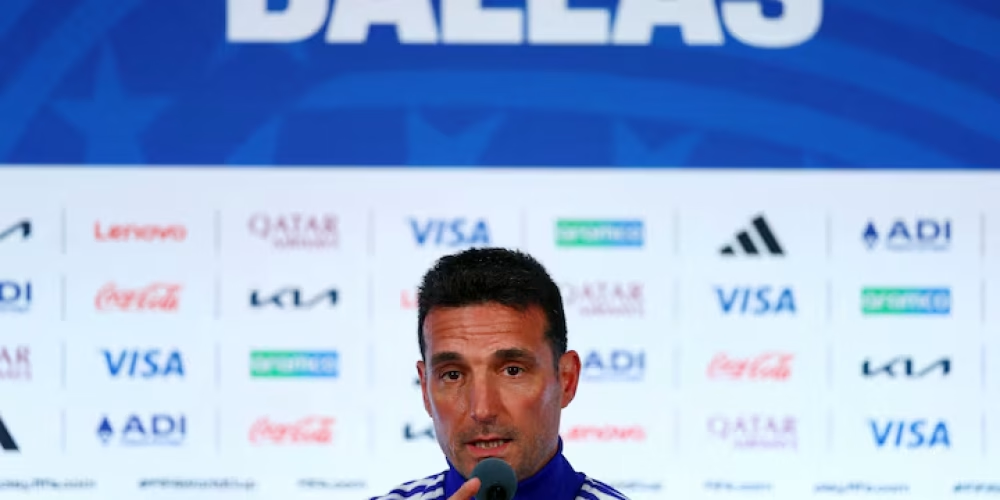
KEY POINTS
- Argentina manager Lionel Scaloni is carefully reviewing how mandatory tournament hydration breaks alter tactical momentum and player endurance.
- The reigning champions face Austria in a highly anticipated match where temperatures are forecast to exceed 90 degrees Fahrenheit.
- Coaching staff are adjusting their high-pressing defensive system to prevent physical exhaustion during extreme weather conditions.
Extremely high summer temperatures are forcing soccer’s elite tacticians to completely re-evaluate their mid-match strategies. Argentina manager Lionel Scaloni is proactively modifying his game plan ahead of a vital group stage encounter against Austria, focusing heavily on how environmental factors disrupt the natural flow of play. The looming climate challenges have turned basic physiological management into a defining tactical battleground.
What You Need to Know
When elite international tournaments are hosted across North America during the peak of summer, weather patterns invariably become a major sporting variable. Governing bodies have established strict heat-management protocols, mandating three-minute cooling pauses midway through each half if the wet-bulb globe temperature reaches specific safety thresholds. While designed entirely for player safety, these brief intervals inadvertently function as timeouts, fundamentally altering the traditional continuous nature of a soccer match.
For a squad like the Argentina national team, whose global success has been built on relentless rhythm, intricate passing sequences, and sustained psychological pressure, these mandatory stoppages present a unique obstacle. A sudden three-minute pause can instantly extinguish a team’s attacking momentum or provide a struggling defensive unit a vital chance to reorganize. Managing these artificial transitions has become a primary focus for top-tier analytical departments.
Furthermore, Argentina’s tactical blueprint under Scaloni relies on an aggressive, energy-sapping counter-press immediately after losing possession. Executing this specific style requires peak cardiovascular conditioning and rapid recovery times from the midfield line. In extreme humidity and heat, maintaining this high-intensity physical output for a full ninety minutes becomes mathematically and biologically impossible without risking severe muscular injuries or systemic exhaustion.
Scaloni Re-Engineers the Argentine Engine
The immediate concern for the Argentine coaching staff is finding a delicate equilibrium between tactical identity and physical preservation. Reports from the team’s training camp indicate that Scaloni is prepared to abandon his signature full-field pressing system during certain phases of the upcoming match. Instead, the South American giants are practicing a more conservative mid-block defense, choosing specific trigger moments to press rather than chasing opponents across the entire pitch.
The timing of the cooling intervals is also being simulated in training sessions to minimize strategic disruption. Coaches are treating the planned breaks as mini-halftimes, preparing rapid tactical adjustments to deliver to players while they hydrate. This allows the staff to counter any adjustments the Austrian side might make, effectively transforming a medical safety measure into an active coaching tool.
Personnel rotation will play an equally crucial role in navigating the oppressive weather conditions. Scaloni is expected to utilize his full allocation of five substitutions far earlier than usual, refreshing his midfield trio around the hour mark to sustain tactical consistency. This puts immense responsibility on auxiliary squad members to mirror the tactical discipline of the regular starters without dropping the team’s overall competitive standard.
Why This Matters
For soccer fans and sports broadcast networks across the United States, watching elite teams adapt to extreme climate variations provides a fascinating glimpse into the evolution of modern sports science. The implementation of cooling timeouts introduces a distinct rhythm that mirrors the structured pauses found in traditional North American sports like American football or basketball. This structural shift alters how television networks schedule commercial advertisements and analyze tactical momentum during live coverage.
Moreover, the emphasis on heat mitigation highlights the growing influence of sports medicine and environmental analytics in professional athletics. Companies specializing in wearable biometrics, cooling apparel, and advanced hydration formulas are seeing their technologies tested on the world’s biggest advertising stage. The strategic solutions engineered by international teams like Argentina eventually trickle down to benefit collegiate, high school, and youth sports organizations operating in hot climates across America.
NCN Analysis
Scaloni’s public emphasis on managing environmental variables demonstrates the comprehensive detail required to win consecutive major international trophies. By openly acknowledging that hydration breaks break tactical momentum, the manager is mentally preparing his players to handle frustrating disruptions without losing focus. This psychological readiness will be vital against a highly organized, physically imposing Austrian team that excels in transition moments.
From a long-term perspective, the teams that master these micro-intervals will possess a massive competitive advantage as the tournament progresses into the high-stakes knockout rounds. If Argentina can successfully conserve energy during the group stage while still securing necessary results, they will enter the later stages far fresher than opponents who blindly stick to energy-expensive systems. Watch for Argentina to slow the game down significantly in possession, using short, horizontal passing sequences to make the ball do the running in the midday heat.
Adopting a flexible tactical approach in response to changing weather conditions could ultimately determine whether the world champions retain their global crown or fall victim to a physical breakdown.
Reported by the NCN Editorial Team









