

KEY POINTS
- The dynamic rookie guard was a late addition to the team’s official medical report as they prepare for a high-stakes postseason showdown.
- Minnesota’s training staff attributed the roster setback to a head contusion sustained during earlier physical playoff action.
- The franchise enters the evening facing immediate elimination, trailing their best-of-seven semifinal matchup three games to two.
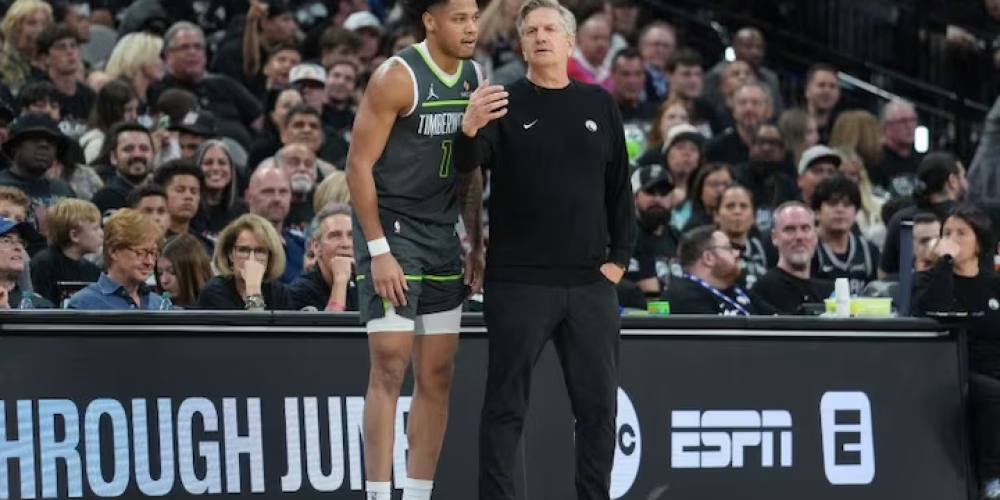
The Minnesota Timberwolves are facing a potential depth crisis ahead of their season-defining Game 6 showdown against the San Antonio Spurs, following the late addition of rookie guard Terrence Shannon Jr. to the official injury report. Team officials confirmed that the athletic perimeter weapon is currently considered questionable to participate due to a head contusion. The untimely medical update presents an additional hurdle for a roster already facing the immense pressure of an elimination match on their home floor.
What You Need to Know
The physical second-round series between these two Western Conference franchises has tested the depth and endurance of both organizations. Minnesota entered the postseason bracket looking to cement their status as a championship-caliber team, relying heavily on a mix of veteran presence and energetic young talent to navigate their way through the early rounds. However, injuries to key backcourt pieces have forced the coaching staff to continuously adjust their player rotations.
The importance of auxiliary perimeter play became magnified earlier in the postseason run when the team lost veteran guard Donte DiVincenzo to a season-ending Achilles tear. That significant roster blow required younger backcourt options to accelerate their development and absorb high-pressure minutes against elite defensive schemes. Navigating a deep playoff run necessitates a clean bill of health, making late-game additions to the medical report a major concern for coaching staffs.
Historically, teams facing immediate elimination must rely on their depth to sustain defensive intensity and offensive spacing throughout a grueling forty-eight-minute contest. Losing an energetic, versatile guard right before the opening tip forces sudden, uncomfortable adjustments to tactical game plans that have been prepared over several days. The medical staff is working behind the scenes to evaluate the rookie’s condition before finalizing the active roster list.
Rookie Guard Dealing With Head Injury Before Elimination Game
The sudden uncertainty surrounding the rookie guard’s availability stems from an incredibly physical Game 5 battle in Texas earlier in the week. During that challenging road contest, the young athlete found himself limited to just two points in 17 minutes of action, struggling to establish an offensive rhythm as the team suffered a decisive 126-97 setback. It remains unclear exactly when the physical contact occurred, but the lingering symptoms prompted the training staff to exercise extreme caution on Friday.
Before this injury development, the former Illinois standout had successfully transformed himself from an occasional regular-season contributor into a vital component of the postseason rotation. After receiving multiple coaching decisions that kept him on the bench to open the playoffs, he experienced a true breakout moment during the first-round closeout game against the Denver Nuggets. In that definitive contest, he exploded for 24 points and six rebounds in nearly 35 minutes of action, completely altering his trajectory within the squad.
Throughout five semifinal appearances against a highly disciplined Texas defense, the first-round draft selection has provided crucial secondary scoring and high-energy perimeter defense. While his shooting percentages have fluctuated against elite defensive coverage, his ability to push the pace in transition and challenge opposing passing lanes has given the second unit a distinct identity. His absence would leave a noticeable void in the team’s ability to pressure the perimeter.
If the medical staff chooses to withhold the young guard from live action to protect his long-term health, head coach Chris Finch will be forced to lean more heavily on his remaining veteran backcourt assets. Experienced playmakers like Mike Conley and versatile guard Ayo Dosunmu would likely see a substantial increase in their minute allocations to cover the vacancy. Additionally, energetic guard Bones Hyland could find himself thrust back into the active game rotation after watching recent games from the sidelines.
Why This Matters
For basketball enthusiasts across the United States and global sports audiences, injury updates regarding key rotational players add an extra layer of tension to high-stakes playoff coverage. Modern sports fans consume news rapidly, understanding that a singular change in a team’s active depth chart can completely shift betting lines, tactical advantages, and series projections. Tracking the medical status of an emerging young talent provides critical context for anyone analyzing the competitive balance of a win-or-go-home game.
Furthermore, the competitive health of premium franchises dictates national television ratings, digital streaming metrics, and sports commentary engagement across North America. A balanced, fully healthy elimination game delivers the absolute pinnacle of athletic entertainment, drawing casual viewers who want to see elite athletes perform under maximum stress. The capability of a team to overcome sudden adversity and protect their home court remains one of the most compelling narratives in professional sports.
NCN Analysis
From an editorial perspective, this late-day injury update places immense psychological stress on a locker room that is already operating with zero margin for error. Heading into a must-win home fixture while monitoring the availability of a key spark plug disrupts the tactical consistency a coaching staff strives for during a deep postseason run. The coaching staff must establish alternative offensive combinations early in the first quarter to ensure the team doesn’t experience an emotional letdown.
For San Antonio, the potential absence of an aggressive transition threat allows their perimeter defenders to play with added aggression against the remaining starting guards. If the home team cannot threaten the paint with secondary drives, the defensive schemes can tilt heavily toward stopping the primary star weapons. The opening minutes of the contest will reveal whether the home squad can successfully channel this latest administrative hurdle into collective motivation.
Protecting the home floor and extending the competitive season requires complete unity and execution, regardless of who is cleared to wear the jersey.
Reported by the NCN Editorial Team









