Key Points
- South Korea and Italy signed an MoU to expand cooperation on AI, chips, aerospace and critical minerals.
- The agreement aims to build resilient supply chains and joint R&D efforts in strategic high-tech sectors.
- Meloni’s visit to Seoul marks the first Italian state visit in nearly two decades and highlights growing bilateral tech ties.
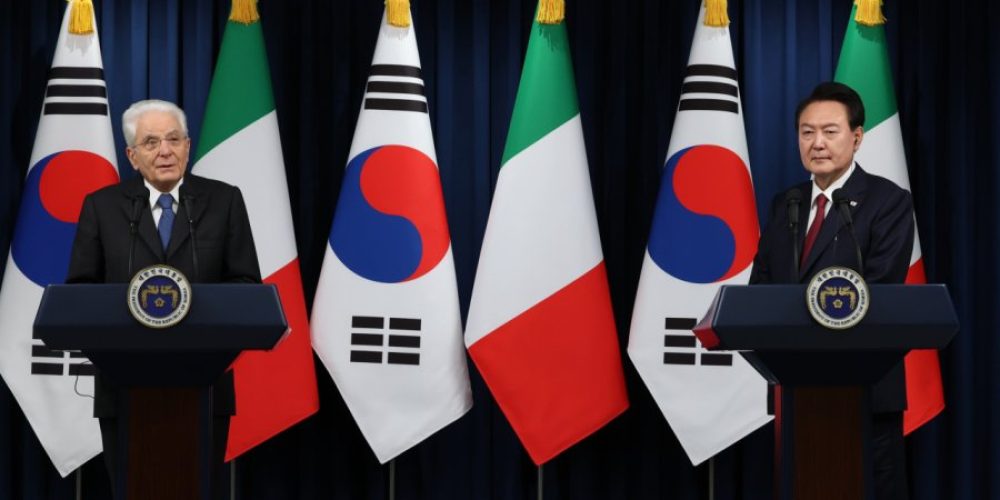
South Korean President Lee Jae Myung and Italian Prime Minister Giorgia Meloni agreed on Monday to deepen cooperation in strategic technologies, particularly artificial intelligence (AI) and semiconductors, during a summit in Seoul. The two leaders signed a memorandum of understanding (MoU) focused on expanding collaboration in the chip industry, including AI-related chip development and supply chain resilience.
The agreement also covers broader high-tech areas such as aerospace and critical minerals, which are vital for modern tech manufacturing and energy transitions. Officials said that building stable, reliable supply chains for critical minerals will support both nations’ technological ambitions and help mitigate external disruptions in global markets.
Meloni’s visit was the first by an Italian leader to South Korea in 19 years, reflecting strengthened bilateral ties driven by shared economic interests and rising global competition in advanced tech sectors. Italy is among South Korea’s top trading partners in the European Union, and the leaders indicated that cooperation could extend into joint research projects, educational exchanges, tourism and cultural initiatives.
South Korea’s prominence in semiconductor production — especially memory chips where it is a global leader — complements Italy’s growing focus on digital and AI strategies. The MoU aims to leverage this mutual expertise to accelerate innovation while reducing dependencies on external suppliers for high-tech inputs, including raw materials that feed advanced electronics manufacturing.
AI collaboration is expected to cover research and development projects, potentially enhancing joint efforts in machine learning, data infrastructure, and workforce training. Such initiatives align with broader global trends toward public-private partnerships and international cooperation to maintain competitiveness in next-generation computing technologies.
The agreement also touches on critical minerals that are essential to semiconductors, clean energy tech and AI hardware. Both governments highlighted the importance of establishing resilient supply chains to ensure access to key inputs such as nickel, cobalt, lithium and rare earth elements, which are subject to geopolitical and market volatility.
In addition to technology and economic ties, Lee and Meloni underscored their shared commitment to regional security, including support for the denuclearisation of the Korean Peninsula, as part of broader diplomatic discussions. These security dialogues complement cooperation on strategic technologies that are increasingly seen as linked to national and economic resilience.
Meloni’s broader Asian tour includes stops in Japan and Oman, pointing to a wider Italian effort to strengthen ties across the region amid shifting global trade and technology landscapes. Leaders from both countries also expressed hope that Lee might undertake a state visit to Italy later this year, deepening diplomatic and economic ties further.