

KEY POINTS
- Rescue crews moved over 154,000 residents to safe zones across four impacted provinces.
- Massive dam overflows caused by intense rain triggered dangerous water levels in the Loukkos River.
- Authorities are utilizing drones and military vehicles to reach isolated flood victims.
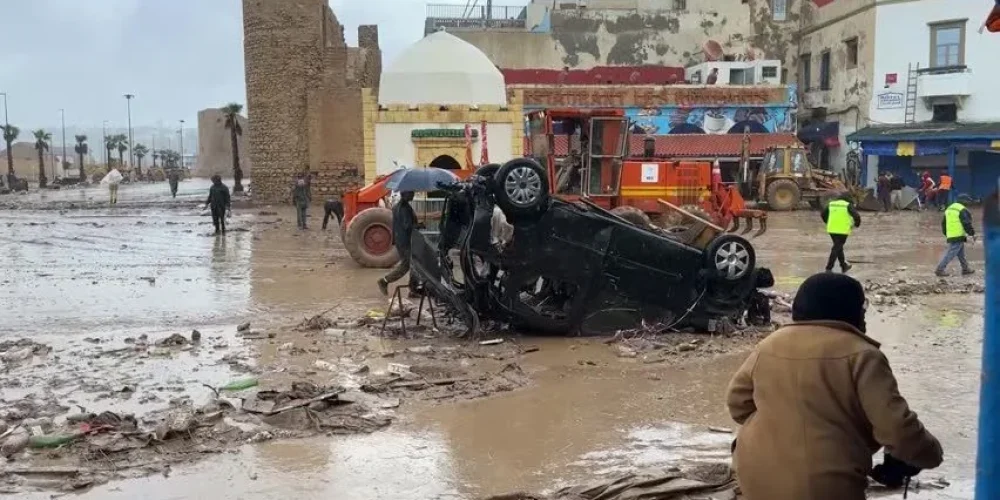
Moroccan emergency teams continue to move citizens away from rising floodwaters. The massive rescue operation has now entered its twelfth consecutive day. Authorities focus their efforts on four specific provinces in the northwest. These areas include Larache, Kenitra, Sidi Kacem, and Sidi Slimane.
Local officials report that more than 154,000 people have left their homes so far. Heavy rainfall has caused river valleys to swell significantly. The Loukkos River remains a primary concern for safety teams. Water levels there continue to rise due to consistent downpours.
The Oued El Makhazine Dam recently reached a record capacity of 156 percent. This extreme level caused the structure to overflow for the first time. The resulting surge flooded nearby regions and disrupted daily life. Official data highlights the severity of this environmental event.
Rescue personnel use a variety of tools to reach trapped families. Military trucks and speedboats navigate through submerged streets and rural paths. Helicopters provide aerial support for difficult extractions. Teams also use drones to monitor the water and find stranded people.
Displaced families are receiving help in nearby urban centers. The government established temporary camps to provide immediate shelter. Designated facilities offer food and basic medical care to those in need. Specialized relief equipment is also on the ground to assist with recovery.
Despite the scale of the flooding, officials report no fatalities. This marks a positive change from previous weather disasters in the region. Flash floods in Safi killed 37 people in late 2025. Current efforts aim to prevent any loss of life during this crisis.
The Interior Ministry manages the coordinated response across the northern provinces. Emergency workers remain on high alert as rain continues to fall. They move residents in phases based on local risk levels. Transportation services help people reach safety quickly and efficiently.
Officials urge the public to follow all evacuation orders immediately. Monitoring stations keep a close watch on several river systems. The situation remains fluid as weather patterns shift across North Africa. Rescue operations will continue until water levels stabilize and the danger passes.









