

Key Points:
- European leaders are intensifying efforts to defend the EU-Mercosur trade pact amid political resistance.
- Farmers, environmental groups, and some governments remain concerned about competition and climate impacts.
- Supporters argue the deal strengthens Europe’s global trade position and reduces reliance on China.
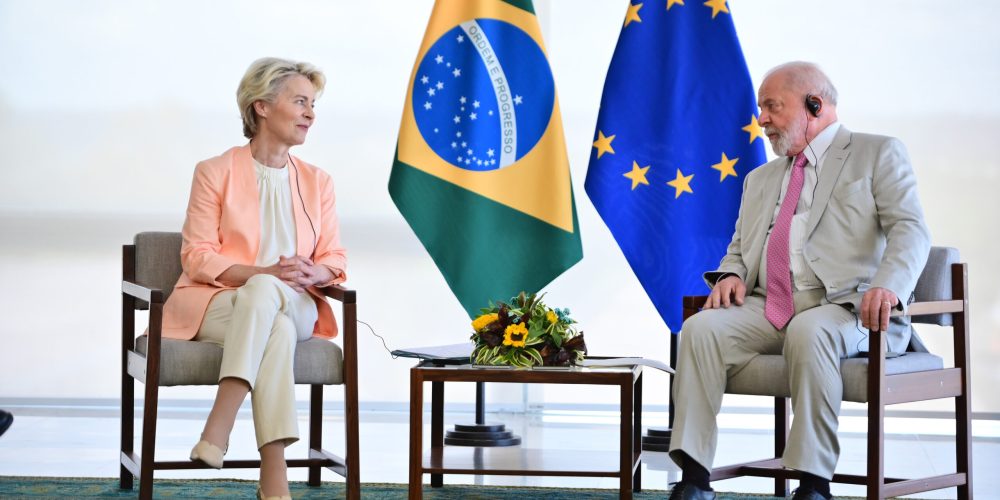
European leaders are stepping up diplomatic and political efforts to rescue the long-delayed EU-Mercosur trade agreement. The pact, negotiated over two decades, faces renewed skepticism from several European Union members. Leaders now frame the deal as vital for Europe’s economic security and global influence.
The agreement would link the EU with Mercosur countries, including Brazil, Argentina, Paraguay, and Uruguay. Combined, the bloc would represent one of the world’s largest free-trade zones. Supporters say the deal could remove tariffs, boost exports, and strengthen strategic ties with South America.
Resistance remains strong across parts of Europe. Farmers worry about competition from cheaper agricultural imports, especially beef and soy. Environmental groups warn the agreement could accelerate deforestation in the Amazon. Several governments fear voter backlash ahead of national elections.
France remains among the most vocal critics. French leaders argue the pact threatens domestic agriculture and fails to guarantee sufficient environmental safeguards. Austria and some regional governments share similar concerns, citing climate commitments and food safety standards.
In response, European Commission officials and pro-trade leaders stress that the agreement includes binding environmental commitments. They argue updated side agreements strengthen protections for forests, labor rights, and sustainability. Leaders say abandoning the pact would weaken Europe’s credibility as a global trade partner.
Germany, Spain, and Portugal have emerged as strong advocates. These countries emphasize export opportunities for European machinery, vehicles, pharmaceuticals, and renewable technologies. Supporters also view the deal as a counterbalance to China’s growing economic presence in Latin America.
The geopolitical context has added urgency. European leaders increasingly frame the pact as part of a broader strategy to diversify supply chains. Reducing dependence on single markets has become a priority after recent global shocks and rising trade tensions.
Business groups across Europe have echoed this message. Industry leaders say the agreement would open new markets for European companies while offering consumers lower prices. They warn that prolonged delays could allow competitors to gain ground in South America.
Negotiators also face pressure from Mercosur nations. South American leaders express frustration over repeated delays and shifting European demands. They argue the deal already reflects years of compromise and warn that further changes could unravel political support at home.
Despite resistance, EU officials believe momentum has improved. Diplomatic outreach has increased, and leaders are engaging skeptical governments directly. The European Commission hopes to secure political backing before submitting the agreement for national ratification.
Ratification remains complex. Every EU member state must approve the deal, and some may require parliamentary votes. Analysts say even one rejection could stall or derail the pact entirely, prolonging uncertainty for businesses on both sides.
Supporters argue the cost of failure is high. Without the deal, Europe risks losing influence in a region rich in resources and growth potential. Leaders warn that hesitation could push Mercosur countries closer to other global powers.
As debates continue, European leaders present the agreement as a test of Europe’s ability to act strategically. The coming months may determine whether economic ambition and geopolitical necessity can overcome political resistance and public concern.









