

Key Points
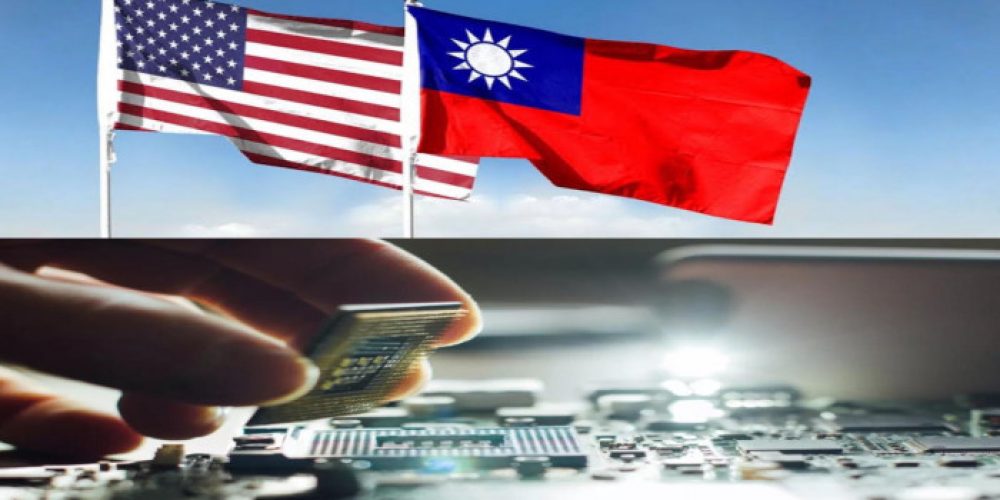
- Taiwan aims to become a strategic AI partner with the United States under a new tariff and investment deal.
- Taiwanese companies agreed to invest about $250 billion in the U.S., including AI, semiconductors and energy sectors.
- The trade agreement reduces tariffs on Taiwanese exports, strengthens bilateral tech cooperation, and awaits parliamentary approval.
Taiwan says it aims to become a strategic partner with the United States in artificial intelligence (AI) under a newly agreed trade and tariff deal that also expands high-tech investment cooperation, Vice Premier Cheng Li-chiun said. The accord, clinched on Thursday, reduces tariffs on a broad range of Taiwanese exports, particularly semiconductors, and directs new Taiwanese investment into the U.S. technology sector, including AI, semiconductors and energy.
Under the agreement, Taiwanese companies have committed to invest about $250 billion in the United States, including $100 billion already committed by Taiwan Semiconductor Manufacturing Company (TSMC) in 2025. The government will also provide credit guarantees to support further U.S. investments. Taipei says this pact will deepen two-way technological ties rather than shift production abroad and help widen Taiwan’s economic footprint in AI innovation.
Taiwan’s push to be seen as an AI strategic partner reflects shared interests with the U.S. in strengthening global semiconductor and advanced technology supply chains amid ongoing geopolitical tensions in the Asia-Pacific. Cheng told reporters that the deal was a win-win for both sides, encouraging reciprocal investment and reinforcing cooperation in emerging tech fields.
The tariff reductions cut general Taiwanese export tariffs from 20% to 15% and eliminate levies on selected goods such as generic pharmaceuticals and aircraft parts, while offering further preferential treatment for chipmakers that invest in U.S. facility construction. The pact is expected to boost U.S. manufacturing capacity for semiconductors and AI equipment, a strategic priority for Washington.
Industry leaders and financial markets reacted positively — Taiwan’s stock market rose on the news as investors welcomed clearer trade rules and expanded access for Taiwanese firms in the U.S. technology ecosystem. The agreement still awaits ratification by Taiwan’s parliament, where some critics worry about its implications for domestic industrial policy and autonomy in semiconductor production.
TSMC, as the world’s largest contract chipmaker, has already been expanding its U.S. footprint with multiple fabrication plants and advanced packaging facilities in Arizona, and the trade deal may accelerate future investments to meet surging demand for AI-related chips. This expansion ties into broader efforts by Taiwanese firms to support U.S. technology supply chains while maintaining strong domestic production capabilities.
The agreement comes amid heightened U.S.–China tech competition, where Taiwan’s semiconductor strength is a key strategic asset for Washington. Taipei’s move to align tariff relief with investment commitments in critical AI and semiconductor infrastructure strengthens its role as a trusted partner in cutting-edge technologies, even as it balances relations with both the U.S. and China.









