

Key Points:
- Mount Nemrut reveals how ancient rulers used monumental stone art to project power and divine authority.
- The Euphrates River shaped settlement, trade, and survival across millennia in southeastern Turkey.
- Modern dams transformed the landscape, preserving some heritage while submerging others forever.
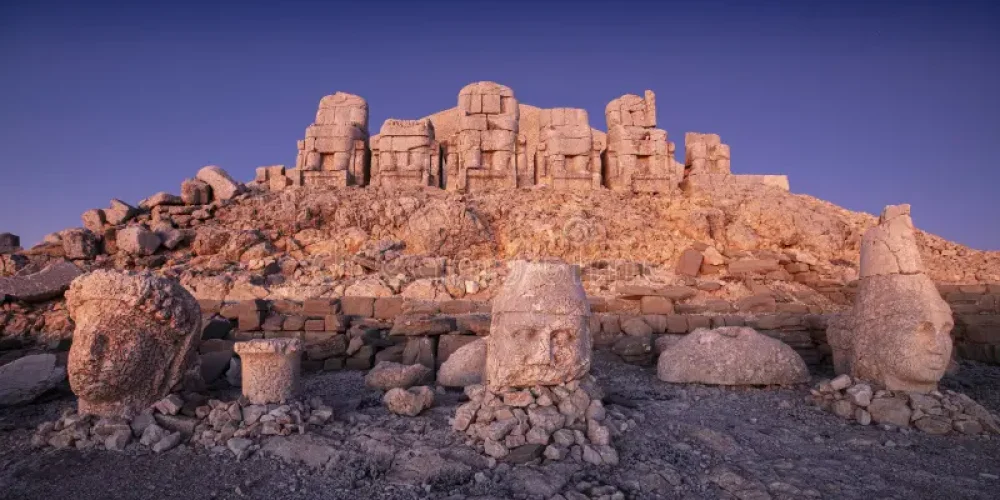
High in southeastern Turkey, Mount Nemrut stands as one of the most striking reminders of ancient ambition. At its summit, colossal stone heads gaze across the horizon. These sculptures reflect how rulers once used landscape and architecture to secure legacy, belief, and authority. The mountain remains a symbol of human desire to shape nature into history.
Mount Nemrut rose to prominence during the first century BC under King Antiochus I of Commagene. He ruled a small but strategic kingdom between powerful empires. Antiochus used religion and art to legitimise his reign, blending Persian and Greek traditions. His monumental sanctuary crowned the mountain as both tomb and sacred stage.
The giant stone statues portray gods, lions, eagles, and the king himself. Each figure conveys protection, power, and divine approval. Their placement on artificial terraces amplified their impact against the vast sky. This elevated setting turned the mountain into a political message visible far beyond its borders.
Below Nemrut flows the Euphrates River, one of the world’s most historically important waterways. The river sustained agriculture, enabled trade routes, and connected early civilisations. Communities settled along its banks for thousands of years, relying on its predictable cycles for survival and prosperity.
The Euphrates shaped not only economies but also belief systems. Water symbolised life, renewal, and divine favour. Ancient cities flourished beside it, drawing strength from its resources. The river linked Mesopotamia, Anatolia, and the Levant, making it central to cultural exchange and regional influence.
In modern times, large dam projects dramatically altered this ancient landscape. Turkey’s Southeast Anatolia Project brought hydroelectric power and irrigation. It also flooded valleys, villages, and archaeological sites. Some ruins disappeared beneath reservoirs, creating permanent losses for historical research and local memory.
The Atatürk Dam stands as one of the world’s largest. While it boosted energy production and agriculture, it submerged parts of the Euphrates valley. Entire communities relocated, and countless heritage sites vanished underwater. The dam illustrates how modern progress often conflicts with historical preservation.
Archaeologists raced against time to document threatened sites before flooding. Rescue excavations saved knowledge, if not physical remains. Museums now display artefacts recovered from doomed settlements. These efforts preserve fragments of history but cannot replace lost landscapes or cultural continuity.
Mount Nemrut survived these transformations largely intact. Its elevation spared it from rising waters. Today, it stands as a UNESCO World Heritage Site. Visitors witness sunrise and sunset ceremonies that reveal how ancient builders aligned stone, light, and belief with extraordinary precision.
The region’s story highlights the fragile balance between development and conservation. Stone monuments endure for centuries, yet water reshapes land within decades. Both forces define human history. The challenge lies in managing progress without erasing the stories carved into landscapes.
Mount Nemrut and the Euphrates together tell a powerful story. They show how rulers, rivers, and modern states reshape geography to serve ambition. Their legacy reminds us that history survives not only in books, but in mountains, rivers, and the choices societies make.









