

Key Points:
- A new scientific study questions whether Europa’s environment can support life.
- Chemical conditions beneath Europa’s ice may limit energy needed for biology.
- Findings could reshape expectations for future missions searching for alien life.
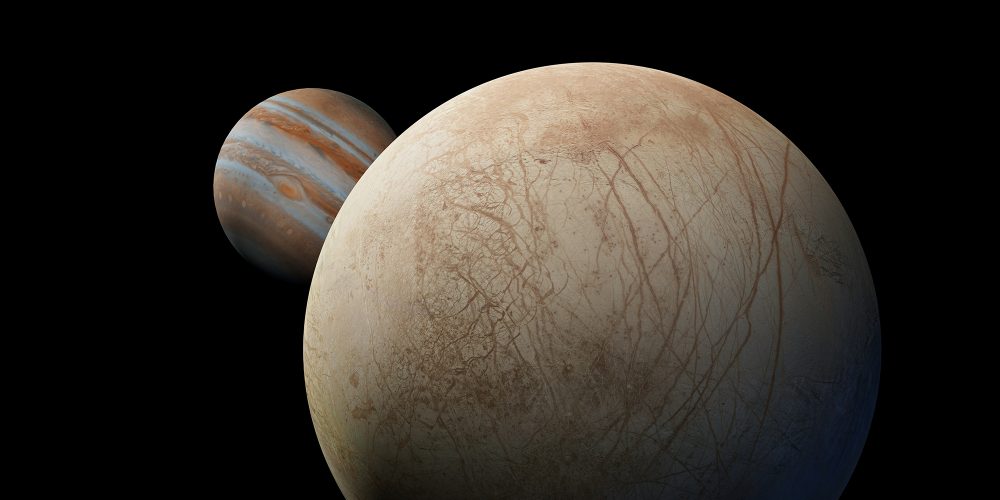
Scientists have long viewed Europa as one of the most promising places to search for life beyond Earth. The icy moon likely hides a vast ocean beneath its frozen surface. However, new research now challenges the idea that this hidden ocean offers the right conditions for living organisms.
The study focuses on Europa’s chemistry rather than the presence of water alone. While liquid water remains essential for life, scientists say it does not guarantee habitability. Life also needs chemical energy sources to survive and evolve. The new findings suggest Europa may lack sufficient chemical reactions to support even simple organisms.
Researchers examined how oxidants form on Europa’s surface and move into its subsurface ocean. These oxidants form when radiation from Jupiter interacts with the moon’s icy crust. In theory, these compounds could provide energy for life if they reach the ocean below.
The study indicates this process may be far less effective than previously believed. Europa’s thick ice shell could block most oxidants from reaching the ocean. Without a steady flow of these chemicals, potential life would struggle to find energy to sustain basic biological processes.
Scientists also analyzed the balance between oxidants and reductants inside Europa’s ocean. Life depends on chemical imbalances that allow energy transfer. The new research suggests Europa’s ocean may be chemically stable, limiting opportunities for such reactions. A stable system sounds favorable, but it may actually reduce biological potential.
The findings do not rule out life entirely. Instead, they highlight uncertainty around Europa’s habitability. Some regions could still offer localized conditions suitable for life. However, the overall environment may be less welcoming than earlier models suggested.
The study arrives as space agencies prepare ambitious missions to explore Europa. These missions aim to study the moon’s ice shell, ocean chemistry, and potential habitability. The new research may influence where scientists focus their search and what signs of life they prioritize.
Experts say this work underscores the complexity of searching for life beyond Earth. Early discoveries often spark optimism, but deeper analysis frequently reveals challenges. Europa remains scientifically valuable, even if its chances of hosting life appear smaller than hoped.
The research also carries broader implications for astrobiology. Many icy moons and distant worlds contain subsurface oceans. This study suggests scientists must carefully assess chemical energy, not just water presence, when judging habitability across the solar system.
Future missions may still find surprises beneath Europa’s ice. New data could reveal active regions where chemical exchange occurs more efficiently. Until then, the study encourages a more cautious approach to claims about alien life.
Ultimately, the findings refine humanity’s understanding of where life might exist. Europa remains a fascinating world shaped by ice, ocean, and intense radiation. While the dream of life there dims slightly, the quest to understand it grows sharper and more scientific.









