

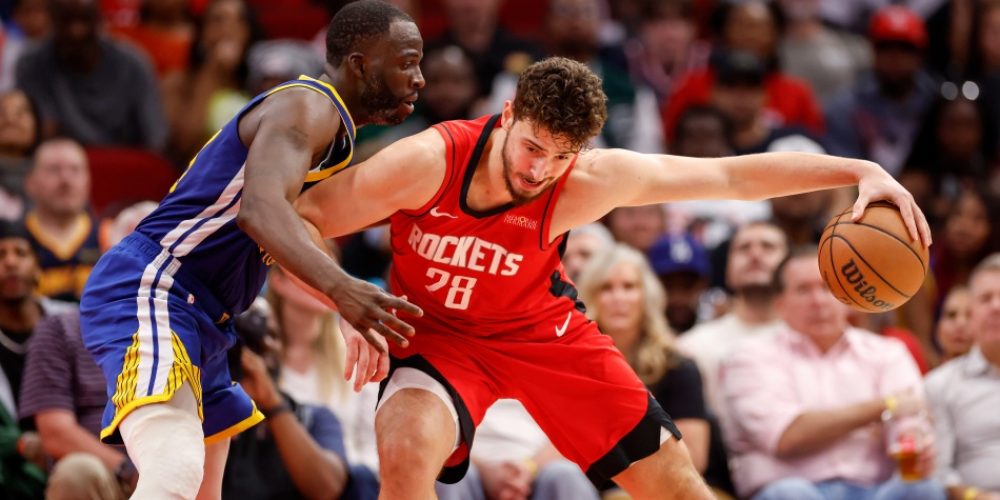
Key Points:
- Alperen Sengun will miss another game as the Houston Rockets host the in-form Phoenix Suns.
- Houston must adjust its offense and interior defense without its All-Star center.
- Phoenix arrives with strong momentum, posing a major challenge for a shorthanded Rockets squad.
The Houston Rockets prepare for a demanding matchup against the Phoenix Suns while continuing without Alperen Sengun. The star center remains sidelined, forcing Houston to reshuffle its rotation again. Sengun’s absence removes a key offensive hub and interior presence as the Rockets attempt to keep pace in a competitive Western Conference landscape.
Sengun’s injury has disrupted Houston’s rhythm on both ends of the floor. He anchors the offense through post scoring, passing, and rebounding. Without him, the Rockets rely more heavily on perimeter creation and fast-paced play. Coaches have emphasized collective effort to compensate for the missing production in the paint.
Houston enters the game seeking consistency after mixed recent results. The team has shown resilience, but late-game execution remains inconsistent. Younger players receive expanded roles, testing their ability to respond under pressure. The coaching staff continues to stress defensive discipline and ball movement to offset Sengun’s absence.
The Phoenix Suns arrive in Houston riding strong momentum. They have surged through recent games with balanced scoring and improved defensive intensity. Phoenix’s offensive flow benefits from quick decision-making and efficient shooting. Their recent form positions them as one of the league’s most dangerous teams entering this matchup.
Phoenix’s success stems from depth and adaptability. Multiple players contribute scoring, reducing reliance on a single star. Their defense forces turnovers and converts stops into transition opportunities. This style creates challenges for opponents lacking interior stability, placing additional strain on Houston’s already adjusted frontcourt rotation.
For the Rockets, containing Phoenix’s offensive tempo stands as a top priority. Houston must limit second-chance points and control rebounds without Sengun. Big men stepping into expanded roles face a difficult task against Phoenix’s physical and skilled front line. Perimeter defenders also carry added responsibility to slow down ball movement.
Offensively, Houston looks toward its guards and wings for scoring bursts. Increased spacing and quick passing aim to create driving lanes and open shots. The Rockets hope that energy and pace can disrupt Phoenix’s defensive rhythm. Efficient shooting becomes essential to keep the contest competitive.
This game also carries broader implications for Houston’s season trajectory. Prolonged absences test roster depth and mental toughness. How the Rockets respond without Sengun offers insight into their long-term growth. Strong performances from supporting players could build confidence despite short-term challenges.
Phoenix views the matchup as an opportunity to sustain momentum. Winning against a young, hungry team reinforces their push toward higher playoff positioning. The Suns remain focused on execution rather than opponent circumstances, aiming to impose their style early and maintain control throughout the game.
As tip-off approaches, attention centers on Houston’s adjustments and Phoenix’s form. Sengun’s continued absence shapes the storyline, but execution will decide the outcome. The contest promises a revealing test for both teams at contrasting stages of their seasons.









