

The United States government is rolling out a major funding initiative aimed at reshaping healthcare access in rural communities, with every state set to receive at least $147 million in 2026. Under a new rural health transformation program, total funding could reach as high as $281 million per state, depending on need and performance.
The initiative, introduced by the Trump administration, is designed to address long-standing disparities in rural healthcare. Officials say outcomes in many rural areas have declined for decades, with geography increasingly influencing life expectancy and access to medical services.
The program was authorized through the One Big Beautiful Bill Act and commits $50 billion over five years, from fiscal 2026 through 2030. Each year, $10 billion will be distributed among all 50 states, making it one of the largest federal investments ever targeted specifically at rural healthcare systems.
According to the Centers for Medicare & Medicaid Services, half of the annual funding will be divided equally among states. The remaining $25 billion over five years will be allocated based on factors such as the condition of rural health systems, policy decisions made at the state level, and specific improvement plans proposed by states.
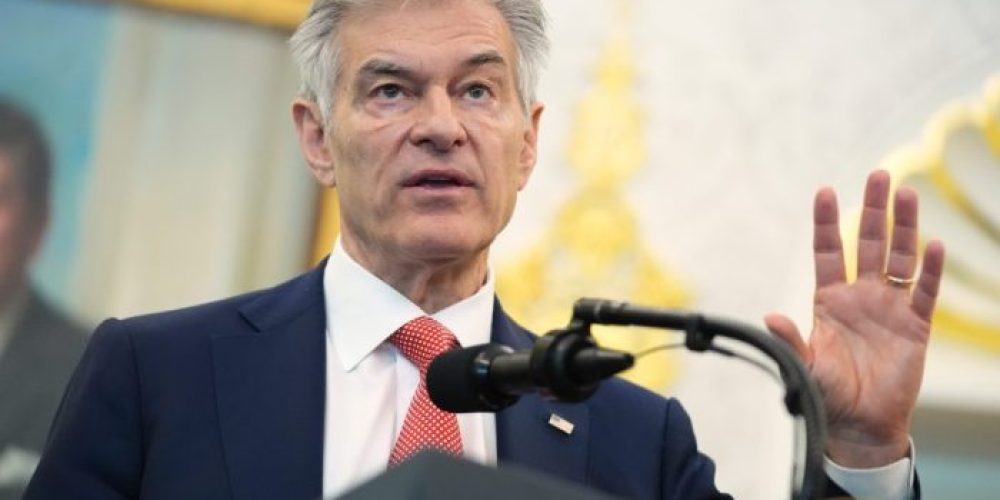
Mehmet Oz, administrator of CMS, said the program is designed to improve care delivery without relying on expensive new hospital construction. Instead, the focus is on strengthening existing systems, expanding access, and supporting innovative approaches that can quickly improve outcomes.
He emphasized that the funding is not meant to cover existing debts or operating shortfalls. Rather, it aims to correct structural problems that have limited progress in rural healthcare for years. States will be expected to show measurable improvements and follow through on commitments outlined in their applications.
Federal officials made clear that accountability is central to the program. States that fail to meet performance benchmarks or do not carry out promised reforms could see funding reduced or clawed back. This performance-based approach is intended to ensure the money leads to real and lasting improvements rather than short-term fixes.
The rollout comes at a politically sensitive time for the administration. President Donald Trump faces declining approval ratings, with inflation and cost-of-living pressures remaining top concerns for voters ahead of the next congressional elections. Rural voters played a major role in Trump’s 2024 election victory, making the program particularly significant for his political base.
Rural communities accounted for more than a third of Trump’s voters in the last election, compared with a much smaller share for his Democratic opponent, according to recent survey data. Administration officials argue the new funding reflects a commitment to those communities, especially as healthcare access continues to shrink in many rural regions.
The initiative also arrives amid broader healthcare debates in Congress. Lawmakers have not yet extended enhanced Affordable Care Act premium subsidies, a move that could raise insurance costs for many Americans starting in early 2026. Moderate Republicans, whose support is critical in a closely divided Congress, are under increasing pressure as these issues converge.
If implemented effectively, the rural health transformation program could reshape care delivery for millions of Americans living outside urban centers. Supporters say the funding has the potential to improve access, strengthen local systems, and reduce long-standing health gaps tied to geography. Critics, however, will be watching closely to see whether states meet expectations and whether the promised reforms deliver meaningful results.









