

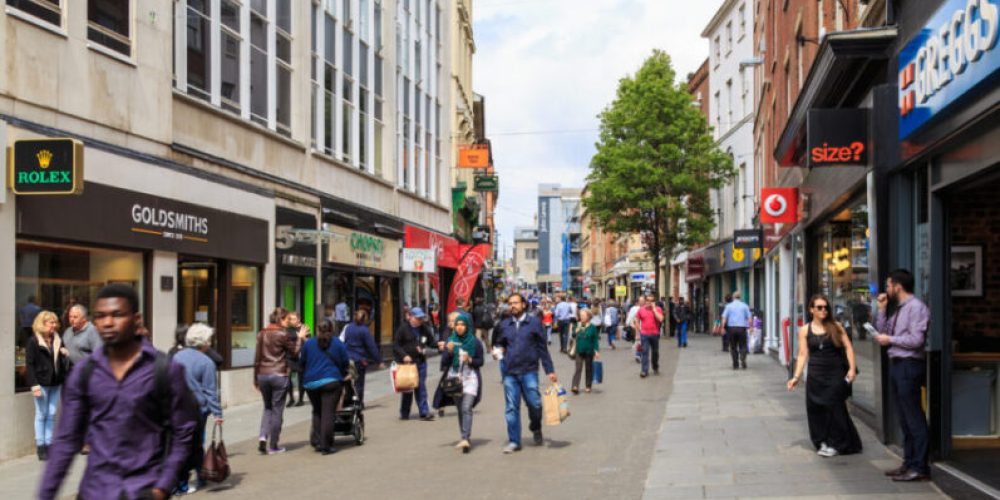
UK retail sales unexpectedly declined in November, raising concerns about consumer confidence heading into the key holiday shopping period. Official figures show sales volumes fell by 0.1%, contrary to forecasts that had predicted growth driven by Black Friday promotions and festive demand. This marks the second straight month of contraction in retail activity, underscoring ongoing caution among British shoppers.
Rather than lifting sales, major promotional events in late November failed to deliver the usual boost in consumer spending. Analysts suggest that uncertainty over the broader economic outlook, including speculation around government budget changes and cost-of-living pressures, weighed on shoppers. Retailers reported that footfall remained weak, especially in supermarkets and online outlets, contributing to the overall drop in sales volumes.
Online retail, which has been a growth driver in recent years, also saw sales decline. Meanwhile supermarkets experienced a fourth consecutive month of falling sales, continuing a longer-term trend of squeezed food and essentials spending. However, some segments such as department stores and non-food outlets posted modest gains, indicating that discounting and product mix can still attract buyers even in a subdued environment.
Business sentiment among retailers has also weakened. A survey from the Confederation of British Industry (CBI) showed that annual sales volumes were falling at their fastest rate in years, and expectations for next month were dire. Retailers involved in the survey reported that consumer confidence remained low and that they did not expect a significant uplift in trading conditions in early 2026.
The broader economic picture shows mixed signals. Despite weak consumer spending, public sector borrowing in November fell to its lowest level for that month in four years, thanks largely to stronger tax receipts. Government borrowing reached around £11.7 billion, aided by higher income tax, VAT, and corporation tax revenues. This narrower deficit suggests some improvement in public finances after months of tight fiscal conditions.
Even though borrowing was lower than in the same month last year, it still exceeded economists’ predictions. Over the current fiscal year, total borrowing remains elevated compared with 2024, reflecting ongoing pressures on government finances from spending commitments and economic uncertainties.
The discrepancy between falling consumer spending and a relative improvement in borrowing highlights the complexity of the UK’s economic outlook. On one hand, households are showing reluctance to increase discretionary spending, which could dampen GDP growth. On the other, stronger tax receipts signal that parts of the economy are still generating income robustly enough to support government revenue.
Market reactions to the data have been muted. Stock indices such as the FTSE 100 have shown resilience, approaching record highs as investors look beyond immediate data to broader trends like lower inflation and expectations of future interest rate cuts. However, the ongoing struggle in the retail sector suggests that the benefits of broader market optimism have yet to fully translate into everyday consumer behaviour.
Economists warn that muted retail sales in November could foreshadow a slow start to 2026 for the UK economy if consumers continue to rein in spending. With inflation gradually easing and interest rates relatively low, the outlook for consumer demand remains dependent on confidence, wage growth, and broader fiscal measures.
Overall, the combination of weakened retail performance and evolving public finances paints a picture of an economy in transition. Policymakers and businesses alike will be watching closely as the crucial holiday season unfolds and the new year begins.









