

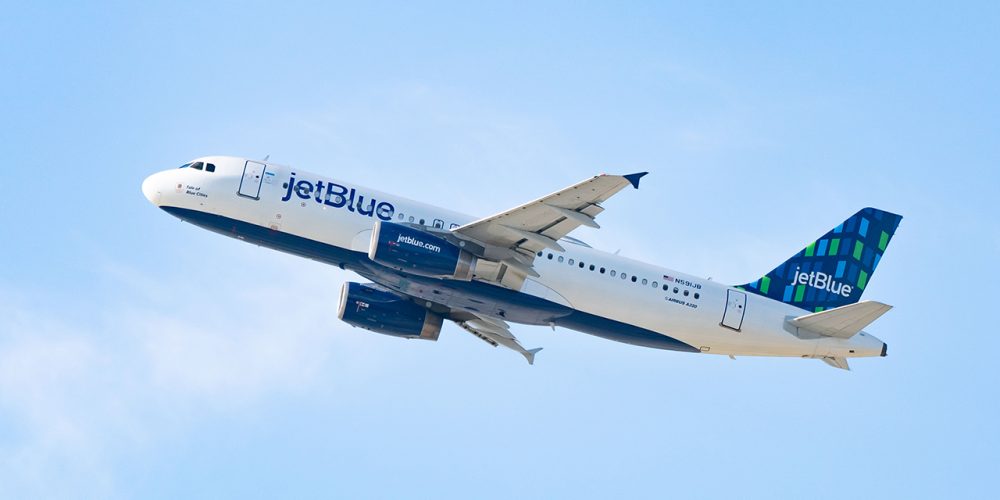
A JetBlue passenger aircraft narrowly avoided a catastrophic mid-air collision with a U.S. military plane on Friday. JetBlue Flight 1112 had just departed from the Caribbean island of Curaçao when the terrifying encounter occurred. The New York-bound Airbus A320 was climbing toward its cruising altitude when a military tanker suddenly crossed its path. Pilots reported that the aircraft passed within two to five miles of their position at a nearly identical altitude.
The commercial crew had to take immediate evasive action to ensure the safety of everyone on board. They abruptly halted their climb and initiated a descent to create necessary separation. In a chilling air traffic control recording, the JetBlue pilot described the situation as “outrageous.” He noted that the military jet was operating without its transponder turned on. This electronic device is essential because it transmits a plane’s location and altitude to radar systems.
Without an active transponder, the Air Force jet was essentially invisible to civilian air traffic controllers. The controller in Curaçao confirmed he had no “scope” on the military aircraft during the incident. This lack of visibility forced the JetBlue crew to rely on visual spotting and internal sensors to avoid a crash. The military plane was later identified as a KC-46 air-to-air refueling tanker.
Following the near-miss, the military aircraft reportedly continued its flight into Venezuelan airspace. This incident occurs during a period of heightened regional tension and increased U.S. military presence in the Caribbean. In response to the close call, the FAA issued an “extreme caution” advisory for pilots in the area. This warning highlights a growing trend of unidentified military operations interfering with busy commercial flight corridors.
U.S. Southern Command acknowledged the incident and stated that a formal review is currently underway. They emphasized that their aircrews are highly trained professionals who follow strict safety protocols. However, aviation safety experts have expressed deep concern over the lack of communication between military and civilian flights. They warn that mixing “invisible” military assets with passenger jets creates an unacceptable risk to public safety.
JetBlue confirmed that it has filed a formal report with federal authorities regarding the safety breach. The airline praised its flight crew for their quick thinking and adherence to emergency procedures. Despite the harrowing experience, Flight 1112 eventually reached its destination at JFK International Airport without further issue. This event serves as a stark reminder of the fragile balance between military operations and global civil aviation security.









