

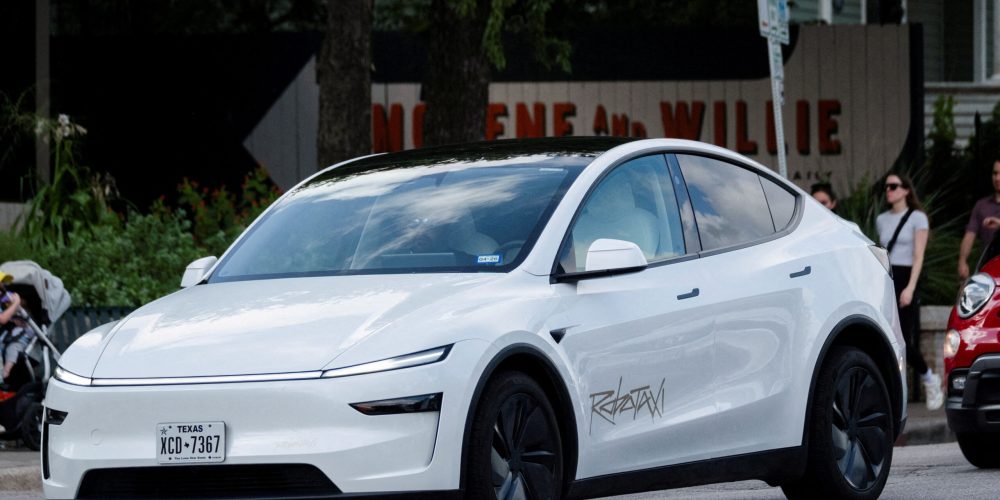
Tesla has taken a major step toward expanding its transportation business after receiving official approval to launch a ride-hailing service in Arizona. The permit marks the company’s first green light to operate such a service in the United States and signals CEO Elon Musk’s broader goal to transform Tesla’s fleet into an autonomous ride-hail network.
The Arizona Department of Transportation granted Tesla a Transportation Network Company (TNC) permit, allowing the automaker to operate a service similar to Uber or Lyft. The approval enables Tesla to begin offering paid rides through its vehicles, although it remains unclear when the service will start or whether the early operations will use human drivers, autonomous technology, or a mix of both.
Tesla has been promoting the idea of a robotaxi network for several years, claiming that its Full Self-Driving (FSD) software would eventually power fully autonomous vehicles. However, the system still requires driver supervision, and regulators have not approved fully driverless Tesla cars. The Arizona permit does not grant autonomous operating rights, but it does allow Tesla to begin building the business model around ride-hailing.
Arizona has been a welcoming environment for autonomous and emerging mobility services. Companies such as Waymo and Cruise have already tested and operated driverless vehicles in the state. Tesla’s entry adds new competition, especially as the company attempts to catch up with rivals that already run robotaxi programs. While Tesla continues to promote its software as the path to autonomy, other companies rely more heavily on sensor-rich hardware like lidar and radar.
Tesla recently announced its “Tesla Network,” a feature inside the Tesla app that includes a ride-hailing option. Musk said during the company’s last earnings call that this network would support both robotaxi operations and a shared mobility service where Tesla owners could rent out their vehicles. The Arizona approval now gives Tesla a regulatory foundation to implement that vision in at least one state.
Industry analysts note that the move could open a new revenue stream for Tesla at a time when vehicle sales growth has slowed. Ride-hail services could generate recurring income and strengthen Tesla’s software ecosystem, which has become central to the company’s long-term strategy.
The Arizona approval also allows Tesla to collect real-world data from ride-hailing operations. This data is critical to improving its FSD system, which Musk claims will reach higher autonomy levels with broader deployment. Offering a ride service also places more Tesla vehicles on the road for extended hours, providing additional training data for the company’s AI models.
For Arizona residents, Tesla’s entry into the ride-hailing market may lead to more transportation choices and potentially lower costs. However, the company has not disclosed pricing, availability, or how many vehicles it plans to deploy at launch.
Tesla still faces regulatory hurdles in other states, especially those with strict autonomous vehicle rules. But the Arizona permit marks an important milestone in Musk’s plan to build a global robotaxi network and reshape mobility using Tesla’s software-driven approach.
Related News : Tesla to Unveil ‘Cybercab’ at Shanghai Expo in Early November









