

Authorities in Delhi attempted cloud seeding this week to fight the city’s severe air pollution, but the trial did not produce rain due to low moisture in the air.
Cloud seeding involves releasing particles like silver iodide into clouds to stimulate rainfall. On Tuesday, a Cessna aircraft released silver iodide and sodium chloride over several parts of the city. This was Delhi’s first such attempt in more than 50 years.
Despite the effort, no rain fell. However, scientists from the Indian Institute of Technology (IIT) Kanpur said the trial still helped reduce air pollution slightly.
Smog crisis in Delhi
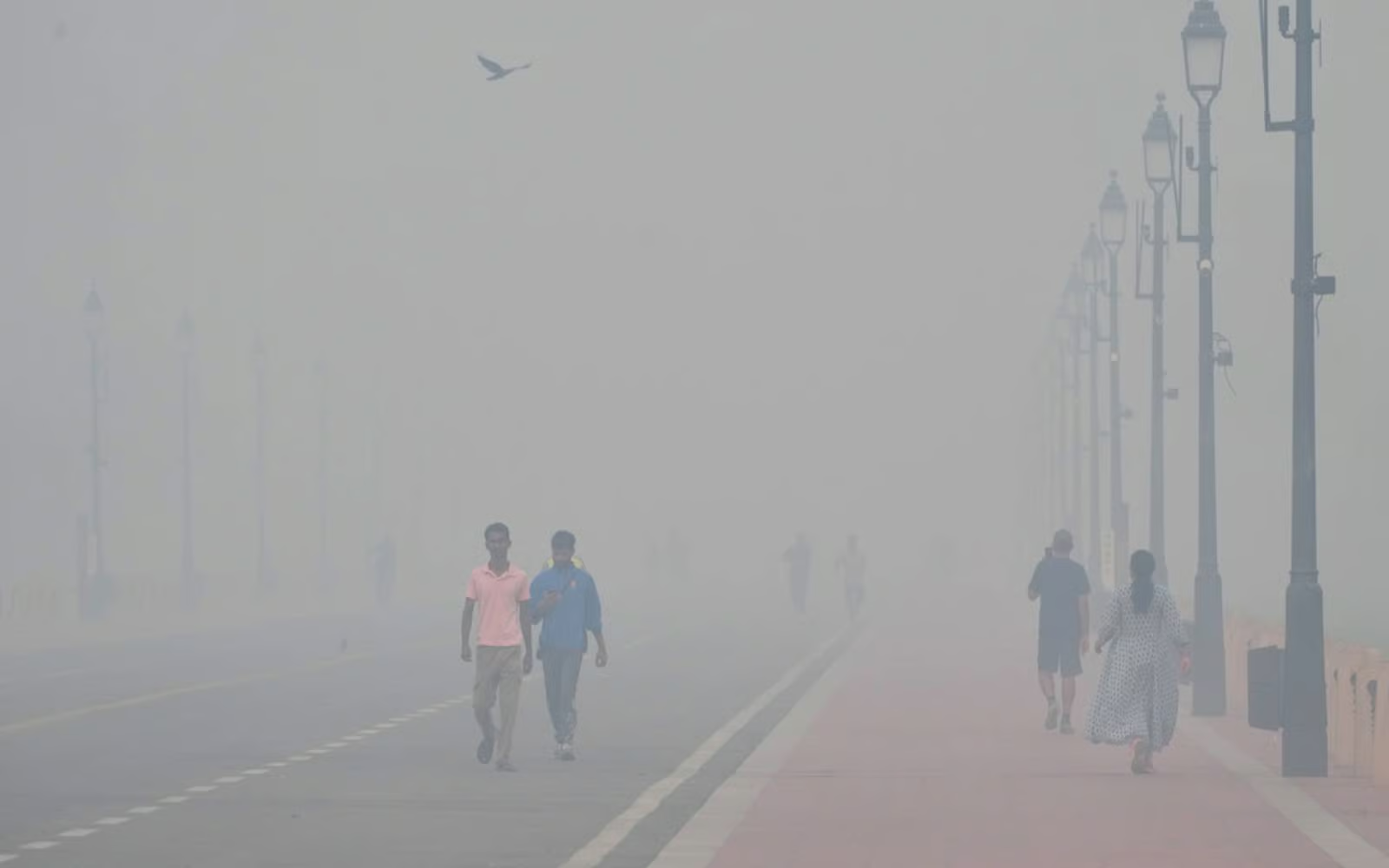
Delhi has been battling one of its worst smog episodes of the year. The Air Quality Index (AQI) has stayed between 300 and 400 for over two weeks — almost 20 times the safe limit. Thick toxic haze continues to cover the city, forcing authorities to try emergency measures.
IIT Kanpur said that while there was no rainfall, sensors detected a drop in particulate matter levels after the seeding attempt. According to the team, even limited moisture conditions allowed for some improvement in air quality.
Not a long-term fix
Experts caution that cloud seeding is not a permanent solution. IIT Kanpur director Manindra Agarwal said the method depends heavily on atmospheric moisture, which was too low during the trial.
“One measure of success is if it rains, which certainly did not happen,” he said. “We will continue efforts when cloud moisture rises again.”
Delhi’s Environment Minister Manjinder Sirsa confirmed plans to attempt cloud seeding again in the coming weeks.
A costly and uncertain solution
Cloud seeding was previously considered in Delhi in 2023 but was delayed due to legal approvals. Scientists say the technology is expensive and has mixed success globally.
While countries like China have reported positive results — especially during major events like the Olympics — cloud seeding’s effectiveness varies and remains hard to measure. It requires the right humidity and cloud conditions to work.
What’s next for Delhi?
Delhi usually sees severe pollution during winter due to vehicle emissions, industrial activity, and crop-burning in nearby states. Officials say cloud seeding can offer temporary relief, but long-term solutions like cleaner transport and reducing crop burning remain essential.
With pollution levels still hazardous, authorities are expected to continue exploring emergency measures, including more cloud seeding trials when atmospheric conditions improve.









