

KEY POINTS
- FIFA President Gianni Infantino published a scathing open letter accusing media commentators and critics of spreading hate and false narratives following the 2026 World Cup.
- Infantino defended governing body decisions, including disciplinary rulings and host visa policies, while labeling the tournament a total organizational success.
- European football authorities and national associations continue to raise ethical concerns regarding political influence and governance during the North American event.
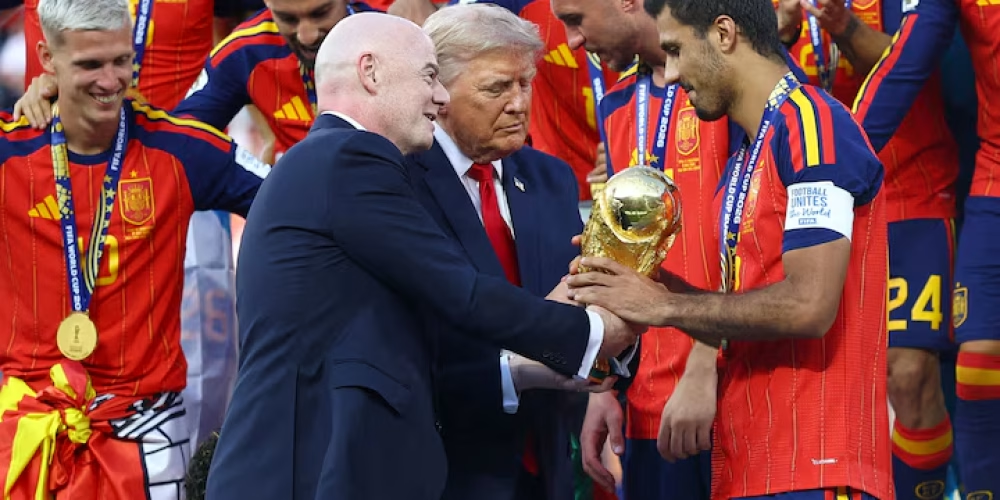
FIFA President Gianni Infantino launched an explosive defense of the 2026 World Cup on Monday, publishing an open letter that directly accused media outlets, commentators, and institutional critics of spreading hostility and false narratives. Writing in the wake of Spain’s tournament victory across host venues in the United States, Canada, and Mexico, the head of world soccer’s governing body claimed detractors had willfully ignored the global celebration enjoyed by millions of attending fans.
What You Need to Know
The 2026 FIFA World Cup marked the largest edition in the tournament’s history, expanding to 48 national teams and utilizing 16 host cities across three North American nations. Despite drawing massive stadium attendance and global television viewership, the six-week event was shadowed by intense administrative, political, and operational friction. Media scrutiny focused heavily on soaring ticket costs, complex travel logistics, strict border control policies, and unprecedented governance decisions made during the knockout stages.
Among the primary flashpoints was the decision by FIFA’s disciplinary framework to suspend an automatic one-match ban for United States forward Folarin Balogun following a red card received during group play. The intervention, which occurred after high-level political exchanges involving host country leadership, drew fierce backlash from international football bodies. UEFA leadership and European federations publicly questioned the integrity of the ruling, with the Belgian and Norwegian football associations signaling potential formal ethics challenges regarding administrative overreach.
Additionally, diplomatic and logistical complications marred the lead-up to several fixtures. A Somali referee holding valid credentials was initially barred from entering the United States under strict entry protocols, while the Iranian national delegation faced severe movement restrictions that forced them to relocate training operations near the Mexican border town of Tijuana.
FIFA President Defends Tournament Execution and Disciplinary Rulings
In his lengthy statement released across official digital channels, Infantino brushed aside structural complaints and labeled the tournament an unqualified success that operated with total security and zero major public safety incidents. Directly targeting journalists and online commentators, the 56-year-old administrator argued that media coverage remained overly fixated on controversy rather than the sporting specter staged on the field.
Infantino specifically addressed the controversial disciplinary interventions that dominated international headlines during the knockout rounds. He asserted that overturning or adjusting red card suspensions is a routine occurrence within domestic leagues worldwide, arguing that European critics applied a double standard when evaluating FIFA’s operational choices. Addressing diplomatic hurdles surrounding participant visas, Infantino pointed to the peaceful participation of nations experiencing severe geopolitical friction as proof of football’s ability to transcend international conflicts.
“To those behind their pens and papers, behind their screens spreading hate and false rumors, I want to say that while you are sitting behind, we at FIFA are on the front lines organizing, working hard, and delivering the best show in the world,” Infantino wrote. He maintained that host governments, law enforcement agencies, and local organizing committees executed a flawless security apparatus across all 16 host venues.
What This Means for Americans
For American sports fans and international audiences who attended matches or followed the tournament across North America, Infantino’s combative rhetoric highlights the ongoing culture clash between global sports governance and traditional media scrutiny. While millions of matchgoers experienced memorable festivities across host metropolitan areas, the administrative fallout underscores how deeply political and commercial interests intertw during mega-sporting events staged on U.S. soil.
The operational disputes surrounding tournament access, ticket pricing structures, and political lobbying setting precedent during this World Cup will likely shape future international sporting events hosted in the United States. As North America prepares to host upcoming global events, American venue operators and municipal leaders must navigate increasingly complex governance frameworks dictated by international governing bodies operating under public scrutiny.
NCN Analysis
Gianni Infantino’s open letter marks a dramatic departure from traditional diplomatic posturing by global sports administrators, signaling a deliberate strategy to bypass traditional journalistic channels in favor of direct digital messaging. By framing legitimate administrative and ethical inquiries as unprovoked hostility, FIFA leadership is attempting to consolidate its authority and protect the tournament’s commercial legacy following a tumultuous six weeks.
However, the fallout from this World Cup is far from resolved. European member associations, led by UEFA representatives, are unlikely to quiet their objections regarding disciplinary interventions and institutional transparency. As legal and ethical reviews proceed through formal channels, FIFA faces prolonged friction with key European stakeholders over the governance standards that will dictate future world championship cycles.
The friction exposed during the 2026 tournament demonstrates that expanding the World Cup’s commercial footprint brings heightened accountability that cannot simply be dismissed through public relations statements.
Reported by the NCN Editorial Team









