

KEY POINTS
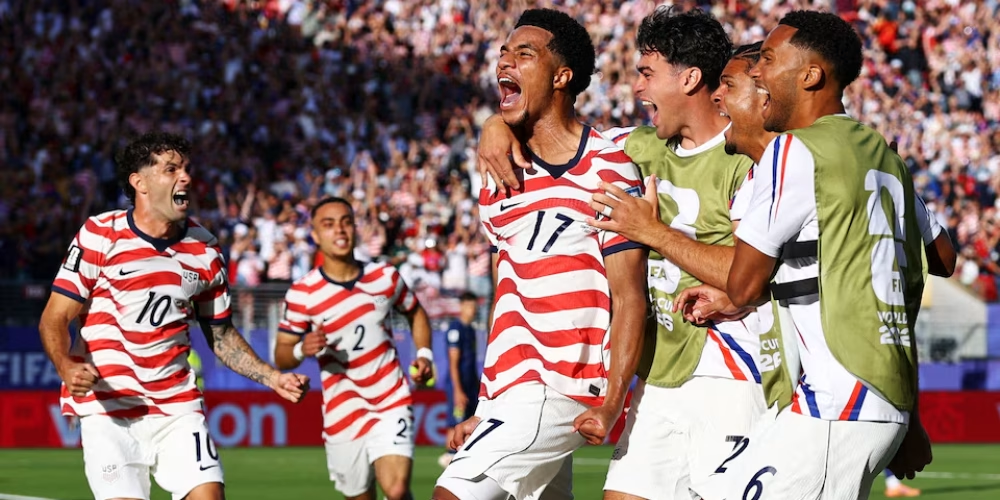
- The United States men’s national soccer team will battle Belgium in a highly anticipated Round of 16 match at Seattle Stadium.
- Head coach Mauricio Pochettino must adjust his attacking strategy due to the critical suspension of starting forward Folarin Balogun.
- Driven by strong performances against Paraguay and Australia, domestic fan optimism has risen significantly ahead of the single-elimination tie.
A different kind of big-game energy is coming to the Pacific Northwest as the United States prepares to square off against Belgium for a coveted spot in the tournament quarterfinals. Playing on home soil, the American squad carries rapidly expanding expectations into a high-stakes meeting with one of Europe’s most battle-tested international lineups. The upcoming single-elimination fixture will test the tactical limits of a modernizing domestic program facing its ultimate contemporary competitive trial.
What You Need to Know
The historical relationship between these two footballing nations is deeply rooted in a memorable international tournament encounter from over a decade ago. In 2014, an exceptionally experienced Belgian squad brought a heartbreaking conclusion to the American campaign during a grueling extra-time battle in Brazil. That dramatic fixture cemented a lingering sense of unfinished business within domestic soccer culture, serving as a symbolic benchmark for the program’s overall growth and competitive ambitions.
Entering this expanded global tournament, standard expectations among local media and fans generally positioned a Round of 16 appearance as a completely acceptable, respectable target for the co-hosts. However, the tactical influence of new manager Mauricio Pochettino has quickly transformed public sentiment across the host nation. By instilling a disciplined defensive identity and an aggressive transition philosophy, the technical staff has successfully altered how the squad views its own competitive celling on the international stage.
The road to Seattle has seen the home side display significant mental fortitude, navigating difficult tactical stretches against aggressive international opponents. Convincing results during the initial group stage provided a massive foundation of momentum, which was further solidified during a hard-fought shutout victory over Bosnia and Herzegovina in the Round of 32. Even after playing a substantial portion of that knockout match a man down, the team managed to expand its lead, validating their tactical progression.
Navigating Key Lineup Adjustments
The primary challenge facing the American technical staff centers on a mandatory offensive recalibration ahead of the opening whistle. Dominant striker Folarin Balogun, who leads the squad with three goals during the current tournament run, is completely unavailable due to a automatic suspension resulting from a controversial red card in the previous round. This critical absence forces a structural adjustment in the final third, shifting the goal-scoring burden onto emerging Eredivisie standout Ricardo Pepi.
Tactically, the home side will lean heavily on the creative vision of veteran winger Christian Pulisic, who returned to the starting lineup following a brief calf injury recovery period. Pochettino’s structured defensive formation, which utilizes three central defenders including veteran Tim Ream and standout Chris Richards, must remain completely organized for ninety minutes. This backline will face the daunting task of neutralizing a potent, albeit aging, European attack that excels at exploiting sudden structural errors.
Belgium arrives at this knockout stage carrying the undeniable pressure of a closing competitive window for their historic “Golden Generation.” Featuring globally recognized icons like orchestrator Kevin De Bruyne and powerful target man Romelu Lukaku, the roster possesses unparalleled tournament experience but has lacked structural cohesion. The European side narrowly escaped elimination in the previous round, capitalizing on a late regulatory surge and an extra-time penalty decision to survive an aggressive challenge from Senegal.
Why This Matters
The surging popularity and competitive relevance of the national team carries massive economic implications for the entire sports business ecosystem within the United States. High-stakes knockout matches taking place in primary domestic markets act as an incredible promotional vehicle for domestic soccer infrastructure, driving record-breaking television ratings and unprecedented digital streaming engagement. This immense public focus translates directly into elevated enterprise valuations for domestic clubs, expanding corporate sponsorships, and increased youth participation across the country.
Furthermore, the distinct atmosphere generated inside major NFL venues during these international matches showcases the unique commercial viability of American soccer culture to global investors. The ability of domestic markets to host highly profitable, safe, and wildly enthusiastic international events permanently alters how global governing bodies distribute future premier sporting events. A deep tournament run by the home nation provides direct financial validation for the massive infrastructure investments made by host cities over the past decade.
NCN Analysis
From a strategic perspective, the match represents a fascinating clash of generational trajectories and physical conditioning. The American squad enters the fixture with the clear advantage of youthful energy, high-pressing capabilities, and the overwhelming psychological backing of a raucous home crowd. If Pochettino’s defensive block can successfully limit Kevin De Bruyne’s passing lanes during the initial phases, the home side can effectively dictate the physical tempo of the entire encounter.
Conversely, the team must avoid tactical impatience in the attacking third, as an experienced Belgian midfield is uniquely adept at punishing naive defensive over-extensions. The forced integration of Ricardo Pepi into the starting lineup introduces an element of tactical unpredictability that could disrupt the opponent’s defensive preparation. Readers should watch closely how the American midfield manages transitions during the opening twenty minutes, as controlling central space will dictate who advances to the final eight.
The upcoming battle offers the home side an ideal platform to step completely out of past shadows and define their own modern legacy.
Reported by the NCN Editorial Team









