

KEY POINTS
- Cody Gakpo and his partner Noa van der Bij suffered the devastating loss of their unborn child just days before a critical knockout match.
- Despite the profound personal tragedy, Gakpo chose to stay with the Netherlands squad and scored a crucial second-half goal against Morocco.
- Team manager Ronald Koeman and captain Virgil van Dijk praised the striker’s immense mental strength and maturity during the tournament.
The emotional weight carried by professional athletes often remains entirely hidden behind the bright stadium lights and the deafening roar of thousands of fans. For Dutch forward Cody Gakpo, the incredibly high stakes of the 2026 FIFA World Cup were suddenly overshadowed by an unimaginable personal tragedy just days before a crucial single-elimination knockout fixture. When Gakpo found the back of the net during Monday’s intensive Round of 32 clash, his overwhelming outpouring of emotion signaled to billions of viewers that certain life events completely transcend the boundaries of competitive sport.
What You Need to Know
The 2026 FIFA World Cup across North America has delivered countless dramatic storylines on the pitch, but none have been as deeply humanizing or somber as the recent circumstances surrounding the Netherlands national football team. Over the weekend, Noa van der Bij, the long-time partner of Liverpool and Netherlands star striker Cody Gakpo, shared the heartbreaking news on social media that the couple had suffered the tragic loss of their unborn child during pregnancy. The devastating announcement came at a moment when the entire Dutch squad was intensely preparing for their high-stakes knockout match against a formidable Moroccan team at the stadium in Guadalupe, Mexico.
Faced with a profound loss that would completely derail most individuals, Gakpo chose to remain with his teammates at their tournament operational base located near Kansas City. The team staff, coaching network, and leadership immediately rallied around the 27-year-old forward, granting him total flexibility, privacy, and compassionate leave. In professional sports, where the immense pressure to perform can sometimes blind organizations to the core human needs of their players, the Dutch management explicitly prioritized empathy, offering Gakpo the space to grieve while completely respecting his ultimate decision regarding his participation in the upcoming match.
Historically, major international tournaments like the World Cup demand total concentration, often isolating players from external realities to maintain a focus on winning. However, the modern sporting landscape is increasingly recognizing the severe psychological toll that personal crises can take on elite competitors. The collective embrace of Gakpo by the entire Dutch camp highlights a shifting culture in global football, where player welfare and emotional support are beginning to match the tactical and physical preparations required for elite athletic success.
Cody Gakpo Emotional World Cup Goal
The heartbreaking narrative reached a poignant peak on Monday evening when the Netherlands faced Morocco in a highly anticipated Round of 32 battle. Gakpo started the match, carrying both the tactical hopes of his nation and a profound emotional burden. After an intense and closely contested first half where the Dutch struggled to break through Morocco’s low defensive block, the match exploded into life in the second half. Gakpo provided a moment of absolute brilliance, scoring a crucial goal in the 72nd minute to give his side a vital breakthrough and showcasing the immense talent that has made him a household name globally.
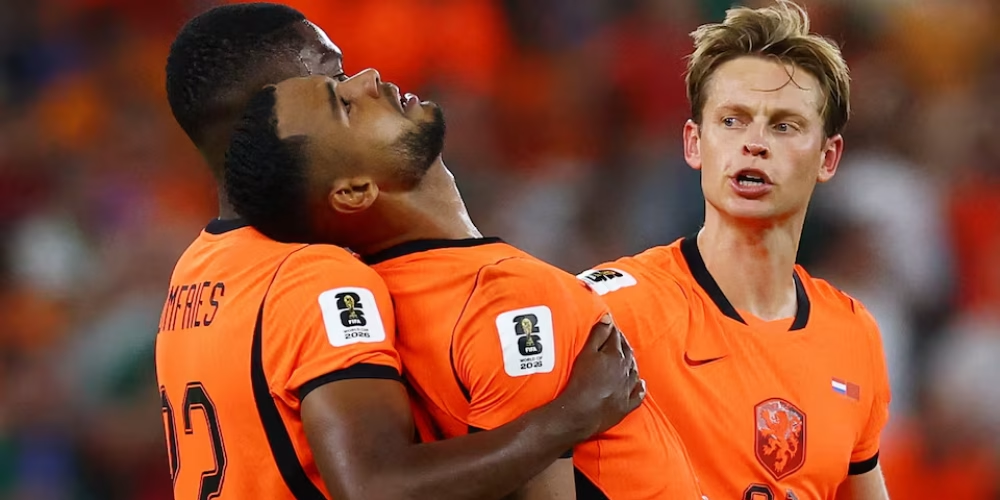
The ensuing celebration was a raw, unfiltered release of grief, resilience, and dedication. Teammates instantly swarmed the forward, offering a physical wall of support that extended far beyond standard goal-scoring congratulations. Though Morocco would eventually equalize through a dramatic regular goal by Issa Diop in the 91st minute and secure progression via a tense 3-2 penalty shootout victory after a 1-1 tie through extra time, Gakpo’s individual performance stood out as the defining symbol of the match. He played 113 grueling minutes, executing critical passes and testing the Moroccan defense until he was finally substituted late in overtime.
Following the heartbreaking exit from the tournament, both team manager Ronald Koeman and captain Virgil van Dijk spoke extensively about Gakpo’s incredible fortitude. Koeman emphasized that the coaching staff had done everything within their power to assist the striker, noting that Gakpo handled the immense sorrow with unbelievable grace and never once asked to abandon the squad. Van Dijk echoed these sentiments, publicly stating that football instantly becomes secondary when a tragedy of this magnitude occurs. The captain expressed his utmost respect for how Gakpo and his family navigated the devastating situation, labeling his teammate’s approach as exceptionally mature and adult.
Why This Matters
For sports enthusiasts and general readers across the United States, Ireland, Sweden, and the global community, this poignant story serves as a stark reminder of the human beings beneath the jerseys. Elite athletes are frequently treated as bulletproof entertainers or statistical assets in fantasy leagues and sports broadcasts, leaving little room for the recognition of their personal vulnerabilities. Gakpo’s willingness to perform amidst profound grief, coupled with his team’s public prioritization of his mental health, sets a powerful precedent for how modern corporate and athletic institutions should handle tragedy.
Furthermore, this situation illuminates the evolving narrative around mental health and emotional transparency in men’s professional sports. For decades, male athletes were expected to suppress personal trauma under the guise of grit and stoicism. Seeing high-profile international stars like Gakpo and Van Dijk openly address pregnancy loss and emotional suffering helps dismantle long-standing stigmas. This story resonates deeply with families worldwide who have experienced similar silent losses, providing a visible, global platform to a topic that is frequently kept in the shadows.
NCN Analysis
From an editorial perspective, the Netherlands’ departure from the 2026 World Cup will be analyzed through a tactical lens by football purists, but the real legacy of this squad lies in its cultural maturity. Manager Ronald Koeman’s defensive approach against Morocco drew criticism from some analysts after the penalty shootout loss, yet his management of the locker room during an internal crisis deserves immense praise. The unity demonstrated by the Dutch squad proves that creating a supportive, psychologically safe environment does not detract from competitive drive; rather, it allows an athlete to channel their emotions into a remarkable performance under the worst possible conditions.
Moving forward, football governing bodies like FIFA and domestic leagues around the world must look at the Dutch team’s handling of Gakpo’s situation as a blueprint for player care. As soccer calendars become increasingly congested and commercial demands amplify the pressure on players, institutional mechanisms for personal leave and mental health support will become vital. Audiences should watch how Gakpo is integrated back into his club duties at the domestic level, as the soccer community continues to navigate the delicate balance between professional entertainment and fundamental human empathy.
Ultimately, the match in Guadalupe demonstrated that while victories on the pitch are fleeting, the resilience of the human spirit in the face of profound grief leaves a permanent mark on the world.
Reported by the NCN Editorial Team









