

KEY POINTS
- Initial local disappointment surrounded the regional tournament schedule due to a perceived lack of high-profile soccer superpowers.
- Exceptional fan attendance and lively stadium atmospheres have turned the fixtures into a massive local success.
- Silicon Valley infrastructure seamlessly accommodated thousands of international and domestic sports tourists.
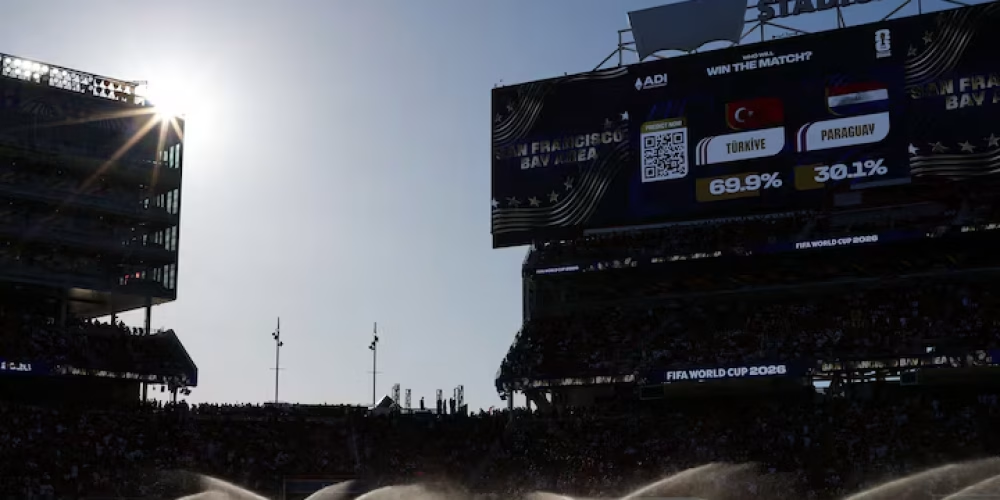
The 2026 FIFA World Cup has officially taken over North America, bringing a historic wave of soccer enthusiasm to stadiums across three nations. When the official match schedule was first unveiled, football enthusiasts in Northern California expressed collective disappointment over an assignment of games lacking traditional heavyweight teams. However, the subsequent tournament matchups at San Francisco Bay Area Stadium have completely defied those pessimistic predictions, creating an unforgettable atmosphere characterized by packed crowds and high-octane sporting drama.
What You Need to Know
The tournament expansion to 48 nations drastically reshaped the logistical footprint of this year’s global soccer showpiece. Regions selected to host games had to prepare for varying combinations of competing countries, leading to highly unpredictable group pairings. For the technologically driven and affluent Silicon Valley corridor, the initial reveal of the Group Stage lineup sparked widespread groans from local fans who had anticipated hosting soccer icons like Brazil, Argentina, or France.
Instead, the regional schedule featured group stage battles involving national teams such as Qatar, Switzerland, Austria, Jordan, Turkey, Paraguay, and Australia. Local sports media and regional commentators openly worried that a lack of soccer superpowers would result in half-empty venues and a visible lack of enthusiasm in the stands. Adding to the local skepticism was the realization that the Santa Clara venue would be the only American location completely excluded from hosting any tournament fixtures past the upcoming Round of 32 phase.
Furthermore, international regulatory bodies imposed strict operational mandates on the venue, including the temporary removal of its corporate identity. The stadium was stripped of its familiar commercial branding to satisfy clean-stadium guidelines designed to safeguard global sponsor investments. Despite these commercial adjustments and early scheduling concerns, regional organizers pushed forward with technical upgrades, including an entirely reconstructed, widened natural grass playing field engineered specifically to meet stringent global dimensions.
Silicon Valley Embraces Global Football
The unfolding reality on the ground has completely transformed the initial narrative of a lackluster tournament hub. Rather than witnessing empty rows, local organizers have overseen a remarkable influx of passionate, traveling fanbases that have electrified the Santa Clara atmosphere. Fixtures like the recent group clash between Australia and Paraguay proved that competitive spirit and international loyalty could easily outshine brand-name stardom. Thousands of fans descended upon the arena, sporting vibrant national colors and chanting throughout the ninety minutes of play.
Tech sector professionals and local soccer purists alike have found themselves drawn directly into the spectacle. While some initial ticket buyers expressed sadness that they would not see a more balanced or high-profile slate of legacy teams, the sheer quality on the pitch quickly erased those regrets. Ticket demand on secondary market platforms remained exceptionally robust, indicating that regional interest in experiencing a live global sports phenomenon vastly outweighed any disappointment over the participating squads.
The administrative execution of these matchdays highlighted the region’s sophisticated transportation and hospitality infrastructure. Utilizing coordinated regional rail options and massive stadium perimeters, tens of thousands of international visitors traveled smoothly to and from the stadium gates. The diverse, multicultural demographic makeup of Northern California also acted as a natural catalyst for international soccer hospitality, with various diaspora communities turning out in large numbers to support nations that rarely receive such a massive spotlight on American soil.
Why This Matters
For the American sports consumer and corporate business community, the overwhelming success of these overlooked fixtures demonstrates a profound evolution in domestic soccer culture. It proves that the United States has progressed past the point of only consuming elite, celebrity-driven sporting events. American sports fans are increasingly showing a deep appreciation for the intrinsic drama of tournament football, regardless of which specific countries are on the field. This cultural shift signals long-term commercial viability for future international soccer tournaments and club tours aiming to expand their operational presence in North America.
From a localized economic perspective, the continuous sellouts offer a massive blueprint for future non-NFL events at major municipal arenas. Local hotels, culinary establishments, and regional transit lines have experienced sustained economic boosts without the necessity of hosting legacy soccer powers. This outcome provides crucial data for municipal planners and stadium authorities nationwide, proving that the sheer prestige of a major global tournament brand is more than sufficient to generate maximum economic impacts and civic engagement.
NCN Analysis
The real takeaway from the vibrant scenes in Northern California is that tournament format expansion actually works from a commercial and experiential standpoint. While purists initially feared that a 48-team roster would dilute the product and alienate casual observers, the enthusiastic reception in Silicon Valley indicates the exact opposite. Smaller or developing football nations bring an unparalleled level of passion and raw energy, often creating far more compelling narratives than predictable group stage wins by traditional global powerhouses.
Looking toward the remainder of the knockout stages, other host cities should take note of how smoothly the Santa Clara venue adapted to unexpected fan dynamics. The ability of a stadium to successfully pivot from NFL-centric branding to a completely neutral, international hub will influence how future multi-national sporting bids are structured. Moving forward, the sports industry should expect future tournament organizers to place a higher premium on diverse urban areas that possess the natural demographic depth to support any global matchup.
The unexpected triumph of the regional schedule proves that the true magic of the World Cup lies in its unmatched ability to unite diverse audiences through competitive drama.
Reported by the NCN Editorial Team









