

KEY POINTS
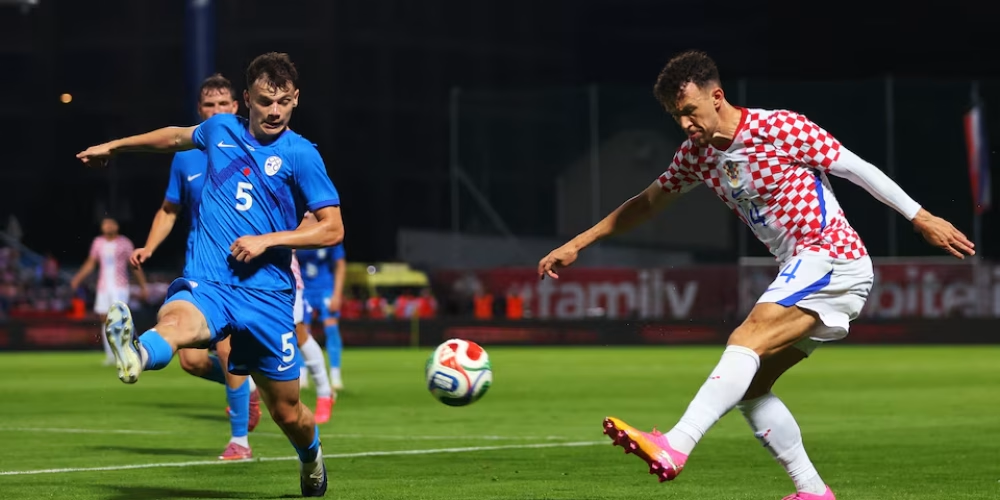
- Midfielder Mario Pasalic scored a dramatic stoppage-time winner to secure a 2-1 victory over Slovenia in Varazdin.
- Legendary captain Luka Modric initially opened the scoring for the hosts early in the second half of the friendly match.
- The critical win snaps a two-game losing streak for the European powerhouse right before they depart for North America.
The Croatia men’s national football team generated vital momentum for their upcoming global campaign by defeating neighboring Slovenia 2-1 on Sunday evening. A chaotic final sequence at the City Stadium in Varazdin culminated in a decisive, late-game breakthrough that sent the home supporters into a frenzy. By closing out their domestic exhibition schedule with a hard-fought victory, the perennially dangerous squad successfully quieted burgeoning external anxieties regarding their recent form.
What You Need to Know
Entering this final international friendly match, the Croatian side faced an unusual amount of pressure for a non-competitive exhibition fixture. Consecutive defeats in previous high-profile warm-up matches against elite tournament contenders Brazil and Belgium had sparked minor panic among local sports media and supporters. Head coach Zlatko Dalic needed a disciplined, cohesive performance to restore internal squad harmony and validate his tactical adjustments before boarding the flight across the Atlantic Ocean.
The current generation of Croatian football carries an immense historical burden into the upcoming tournament cycle. Having remarkably advanced to the final match in 2018 and secured a third-place finish in 2022, the small European nation has defied structural expectations to establish itself as an elite global power. However, sports analysts have frequently questioned the long-term sustainability of the aging roster, putting heavy scrutiny on the physical longevity of their veteran leadership core.
Slovenia, operating under the managerial guidance of Bostjan Cesar, provided the exact type of physical, defensively rigorous test that Dalic desired. While the visitors entered the match suffering through a difficult stretch of form, their defensive organization features world-class goalkeeper Jan Oblak patrolling the penalty area. This structural resilience forced the hosts to exhibit patience and positional discipline rather than relying purely on individual athletic advantages.
Modric and Pasalic Secure Dramatic Victory
The opening forty-five minutes of play featured a physical, tactical chess match as both squads struggled to find a definitive breakthrough in the final third of the pitch. Croatia attempted to establish structural dominance early, with forward Ante Budimir narrowly steering a powerful header wide of the post following an accurate cross from veteran winger Ivan Perisic. Slovenia responded with dangerous counter-attacking sequences of their own, forcing a sharp, diving save from Croatian goalkeeper Dominik Livakovic to deny an initial attempt by midfielder Sandi Lovric.
The competitive tempo accelerated rapidly immediately following the halftime intermission. In the 51st minute, talismanic midfielder Luka Modric broke the scoreless deadlock by converting an intelligent pass from Perisic, sending a precise strike past Oblak to register his 29th career international goal. The landmark moment highlighted Modric’s enduring importance to the national setup, even as he stands on the absolute precipice of reaching an incredible 200 international caps.
Following the opening goal, Dalic utilized the friendly format to execute a series of planned tactical substitutions, introducing younger talents like Martin Baturina and match-winner Mario Pasalic to manage the physical workload. This heavy squad rotation temporarily disrupted the host’s defensive alignment, allowing Slovenia to capitalize in the 83rd minute when striker Andraz Sporar pounced on a rare defensive lapse to equalize. However, the hosts refused to settle for a draw, mounting one final offensive surge in the third minute of stoppage time. Pasalic timed his run perfectly into the heart of the penalty area, meeting a headed pass from full-back Josip Stanisic to lash home a dramatic right-footed volley.
Why This Matters
This high-stakes exhibition outcome illustrates the fine margins that define elite preparation for major international sporting tournaments. For international football enthusiasts and commercial broadcast partners throughout the United States and global markets, these final preparation matches serve as the primary indicator of structural readiness. A victory of this nature dramatically shifts public perception and alters the statistical algorithms utilized by global sports analytical firms.
Furthermore, the match serves as an essential case study in how veteran international squads navigate the delicate balance between physical self-preservation and competitive intensity. With millions of dollars in future marketing valuations and institutional prestige on the line, elite athletes must compete hard enough to build chemistry without risking catastrophic physical injuries. The ability to win a highly physical regional derby right before transitioning to a grueling group stage provides an invaluable psychological edge that data metrics cannot easily quantify.
NCN Analysis
This dramatic triumph provides Zlatko Dalic with a massive sigh of relief as his coaching staff finalizes their travel logistics. Beyond the obvious emotional benefits of snapping a brief losing skid, the structural manner of the victory proved that Croatia’s traditional 4-2-3-1 tactical formation remains highly effective when executed with proper pacing. The fact that the decisive offensive sequence was constructed by substitute players underscores a level of roster depth that will be vital during a compressed tournament schedule.
Looking forward, the global football audience should monitor how this positive momentum translates directly to the opening stage of tournament play in North America. Placed in a highly competitive Group L alongside heavyweight contenders England, Panama, and Ghana, the Croatians have absolutely zero margin for early competitive errors. If the veteran midfield core can continue to control the operational tempo of matches while integrating modern energy from depth pieces like Pasalic, the small European nation could very well orchestrate yet another deep, historical run through the knockout brackets.
The final home test is officially complete, and the focus now shifts entirely to the ultimate global stage.
Reported by the NCN Editorial Team









