

KEY POINTS
- Former national team captain Park Ji-sung sharply criticized South Korea’s tactical display following an unexpected loss to South Africa.
- The iconic midfielder warned that the current squad risks mirroring the team’s disastrous group-stage collapse at the 2014 tournament.
- Tactical rigidity and a perceived lack of creative urgency were highlighted as primary drivers behind the disappointing international result.
The South Korean men’s national soccer team is facing intense domestic scrutiny after a surprising setback in their international campaign, drawing a harsh assessment from one of the country’s most revered athletic icons. Following a disappointing defeat against an opportunistic South African side, former national team captain Park Ji-sung publicly lambasted the squad’s performance, warning that the current trajectory mirrors historical failures. Park’s blunt critique has amplified pressure on the coaching staff and players as they fight to avoid an early exit from the global stage.
What You Need to Know
Park Ji-sung occupies a unique space in South Korean sports history, celebrated as a trailblazer who elevated the nation’s footballing profile on the global stage. As a tireless midfielder who starred for Manchester United and drove South Korea to a historic semifinal appearance at the 2002 tournament, his insights carry immense weight among fans and sports analysts alike. When Park speaks on the state of national football, his comments frequently set the agenda for the domestic sports media and shape public expectations.
The historical reference point invoked by Park is a particularly painful memory for South Korean sports fans. During the 2014 tournament in Brazil, the national team arrived with high expectations but endured a miserable group-stage campaign, failing to win a single match and exiting the competition in last place. That squad was widely criticized for organizational disorder, an inability to adapt to opposing strategies, and a visible lack of competitive hunger—flaws that critics worry are resurfacing in the current generation of players.
Confronting a highly disciplined South African squad, the current South Korean team struggled to implement a cohesive attacking game plan. South Africa utilized its physical strength and swift transition play to disrupt South Korea’s rhythm, exploiting defensive vulnerabilities to secure a vital victory. The result has completely shifted the dynamics of the group, leaving South Korea with little margin for error in their upcoming fixtures and triggering an immediate post-mortem regarding the team’s overall identity.
South Korea World Cup Struggle Sparked by Tactical Issues
The tactical deficiencies that drew Park’s ire were visible throughout the 90 minutes of play, as South Korea failed to turn their superior possession statistics into meaningful goal-scoring opportunities. The team’s buildup play appeared slow and predictable, allowing the South African defensive block to shift into position and close down passing lanes with relative ease. This lack of penetration left the forward line isolated, neutralizing South Korea’s individual attacking talents.
Park’s public assessment targeted this tactical rigidity, noting that the team appeared devoid of the creative spark and urgency required to break down disciplined international opponents. He observed that the current squad appeared overly cautious, prioritizing safe sideways passes rather than taking the calculated risks necessary to unbalance a defensive opponent. Without dynamic off-the-ball movement, the possession-heavy approach quickly became counterproductive, playing directly into South Africa’s counter-attacking strategy.
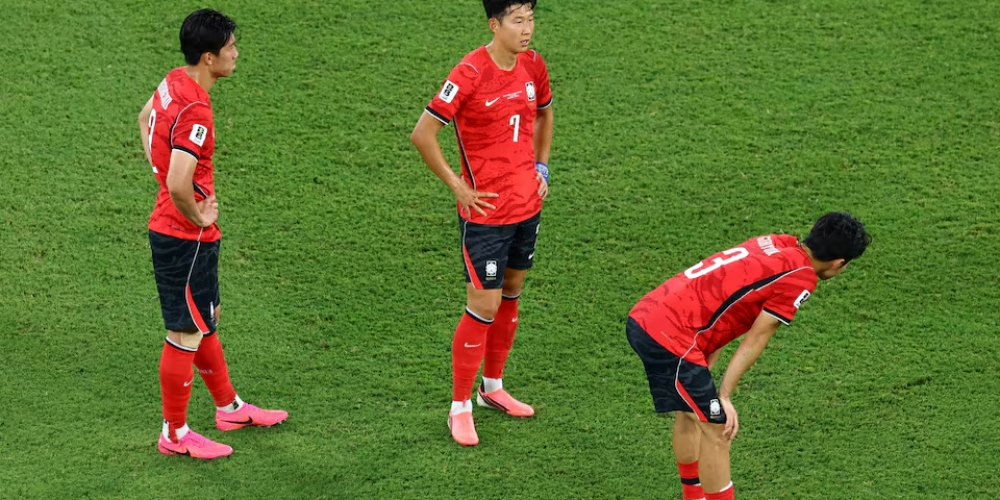
The emotional and psychological response of the players on the field also drew sharp scrutiny from the legendary midfielder. Park emphasized that top-tier international competition requires an unyielding work ethic and physical intensity, attributes that he felt were lacking during critical moments of the match. When South Africa intensified their physical pressing, South Korea struggled to match that aggression, leading to crucial turnovers in the midfield that directly contributed to the definitive goal.
The fallout from the match has intensified focus on the technical staff’s ability to adjust strategies mid-game. When South Africa took the lead and retreated into a compact defensive shape, South Korea’s substitutions and subsequent formation changes failed to yield a tangible tactical response. This inability to adapt under pressure has heightened concerns that the team is ill-equipped to handle the diverse tactical challenges presented by elite global competition.
Why This Matters
For American soccer enthusiasts, international sports executives, and global fans tracking the tournament, the unfolding drama within the South Korean camp underscores the immense pressure cooker of international football. The sudden vulnerability of a perennial Asian powerhouse adds a layer of unpredictability to the tournament group stages, directly impacting bracket predictions and potential knockout stage configurations. High-stakes collapses by established nations create opportunities for emerging soccer regions, altering the traditional power dynamics of the sport.
Additionally, the public intervention of a figure like Park highlights the evolving role of veteran athletes as critical media voices in modern sports culture. For global viewers, understanding the internal cultural expectations and historical traumas of competing nations enhances the narrative complexity of the tournament. The intense domestic backlash in Seoul serves as a reminder that for many participating nations, international soccer results carry significant cultural and national prestige far beyond the field of play.
NCN Analysis
Park Ji-sung’s public condemnation is a calculated attempt to shock the South Korean squad out of its current complacency. By invoking the specter of the 2014 disaster, Park is utilizing his significant cultural leverage to demand an immediate cultural shift within the locker room. The current team possesses undeniable individual talent, but as the match against South Africa proved, raw skill is easily neutralized by a lack of tactical imagination and collective desire.
The road ahead for South Korea is now fraught with immense psychological and competitive pressure. The coaching staff must rapidly address the team’s predictability in possession and instill a more aggressive, vertical passing philosophy before their next must-win fixture. If the players can channel this internal criticism into a disciplined, high-intensity performance, they still retain the quality to salvage their campaign; however, failure to adapt will almost certainly validate Park’s ominous warning of a historical repeat.
The true character of this South Korean generation will be defined by how they respond to this legendary wake-up call.
Reported by the NCN Editorial Team









