

KEY POINTS
- Arsenal and Atletico Madrid played to a tactical stalemate in the first leg of their Champions League semi-final matchup.
- The Spanish side displayed trademark defensive resilience to neutralise one of Europe’s most prolific attacking units.
- The scoreless draw shifts the pressure to the second leg in London, where away goals no longer provide a tie-breaking advantage.
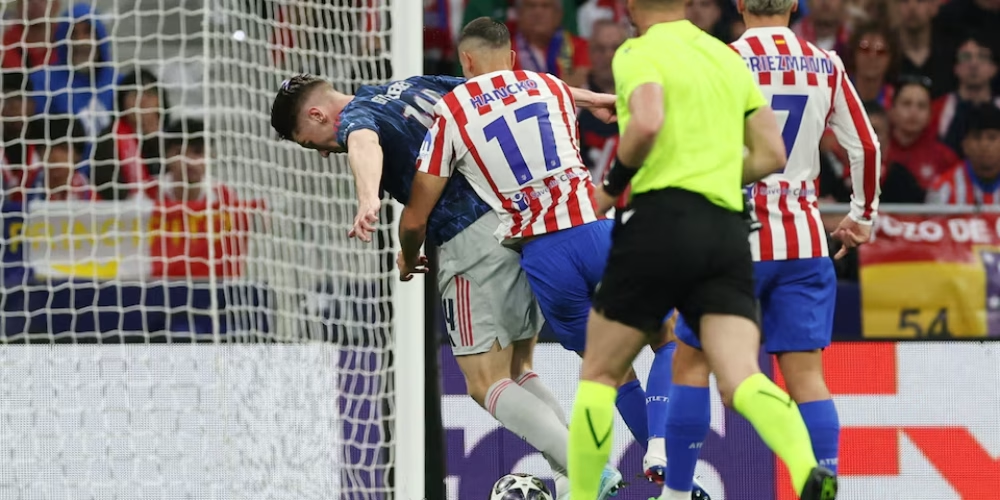
The quest for European glory remains on a knife-edge after Atletico Madrid frustrated Arsenal in a scoreless draw during the first leg of their Champions League semi-final. In a match defined by tactical discipline rather than offensive flair, the Spanish giants successfully blunted a potent London attack to keep their finals hopes alive. This high-stakes encounter sets the stage for a dramatic second leg, with both clubs now facing a winner-take-all scenario.
What You Need to Know
The Champions League semi-finals represent the pinnacle of European club soccer, featuring the four best teams on the continent. For Arsenal, this season represents a significant milestone in their recent resurgence under their current management. After years of absence from the deepest rounds of the tournament, the London-based club has evolved into a legitimate powerhouse, blending youthful energy with high-level technical execution. Their journey to this stage involved overcoming some of the most storied programs in the game, marking them as favorites for many international analysts.
Atletico Madrid, conversely, are the perennial disruptors of European soccer. Under long-term leadership, they have cultivated a reputation for being the most difficult team to beat in knockout football. Known for their “cholismo” philosophy—a mix of intense work rate, defensive organization, and psychological warfare—they often thrive when cast as the underdog. Having reached multiple finals in the past decade without capturing the trophy, the motivation within the Madrid camp is at an all-time high to finally secure the elusive title.
The history between these two styles of play—Arsenal’s fluid, possession-based attacking and Atletico’s rigid, counter-attacking defensive block—created a fascinating tactical narrative heading into the match. With the away goals rule no longer in effect in UEFA competitions, the strategy for opening legs has shifted significantly. Teams are now more inclined to prioritize defensive stability over chasing a risky road goal, a trend that was on full display throughout the ninety minutes in Madrid.
Tactical Stalemate at the Metropolitano
From the opening whistle, the rhythm of the game was dictated by Arsenal’s desire to control the ball and Atletico’s comfort in conceding it. The English side moved the ball with precision across the midfield, looking for gaps in a defensive line that seemed carved from granite. Despite having nearly 65% of the possession in the opening half-hour, Arsenal struggled to register a single shot on target. Every creative pass into the final third was met by a sliding challenge or an expertly timed interception from the Madrid backline.
The midfield battle was particularly grueling. Arsenal’s playmakers attempted to bypass the central congestion with quick, one-touch passing sequences, but the Spanish side’s holding midfielders were relentless. The physical nature of the game resulted in several early yellow cards, as the referee attempted to maintain control over a match that threatened to boil over. Atletico, while largely focused on their own half, remained dangerous on the break, using the speed of their wingers to keep the Arsenal full-backs from committing too far forward.
As the second half progressed, the tension within the stadium reached a fever pitch. Arsenal introduced fresh legs in the attacking positions, hoping to find the individual brilliance needed to break the deadlock. There were moments of genuine concern for the home fans, including a late strike that rattled the woodwork, but the breakthrough never arrived. Atletico’s goalkeeper was called into action only sparingly, though his command of the penalty area during set-pieces proved vital in the closing stages.
In the final ten minutes, both managers seemed to accept the draw as a workable result. Arsenal slowed the tempo to ensure they did not concede a late, devastating goal on the counter, while Atletico remained disciplined in their shape. The match concluded with a sense of unfinished business, as the two squads walked off the pitch knowing that their entire season would likely be defined by the ninety minutes awaiting them in the return leg.
Why This Matters
For soccer fans and sports consumers in the United States, this matchup highlights the growing gap between the tactical sophistication of European leagues and the rest of the world. As the U.S. prepares to host major international tournaments in the coming years, the popularity of the Champions League continues to surge among American audiences. This specific game serves as a masterclass in defensive strategy, a component of the sport that is often overshadowed by high-scoring highlights but remains essential for championship success.
Furthermore, the financial and cultural implications of these matches are immense. The global English-speaking audience for the Champions League is at an all-time high, driving massive sponsorship deals and broadcasting rights that influence the entire sports economy. For businesses involved in sports marketing or international media, the success of a brand like Arsenal—which has a massive North American following—directly impacts engagement levels and consumer spending. A deep run by a popular English club ensures that the tournament remains a central topic of conversation in offices and sports bars across the Atlantic.
NCN Analysis
The scoreless draw in the first leg is a strategic victory for Atletico Madrid, though it comes with inherent risks. By preventing Arsenal from scoring, they have ensured that the second leg begins on a completely level playing field. However, playing at the Emirates Stadium in London is a daunting task for any visitor. Arsenal’s home form has been nearly impeccable this season, and their fans will create an intimidating atmosphere that tests the mental fortitude of the Spanish veterans.
Expect the second leg to be a mirror image of the first in terms of strategy, but with significantly more desperation as the clock winds down. Arsenal will likely double down on their offensive pressure, while Atletico will wait for the one mistake that allows them to steal a goal on the break. If the game remains tied late into the second half, the lack of the away goals rule may actually encourage more attacking play, as neither side will be “safe” with a 1-1 draw. We anticipate a match that could very well go to extra time or penalties, given how evenly matched these two tactical systems appear to be.
Reported by the NCN Editorial Team









