

KEY POINTS
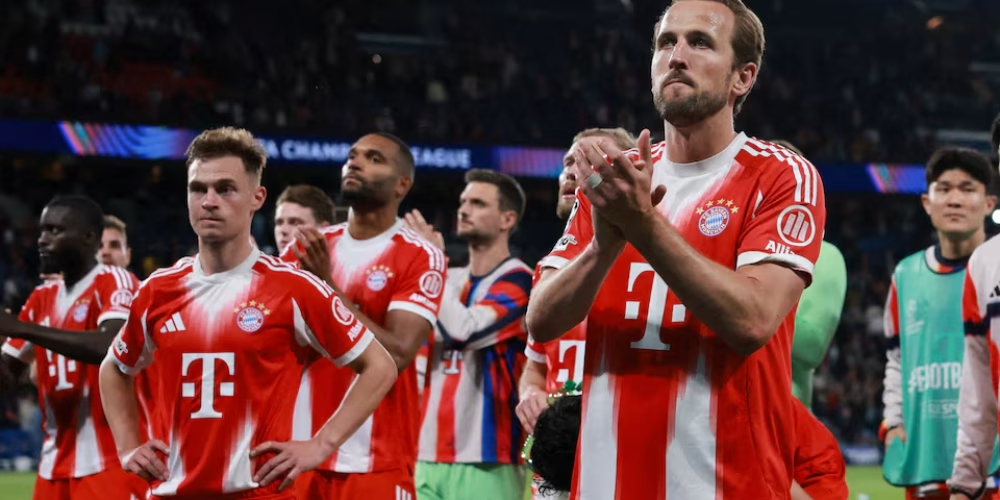
- Paris Saint-Germain defeated Bayern Munich 5-4 in the highest-scoring Champions League semi-final match ever recorded.
- Ousmane Dembélé and Khvicha Kvaratskhelia each bagged a brace for the French side, while Harry Kane continued his record-setting scoring streak for the visitors.
- The outcome leaves the aggregate tie finely poised as both European heavyweights prepare for the decisive second leg in Germany next week.
The Parc des Princes played host to a footballing spectacle for the ages on Tuesday night, as Paris Saint-Germain secured a narrow 5-4 victory over Bayern Munich. In a display of relentless offensive prowess, both sides abandoned traditional defensive caution, turning the opening leg of their Champions League semi-final into an instant classic that shattered previous records for goal production at this stage of the competition.
What You Need to Know
This encounter brought together two of the most potent attacking units in European football. Paris Saint-Germain entered the fixture aiming to defend their title, a feat rarely achieved in the modern era of the Champions League. Under the guidance of manager Luis Enrique, the Parisians have developed a fluid, high-octane system that favors possession and rapid transitions.
For Bayern Munich, the season has been defined by a historic scoring pace, led by English captain Harry Kane. Entering the match, the German champions boasted a staggering tally of over 160 goals across all competitions. Even with head coach Vincent Kompany watching from the stands due to a touchline suspension, the team maintained its aggressive philosophy, setting the stage for an end-to-end clash that captivated a global audience.
A Night of Relentless Scoring
The drama began early when Bayern Munich was awarded a penalty in the 17th minute after a foul on Luis Díaz. Harry Kane stepped up to convert, extending his remarkable streak of scoring in six consecutive Champions League knockout fixtures. However, the lead was short-lived. PSG responded with a display of individual brilliance, as Khvicha Kvaratskhelia cut inside from the flank to slot home a precise equalizer, followed shortly by a header from João Neves that put the home side in front.
Just before halftime, the momentum shifted again. After Michael Olise leveled the score with a composed finish, PSG was awarded a contentious penalty following a VAR intervention for a handball by Alphonso Davies. Ousmane Dembélé buried the spot kick, ensuring the hosts took a 3-2 lead into the interval. The second half saw the intensity reach even higher levels, with Kvaratskhelia and Dembélé both netting their second goals of the night to extend the lead to 5-2 by the 58th minute.
Despite appearing to be on the verge of a blowout, Bayern Munich demonstrated immense resilience. Recognizing the stakes, the German side tightened their formation and exploited gaps in the PSG backline. Dayot Upamecano headed in a vital goal from a free-kick, and Luis Díaz capitalized on a defensive lapse to bring the score to 5-4. A frantic closing period saw both teams trade opportunities, but PSG managed to hold firm, securing a fragile advantage to take to the Allianz Arena.
Why This Matters
For American sports fans and the growing contingent of European football followers in the United States, this match serves as a masterclass in why the Champions League remains the gold standard for club competition. As major broadcasters continue to invest heavily in streaming rights, high-scoring, competitive encounters like this are driving unprecedented engagement levels in the U.S. market. The tactical evolution displayed—where even top-tier defenders are pushed into high-risk, high-reward positions—signals a shift in how modern clubs are marketing themselves to a global, entertainment-focused audience.
Beyond the tactical spectacle, this match highlights the rising influence of international scouting and player movement on the American viewing experience. With standout performances from players like Kvaratskhelia and Kane, the Champions League provides a familiar stage for North American fans to follow global icons, even those who do not play in Major League Soccer. The intense rivalry showcased in Paris reinforces the tournament’s status as a must-watch event, cementing its position in the American sports calendar alongside the NBA playoffs and the NFL post-season.
NCN Analysis
The most striking takeaway from this semi-final is the complete disregard for defensive conservatism. While purists might point to the defensive lapses, both Luis Enrique and the Bayern staff seem to have calculated that attempting to contain the opposition is a futile exercise compared to outscoring them. This philosophy suggests that the second leg in Munich will be equally chaotic. Bayern will undoubtedly look to leverage their home-field advantage and vocal support to press early, while PSG will rely on the counter-attacking speed that caused such havoc in Paris.
Looking ahead, fans should monitor the physical fatigue of both squads. Playing at such a frantic tempo requires immense stamina, and the mid-week turnaround will test the squad depth of both managers. If the second leg maintains even 70% of the intensity of the first, it will likely be remembered as the greatest semi-final tie in the history of the competition. Expect a chess match that breaks into a brawl, as neither side seems capable of playing for a draw.
This historic nine-goal thriller ensures that the return leg will be a defining moment for both clubs as they chase European glory.
Reported by the NCN Editorial Team









