

KEY POINTS
- The United States has enacted a sweeping maritime blockade to halt Iran’s illicit oil exports, significantly disrupting Tehran’s primary revenue stream.
- Despite the aggressive enforcement, diplomatic channels remain open as officials from both nations signal a tentative willingness for further negotiations.
- Global energy markets are bracing for volatility as the interdiction of “ghost fleet” tankers creates a supply bottleneck in the Middle East.
The United States has moved to effectively paralyze Iran’s seaborne commercial operations, deploying advanced naval assets to sever the shipping lanes used for the country’s shadow oil trade. This decisive action comes at a critical juncture, directly challenging Tehran’s economic resilience while the White House simultaneously leaves the door ajar for high-stakes diplomatic talks. For the American public, this move signals a pivot back to “maximum pressure” tactics aimed at curbing regional influence through financial exhaustion.
What You Need to Know
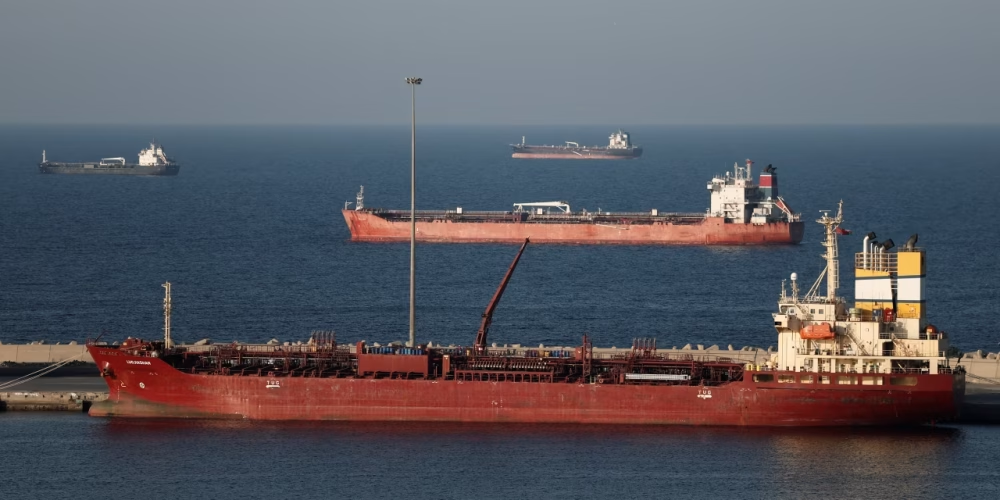
For the past several years, the geopolitical standoff between Washington and Tehran has been characterized by a complex game of cat-and-mouse on the high seas. Iran has historically relied on a “ghost fleet” of aging tankers that turn off their tracking transponders to bypass international sanctions. These vessels often engage in mid-ocean transfers to disguise the origin of their cargo, allowing Iran to maintain a steady flow of crude oil to buyers in Asia despite existing trade restrictions.
The current escalation is rooted in the failure of previous agreements to address both Iran’s nuclear aspirations and its support for various proxy groups across the Middle East. While the international community has fluctuated between periods of engagement and isolation, the recent surge in maritime interdictions suggests that the U.S. has reached a threshold of intolerance for sanctions evasion. This strategy aims to dry up the hard currency reserves that the Iranian government uses to fund its domestic and foreign policy objectives.
However, the situation is not purely one of military and economic confrontation. Even as the U.S. Navy enforces these strict trade barriers, senior diplomats are hinting at a “dual-track” approach. The hope is that by demonstrating the total cost of economic isolation, the U.S. can bring Iran back to the negotiating table in a weakened position, potentially leading to a more comprehensive and enforceable long-term treaty.
Enforcing the Iran Maritime Trade Blockade
The enforcement of this maritime trade blockade has utilized a multi-layered approach involving satellite surveillance, drone reconnaissance, and direct naval intervention. By targeting the logistics of the shadow fleet, the U.S. Treasury and Defense Departments are identifying the shell companies and insurance providers that facilitate these voyages. This “financial and physical” pincer movement makes the cost of transporting Iranian oil prohibitively high for the few traders still willing to risk the legal consequences.
The timeline of events intensified this week when several large-scale tankers were intercepted in international waters. These operations were conducted with a level of transparency intended to send a clear message to the global shipping industry: the era of turning a blind eye to illicit Iranian exports is over. While some regional players have expressed concern over the potential for kinetic conflict in the Strait of Hormuz, the U.S. has maintained that its actions are strictly defensive and rooted in the enforcement of international law.
Surprisingly, the aggressive posture on the water has been met with a measured tone from some Iranian officials. There are indications that the internal economic pressure within Iran—exacerbated by sky-high inflation and a devaluing currency—is creating a mandate for some level of diplomatic compromise. However, the hardline elements of the Iranian leadership continue to view the blockade as an act of economic warfare, threatening to respond with their own maritime disruptions if their ability to export energy is permanently extinguished.
The role of international partners, particularly those in Europe and Asia, remains a critical variable. While many U.S. allies in Ireland and Sweden support the goal of regional stability, there is a lingering anxiety regarding the impact on global energy prices. The U.S. is currently working to reassure these partners that increased domestic production and strategic reserve releases will mitigate any supply shocks caused by the removal of Iranian crude from the market.
Why This Matters for Americans
The immediate impact of this maritime blockade will likely be felt at the gas pump. Iran is a significant, albeit unofficial, contributor to global oil supplies, and any disruption in the Middle East typically triggers a speculative rise in energy futures. American consumers, already grappling with a sensitive inflationary environment, should prepare for potential fluctuations in fuel costs as the market adjusts to the sudden absence of Iranian “ghost” shipments.
Beyond the economy, this development is a test of U.S. foreign policy efficacy. If the blockade succeeds in forcing a diplomatic breakthrough, it could lead to a more stable Middle East and a reduction in the long-term military commitment required in the region. Conversely, if it leads to a direct confrontation in the Persian Gulf, it could draw the U.S. into another protracted conflict, impacting everything from national security priorities to the domestic political landscape.
NCN Analysis
The U.S. is betting that the Iranian government’s need for survival will outweigh its ideological commitment to regional expansion. This “choke-point” strategy is designed to make the status quo unbearable for Tehran. However, the danger of this approach lies in the “cornered cat” scenario; if the Iranian leadership feels they have nothing left to lose, they may attempt to disrupt the transit of non-sanctioned oil from neighboring countries, potentially sparking a much larger maritime crisis.
In the coming weeks, keep a close eye on the rhetoric coming out of the United Nations and the secret back-channels in Oman. These are the venues where the true impact of the maritime trade blockade will be measured. If we see a sudden de-escalation in regional proxy conflicts, it will be a sign that the economic pressure is working. If tensions continue to mount without a corresponding diplomatic shift, the likelihood of a significant naval skirmish increases daily.
The success of Washington’s strategy depends entirely on its ability to maintain the blockade without triggering a full-scale regional war.









