

KEY POINTS
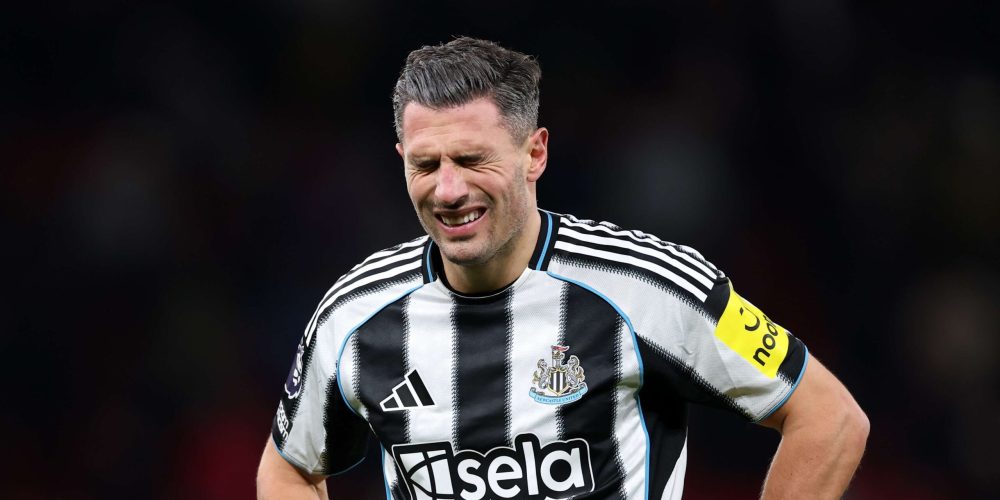
- Newcastle United manager Eddie Howe has publicly accepted the blame after his side once again threw away a lead in a critical Premier League fixture.
- The Magpies have now dropped a significant number of points from winning positions this season, leaving their European qualification hopes in serious jeopardy.
- Despite a high-scoring attack, defensive frailties and a lack of game management have become the defining characteristics of Newcastle’s 2026 campaign.
Newcastle United manager Eddie Howe has stepped into the line of fire, admitting his tactical decisions were at the heart of yet another second-half collapse. The Tyneside club, which has spent hundreds of millions of dollars to compete with the world’s elite, saw a comfortable advantage evaporate in a performance that has become all too familiar to their frustrated fanbase. For the American audience accustomed to the “close-out” precision of the NBA or NFL, Newcastle’s inability to protect a lead is becoming a masterclass in sporting fragility.
What You Need to Know
Newcastle United has undergone a seismic shift since its acquisition by a Saudi-led consortium in late 2021. The club moved rapidly from battling relegation to competing in the Champions League, fueled by a mixture of strategic recruitment and Howe’s high-intensity coaching style. However, the 2025-2026 season has proven to be a sobering reality check. While the team remains a potent force going forward, their defensive structure has looked increasingly porous against both top-tier opponents and mid-table scrappers.
The pressure on Howe has mounted as the club’s ownership expects a consistent presence in Europe’s elite competitions to justify their massive financial outlay. Last season’s successes set a high bar, and the current dip in form has sparked intense debate among pundits regarding Howe’s long-term suitability for a “super-club” project. The primary issue lies in the team’s transition defense; when the Magpies lose possession while attacking, they often leave their center-backs exposed to rapid counter-attacks, a flaw that rivals have ruthlessly exploited throughout the spring.
Furthermore, the squad has been stretched thin by injuries to key defensive personnel. This lack of rotation has led to visible fatigue in the final thirty minutes of matches, which is exactly when Newcastle has most frequently conceded. Game management—the art of slowing the tempo and neutralizing an opponent’s momentum—appears to be a missing ingredient in Howe’s tactical toolkit this year. Instead of “parking the bus,” Newcastle often continues to chase additional goals, leaving the back door wide open.
Tactical Errors and the Newcastle Defensive Crisis
The core of the current Newcastle defensive crisis was on full display during their latest outing. After taking a two-goal lead through sheer offensive brilliance, the team failed to adjust their shape to account for the opponent’s tactical substitutions. Howe admitted after the match that he should have been more proactive in freshening up the midfield to provide more cover for the back four. By the time the equalizing goal was scored, the momentum had shifted so drastically that a loss felt almost inevitable for the traveling supporters.
Howe’s public admission of guilt is a strategic move designed to protect his players from the harsh glare of the British media. By shouldering the responsibility, he hopes to maintain a unified locker room during a period where confidence is clearly brittle. However, the statistics are difficult to ignore. Newcastle now ranks among the worst in the league for points dropped after the 70th minute. This trend suggests a systemic failure rather than isolated individual errors, pointing toward a coaching philosophy that perhaps values bravery over pragmatism.
The timeline of this decline has been particularly painful for the club’s supporters. Throughout February and March, Newcastle seemed to have turned a corner, securing several clean sheets and looking like a disciplined unit. Yet, as the stakes have increased in April, the discipline has dissolved. Defensive stalwarts who were once considered “undroppable” have struggled with basic positioning and aerial duels. This regression has forced Howe to consider radical changes to his starting eleven, though his options are limited by the ongoing absence of several first-choice defenders.
Internal discussions at St. James’ Park are likely focusing on whether the current personnel can execute Howe’s demanding system for an entire 38-game season. The high-press requires constant sprinting and mental sharpness, which is difficult to sustain when the squad lacks depth. If the manager refuses to compromise on his attacking principles, the club may be forced to look for defenders with elite recovery speed in the upcoming summer transfer window. Until then, Howe must find a way to patch the holes in a ship that is currently taking on far too much water.
Why This Matters for Americans
For American sports fans, the Newcastle story is a fascinating study in the “salary cap-free” world of global soccer. Unlike the parity-driven leagues in the U.S., the Premier League allows for rapid ascension through massive capital investment, but it also provides no safety net for tactical failure. The struggle of Eddie Howe highlights that in the most competitive league on earth, money can buy talent, but it cannot buy the composure needed to win close games. This narrative resonates with followers of “big-market” American teams that underperform despite having the highest payrolls in their respective leagues.
Additionally, the stability of Newcastle United is of significant interest to the global English-speaking business community. The club is a major asset in a multi-national investment portfolio, and its performance affects everything from international broadcasting rights to local tourism in the North East of England. For the American consumer who has recently adopted “soccer” as their primary sport, Newcastle represents the “new money” challenger trying to disrupt the established hierarchy of Manchester City and Liverpool. Seeing that challenger stumble due to fundamental coaching errors provides a compelling look at the high-stakes pressure of top-flight football.
NCN Analysis
Eddie Howe is currently navigating the most difficult period of his tenure. While his honesty is refreshing, it does not solve the structural imbalance of his team. At NextClickNews, we believe the next three fixtures will determine Howe’s future. If he can implement a more conservative “Plan B” to see out games, he will likely retain the support of the board. However, if Newcastle continues to be the league’s most “generous” team in the final ten minutes, the ownership may decide that a more experienced continental manager is required to take the next step.
The defensive issues are not just about the players on the pitch; they are about the identity of the club. Newcastle wants to be known as an entertaining, front-foot team, but there is a fine line between being entertaining and being vulnerable. The coming weeks will show whether Howe is capable of evolving his tactics or if he is a victim of his own commitment to “The Newcastle Way.” Fans should keep a close eye on the mid-week training reports; any shift toward a five-man defense or a double-pivot in midfield will be the first sign that the manager is finally prioritizing results over aesthetics.
The vulnerability at the back has turned what should have been a march toward Europe into a desperate scramble for stability.
Reported by the NCN Editorial Team









