

KEY POINTS
- A federal judge found the Pentagon in violation of a prior court order, ruling that its “interim” press policy was an illegal attempt to bypass constitutional protections.
- The court ordered the immediate reinstatement of full, unescorted access for credentialed journalists, effectively ending the “escort-only” rule implemented last year.
- The judge slammed the Pentagon for “viewpoint discrimination,” stating that the government cannot use security policies to silence journalists who are critical of the administration.
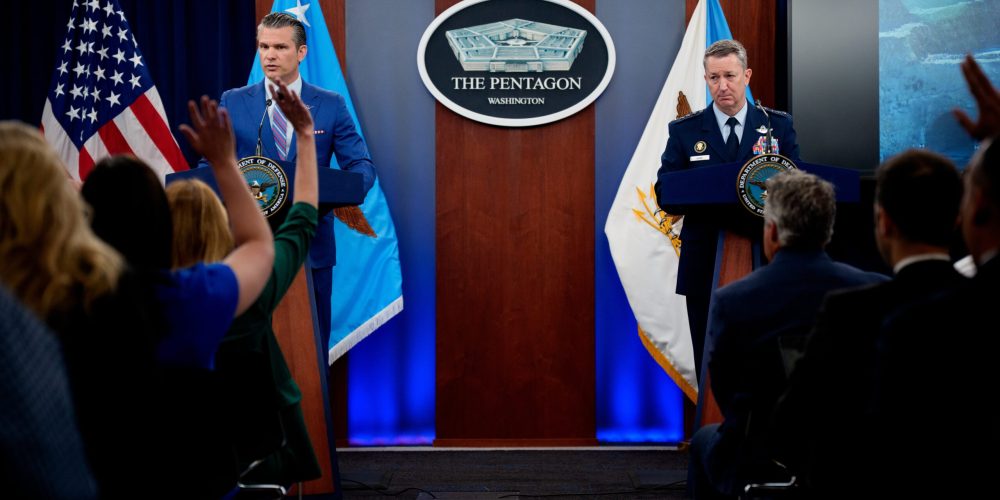
In a landmark victory for First Amendment rights, a federal judge has ordered the Pentagon to immediately restore full access to credentialed journalists, effectively striking down a restrictive policy that had frozen out major news organizations. The ruling comes as a sharp rebuke to recent efforts by the Department of Defense to limit how reporters interact with military personnel and navigate the halls of the nation’s defense headquarters. For Americans accustomed to transparency in government operations, this court intervention marks a critical moment in the ongoing struggle over press freedom and national security.+1
What You Need to Know
The conflict began in October 2025 under the direction of Defense Secretary Pete Hegseth, who introduced a controversial new credentialing policy. Under these rules, journalists were required to sign a “media in-brief” document that many viewed as an unconstitutional gag order. The policy stated that reporters could be branded as “security risks” and have their press badges revoked if they solicited information from unauthorized personnel—even if that information was unclassified. The professional community responded with unprecedented unity: of the 56 news outlets in the Pentagon Press Association, 55 refused to sign, with reporters surrendering their badges in mass protest.
In March 2026, U.S. District Judge Paul Friedman initially ruled the policy unconstitutional, citing violations of free speech and due process. He ordered the Pentagon to reinstate the credentials of several New York Times reporters and suggested the order applied broadly to the press corps. However, rather than returning to the previous status quo, the Pentagon issued a new “interim” policy. This revised version required all journalists to be escorted within the building and set unprecedented rules on when reporters could offer anonymity to sources, which the press corps decried as a “Kafkaesque” attempt to circumvent the court’s authority.
The headquarters of U.S. military power has long operated on a system of mutual trust with the press, allowing specialized reporters to move freely in designated areas to facilitate timely reporting on global conflicts and defense spending. The sudden shift toward restrictive “escort-only” access and the threat of security risk labeling represented a fundamental break from decades of established practice. As legal tensions reached a boiling point this April, the court was forced to decide whether the government could use “security” as a catch-all justification to dictate the flow of information to the public.
Pentagon Press Access: Judge Slams “Blatant Circumvention”
On Thursday, Judge Friedman issued a blistering follow-up ruling, finding the Pentagon in violation of his previous order. The judge made it clear that the department’s attempt to replace an illegal policy with a slightly modified “interim” version was unacceptable. He described the Pentagon’s actions as a “blatant attempt” to dodge the law, stating that the government cannot simply rebrand an unlawful policy and expect the court to look the other way. The ruling effectively mandates that Pentagon press access be returned to the level of openness that existed before the October 2025 crackdown.
A central point of the judge’s critique was the “escort requirement,” which he determined stripped the press pass of its meaningful value. By requiring a government official to accompany reporters at all times, the Pentagon was able to monitor which offices journalists visited and whom they spoke with, creating a chilling effect on whistleblowers and routine newsgathering. Judge Friedman noted that the Constitution demands better, and the American public deserves a press corps that is not under the thumb of the administration’s messaging team
The ruling also specifically threw out the Pentagon’s rules regarding the “inducement of unauthorized disclosures.” The court found that these standards were so vague that a journalist simply asking a pointed question could be accused of a violation. This “viewpoint discrimination,” as the judge labeled it, appeared designed to weed out journalists critical of the administration while favoring those willing to adhere strictly to official talking points. The Pentagon has been ordered to file a status report by April 16, 2026, detailing exactly how it will comply with the restoration of these privileges.
While the Defense Department has expressed disagreement with the ruling and signaled an intent to appeal, the immediate impact is a victory for independent journalism. For the first time in months, the “correspondents’ corridor”—the designated workspace for journalists inside the Pentagon—is expected to see the return of the full press corps. The court’s decision reaffirms that while national security is paramount, it is not an “all-access pass” for the government to suppress political speech or control the narrative of military actions.
Why This Matters
For the American public, this ruling ensures that information about military operations and taxpayer spending remains subject to independent oversight. Without a free press in the Pentagon, the only information reaching the public would be what the government chooses to release through official press releases. This matters because an informed citizenry is the backbone of a democracy; when the military operates in total secrecy, the risk of unchecked power and lack of accountability increases. This court victory protects the right of citizens to hear from a variety of perspectives, not just the “sanitized” version of events provided by the state.
Globally, the decision resonates as a powerful affirmation of democratic values at a time when press freedoms are under threat worldwide. For readers in Ireland, Sweden, and beyond, the U.S. court system’s willingness to challenge the military’s control over information serves as a standard for judicial independence. It sends a message that even the most powerful defense organization in the world is not above the constitutional protections of the people. This ruling is a reminder that transparency is a strength of a free society, not a vulnerability.
NCN Analysis
This ruling is more than just a win for a few reporters at the New York Times; it is a defensive wall against the “politicization” of military information. By attempting to define reporting as a “security risk,” the Pentagon was essentially trying to criminalize journalism. At NextClickNews, we believe this case will serve as a landmark precedent for how future administrations handle the delicate balance between operational security and public transparency. If the Pentagon’s “security risk” label had been allowed to stand, it would have set a dangerous template for every other government agency to freeze out critical coverage.
Moving forward, the focus will be on the Pentagon’s compliance report due next week. We expect the Defense Department to try and implement “technical” hurdles to slow down the process, but the judge’s firm stance suggests he has little patience for further delays. Watch for whether the Pentagon tries to move press offices to less accessible parts of the “Pentagon Reservation” as a secondary way to limit interaction. The battle for the halls of the Pentagon is won for now, but the friction between the press and the current defense leadership is far from over.
The court has sent a clear message to the Pentagon: the First Amendment is not a suggestion, and the press cannot be escorted out of the democratic process.
Reported by the NCN Editorial Team.









