

KEY POINTS
- Senior advisors to President Trump are split on the best path to conclude ongoing military action with Iran.
- Some officials advocate for a decisive escalation while others push for a negotiated diplomatic settlement.
- The internal friction comes as the administration seeks to fulfill promises of ending foreign entanglements.
Internal divisions within the Trump administration have reached a critical point regarding the military conflict with Iran. High-ranking officials are currently engaged in a heated debate over how to resolve the situation. This struggle for influence centers on whether to intensify military pressure or seek a rapid diplomatic exit.
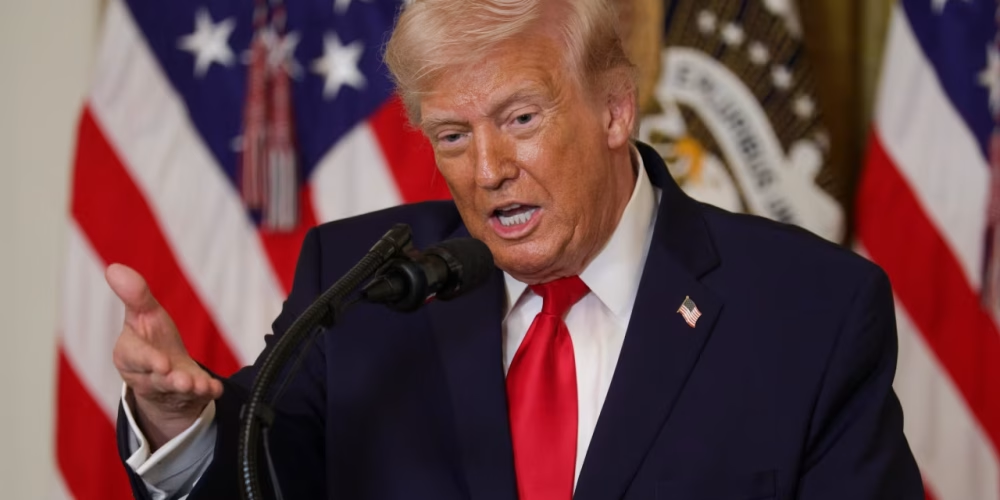
President Trump has consistently expressed a desire to bring American troops home from the region. However, finding a stable path to withdraw has proven difficult as hostilities continue to flare. The president is now weighing conflicting advice from two distinct camps within his inner circle.
One group of advisors argues that a massive military strike is necessary to ensure long-term stability. They believe that only a show of overwhelming force will deter future Iranian aggression against regional allies. This faction warns that an early withdrawal without a clear victory could project American weakness on the global stage.
In contrast, a different set of aides is prioritizing a diplomatic resolution to the crisis. These officials are reportedly exploring back-channel communications to establish a framework for peace. They argue that a prolonged war contradicts the president’s stated goals of reducing expensive foreign military commitments.
The ongoing conflict has placed significant strain on the administration’s broader foreign policy agenda. Resources that were intended for other regions are currently diverted to the Middle East theater. This shift has complicated efforts to focus on trade and competition with other global powers.
The president has recently expressed frustration with the lack of a clear timeline for victory. He has reportedly asked his military commanders for more creative options to end the fighting. This pressure has only served to increase the competition among his staff to provide the winning strategy.
Market experts suggest that the outcome of this internal debate will have major implications for energy prices. A sudden escalation could lead to further disruptions in global oil supplies. Conversely, a peace agreement would likely provide immediate relief to international markets.
Military leaders remain cautious about the risks of a rapid exit that leaves a power vacuum. They are working to ensure that any withdrawal plan includes protections for American assets in the area. The Pentagon is currently preparing several different scenarios for the president to review in the coming weeks.
As the situation evolves, the White House continues to project a unified front to the public. However, sources close to the administration describe a tense environment behind closed doors. The final decision will ultimately rest with the president as he navigates these complex geopolitical challenges.









