

KEY POINTS
- Galgotias University was asked to vacate its booth at the India AI Impact Summit after a staff member presented a Chinese-made robotic dog as the institution’s creation.
- The robot was identified online as the Unitree Go2, a commercially sold product from China, sparking widespread criticism.
- The incident drew political backlash and highlighted challenges at India’s flagship summit aimed at showcasing homegrown AI talent.
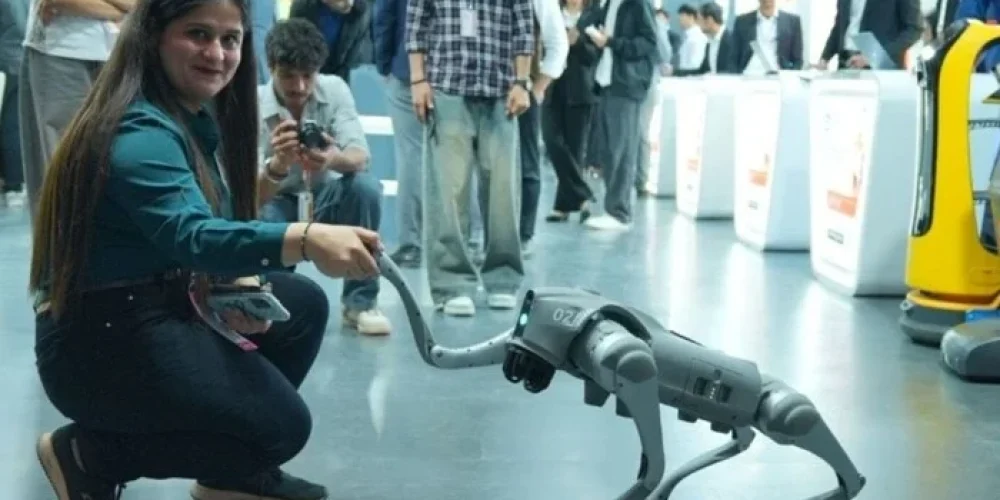
An Indian university was directed to step down from its exhibition space at the India AI Impact Summit in New Delhi after a professor appeared to present a Chinese-manufactured robotic dog as a proprietary development by the institution.
The controversy unfolded when a video of Galgotias University staff member Neha Singh went viral. In remarks broadcast on Indian state-run television, she introduced a robot nicknamed “Orion,” claiming it was developed by the university’s Centre of Excellence.
Social media users quickly recognised the robotic dog as the Unitree Go2, a widely available commercial product made by China’s Unitree Robotics and used internationally for education and research. Its identity was confirmed by observers familiar with robotics products, highlighting the misrepresentation.
The summit is billed as the first major artificial intelligence gathering hosted in the Global South, attracting global tech leaders, government officials and corporate investment pledges. Intended to showcase India’s AI capabilities and innovations, the event instead saw widespread critique over the episode.
Authorities reportedly asked the university to vacate its stall amid the backlash, though representatives at the booth said there had been no formal communication about removal as of the latest reporting.
The Indian government has sought to position the AI Impact Summit as a platform for homegrown talent and global cooperation in artificial intelligence. The event runs several days and includes addresses from major figures in tech and government, from Prime Minister Narendra Modi to leading executives from global AI companies.
The episode drew political criticism from opposition parties, who accused government organisers of damaging India’s reputation in technology on the world stage. Critics argued that showcasing a foreign-made product as a domestic innovation undermined the summit’s credibility and goals.
In response to the backlash, both the professor and the university later clarified that the robot was not its own creation and that they had not officially claimed development of the device. The university stated it was using the robot for student learning and experimentation.
The summit also faced wider scrutiny over organisational challenges and logistical issues, but investment pledges totalling more than $100 billion in Indian AI initiatives were announced during the event, signalling significant interest in the country’s tech ecosystem despite the controversy.
The incident underscores the heightened attention on authenticity and transparency at high-profile technology events, especially as countries compete to present progress in fields like artificial intelligence, robotics and innovation.









