

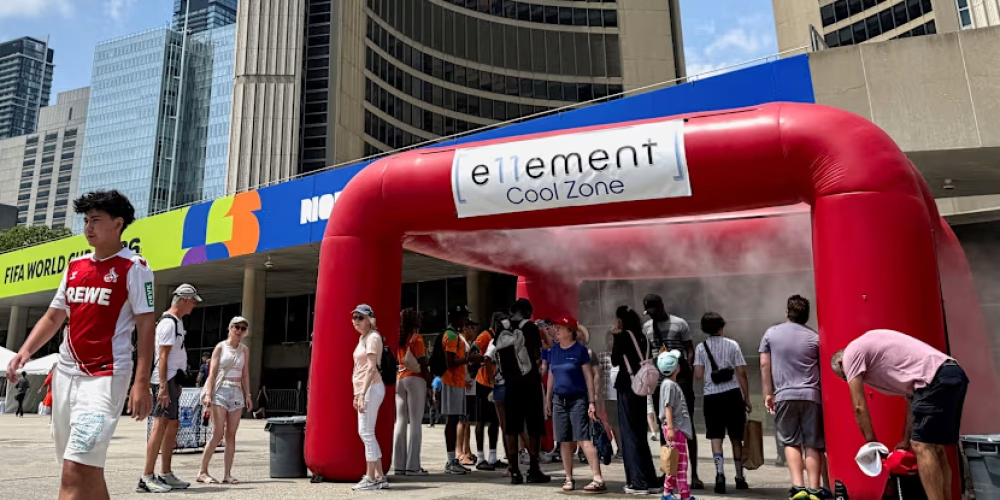
KEY POINTS
- Environment Canada issues severe heat warnings for Toronto as a dangerous heatwave blankets the region during major sporting events.
- Spectators are urged to limit alcohol, maximize hydration, and prepare for temperatures feeling as high as 44 degrees Celsius.
- The city has canceled public outdoor viewing broadcasts at Nathan Phillips Square due to severe weather and public safety risks.
A severe weather system bringing blistering temperatures and potential thunderstorms has triggered health alerts across Ontario just as sports fans gather for major international matchups. Government meteorologists have officially issued a domestic heat warning for the Toronto metropolitan area, prompting emergency health officials to distribute safety guidelines to tens of thousands of incoming travelers. The dangerous combination of high baseline heat and intense humidity is expected to persist through the week, presenting a serious public health challenge for outdoor gatherings.
What You Need to Know
The current atmospheric conditions in Eastern Canada are part of a broader pattern of volatile summer weather that has caused issues from coast to coast. Leading up to recent national holiday celebrations, the country has experienced a highly unusual sequence of environmental crises, stretching from severe regional flooding in western provinces to intense heat domes in urban centers. Local municipalities have been forced to quickly pivot by constructing cooling hubs, installing public hydration stations, and increasing emergency medical personnel to manage heat-related illnesses.
Historically, major summer sporting tournaments are scheduled with seasonal climate risks in mind, but the unprecedented intensity of this heatwave has caught local infrastructure off guard. Toronto Stadium, which operates as one of the primary hubs for global soccer matches this summer, is preparing for its final major event of the tournament under extreme operational strain. Public health authorities are particularly concerned because the stadium layout features open-air concourses that leave attendees highly exposed to ambient environmental conditions.
Sweltering Conditions Disrupt Fan Zones
With the heat index projected to push perceived temperatures well past 40 degrees Celsius (104 degrees Fahrenheit), the City of Toronto took the drastic step of shutting down its massive public viewing area at Nathan Phillips Square. Local administrators announced that the operational resources required to safely monitor thousands of people in an open-air concrete plaza under such hazardous conditions were simply too high. Officials are redirecting the public to indoor venues, air-conditioned sports bars, and shaded local establishments to minimize the risk of heat exhaustion and heatstroke.
Medical professionals are emphasizing that typical festive behaviors, such as heavy alcohol consumption and extended periods of standing under direct sunlight, dramatically escalate health risks during a heat crisis. City health representatives have publically advised individuals not to wait until they feel dehydrated to consume water, noting that excessive humidity prevents the human body from cooling itself naturally through sweat. To counter these dynamics, stadium officials are introducing modified security protocols to allow fans to bring sealed water containers into the venue, a rare exception to standard event policies.
The severe weather threat is further complicated by regional meteorologists tracking a line of volatile convective storms that could hit the area near game time. The potential for sudden, severe thunderstorms presents a dual hazard: extreme lightning and flash flooding risks occurring simultaneously with elevated heat indexes. Event staff have been instructed to execute emergency shelter plans if lightning strikes occur near the main stadium, which would compress large crowds into tight indoor corridors and potentially worsen localized heat levels.
Why This Matters
For American consumers and sports enthusiasts traveling across the northern border, this extreme weather event serves as a stark reminder of changing global travel dynamics. Thousands of US citizens routinely cross into Canada for major sporting events, often underestimating how severe summer weather can be in the Great Lakes region. The closure of major public fan zones forces travelers to alter their itineraries, incur unexpected indoor hospitality costs, and navigate municipal transit systems under highly stressful physical conditions.
Furthermore, this situation highlights a growing operational risk for the broader North American sports and tourism economies. As outdoor entertainment events face increasingly volatile seasonal climates, municipalities must allocate substantial taxpayer resources to climate mitigation, emergency medical services, and infrastructure upgrades. For the average consumer, these hidden costs will likely manifest as higher ticket prices, increased event insurance premiums, and stricter regulations regarding attendance at public venues during the summer months.
NCN Analysis
The disruption of high-profile international matches due to extreme heat waves signals a fundamental shift in how global sports organizations must approach host city selections. Moving forward, the traditional summer tournament window will face intense scrutiny as player safety and fan comfort become increasingly difficult to guarantee in non-temperate zones. Governing bodies will likely have to mandate retractable roofs or climate-controlled environments for all future tournament selections, effectively sidelining historic but smaller open-air venues.
Additionally, municipalities will need to develop more sophisticated, real-time public communication strategies to handle sudden weather cancellations. The last-minute closure of major fan hubs like Nathan Phillips Square creates a chaotic ripple effect through local economies, hitting street vendors and small businesses that relied heavily on outdoor foot traffic. Future event planning will require built-in economic contingencies and robust secondary indoor spaces to safely absorb displaced crowds without compromising public safety.
The upcoming days will test whether major urban infrastructures can seamlessly adapt to sudden climate disruptions while hosting global crowds.
Reported by the NCN Editorial Team









