

KEY POINTS
- The Iranian national squad officially thanked the city of Tijuana for its hospitality following their elimination from the tournament.
- Drastic logistical shifts forced the team to relocate its home base from Arizona to Mexico right before the competition began.
- Despite their gratitude toward local fans, team leaders sharply questioned the competitive fairness of their travel restrictions.
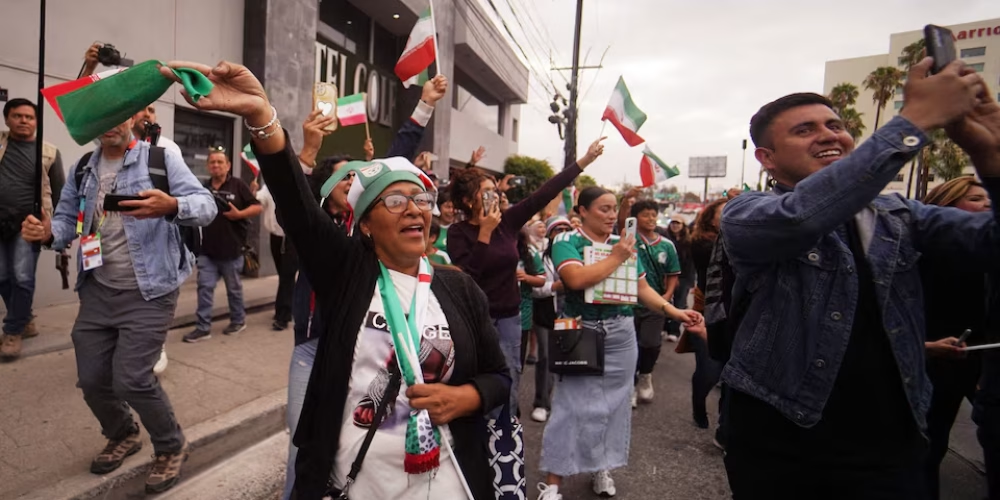
The Iranian national football team has officially bid farewell to the 2026 FIFA World Cup, pairing their tournament exit with an emotional message of gratitude toward their temporary hosts in Mexico. Following their elimination in the group stage, the squad released a statement honoring the border city of Tijuana, declaring the country to be their adoptive secondary home and backing the Mexican national team for the remainder of the competition. The heartfelt departure highlights the unique cross-border dynamics that defined the team’s tumultuous tournament journey.
What You Need to Know
The buildup to the 2026 FIFA World Cup was heavily impacted by geopolitical friction between Tehran and Washington, creating unprecedented hurdles for the Iranian athletic delegation. Initially, the Iranian Football Federation planned to establish its premier training camp in Tucson, Arizona, utilizing American sporting facilities to prepare for their Group G fixtures. However, escalating political and security concerns forced a rapid relocation of their operational headquarters just weeks before the opening match.
In a swift logistical pivot approved by FIFA officials, Iran shifted its base camp to the Centro Xoloitzcuintle in Tijuana, Mexico. This decision placed the roster directly along the United States-Mexico border, creating a complicated cross-border travel schedule. Because of stringent regulatory policies, Iranian players faced intense security scrutiny and strict travel mandates whenever they crossed into American territory to play their scheduled matches.
Throughout their stay in Baja California, the Iranian players and coaching staff found an unexpected sanctuary. Local residents and soccer enthusiasts in Tijuana embraced the displaced team, gathering regularly outside their hotel to offer encouragement, secure autographs, and foster an atmosphere of solidarity. This organic relationship between the local Mexican community and the visiting Middle Eastern squad became one of the most compelling human-interest stories of the group stage.
Competitive Imbalances and Border Challenges
While the team expressed profound gratitude for the human warmth they experienced, their exit statement also brought structural grievances to light. Head coach Amir Ghalenoei and team captain Mehdi Taremi raised serious concerns regarding what they perceived as an unlevel playing field. The core of their frustration stemmed from the strict travel windows imposed on the roster by regional authorities during the first two rounds of group play.
For their opening fixtures at SoFi Stadium in Los Angeles, the Iranian delegation was restricted from entering the United States until a mere 24 hours before kickoff. Though authorities eventually softened these parameters to allow a 48-hour arrival window prior to their final match against Egypt in Seattle, the squad was still required to immediately pack up and return to Tijuana after every game. The team argued that these rolling travel demands severely disrupted their recovery cycles and tactical training sessions.
The competitive frustration peaked during their decisive Group G finale against Egypt. Iran was denied a crucial stoppage-time winning goal due to a razor-thin offside decision, a result that ultimately sealed their elimination from the knockout rounds. In their post-tournament reflections, the federation noted that while international football marketing frequently promotes fair play, the practical execution of the tournament’s logistics created stark operational differences between competing nations.
Why This Matters
The unique plight of the Iranian team underscores the complex intersection of sports, global diplomacy, and international border policies. For soccer fans and regulatory bodies in North America, this situation serves as a critical case study on how external political conflicts can directly bleed into the management of elite sporting events. The logistical friction experienced by the squad highlights the immense challenges of hosting a multi-nation tournament when host countries maintain strict diplomatic embargoes against participating federations.
Furthermore, the bond formed between the residents of Tijuana and the Iranian players highlights the power of sport to transcend political divides. The enthusiastic support of Mexican fans toward a foreign team demonstrates how local communities can reshape the narrative of a tournament through hospitality and cultural exchange. This cross-border dynamic will likely influence how international sports organizations assess future bids involving multiple host nations with complex border regulations.
NCN Analysis
The public statements left behind by Team Melli represent a dual-pronged diplomatic message. By separating their immense gratitude for the Mexican public from their critique of tournament logistics, the Iranian federation skillfully highlighted their grievances without appearing bitter about their sporting exit. Their parting endorsement of Mexico as a “second team” leaves a lasting positive legacy in the region, ensuring that their tournament run will be remembered for cultural unity rather than just political gridlock.
Looking ahead to the remainder of the tournament, FIFA and regional organizing committees will face pressure to re-evaluate how travel and entry accommodations are handled for politically sensitive matchups. The administrative friction documented by the Iranian staff creates a crucial precedent that future organizers must resolve to preserve athletic equity. Ultimately, while Iran’s on-field campaign has concluded, the structural questions raised by their cross-border journey will echo throughout the sports world long after a champion is crowned.
World Cups inevitably reach a conclusion, but the historic connections forged between diverse cultures during times of adversity endure well past the final whistle.
Reported by the NCN Editorial Team









