

KEY POINTS
- A traditional Bosnian restaurant in Santa Clara has experienced an unprecedented surge in business during the World Cup.
- Traveling fans and locals are converging on the venue ahead of a high-stakes knockout match against the United States.
- The festive gathering highlights the deep resilience and cultural pride of the Northern California diaspora.
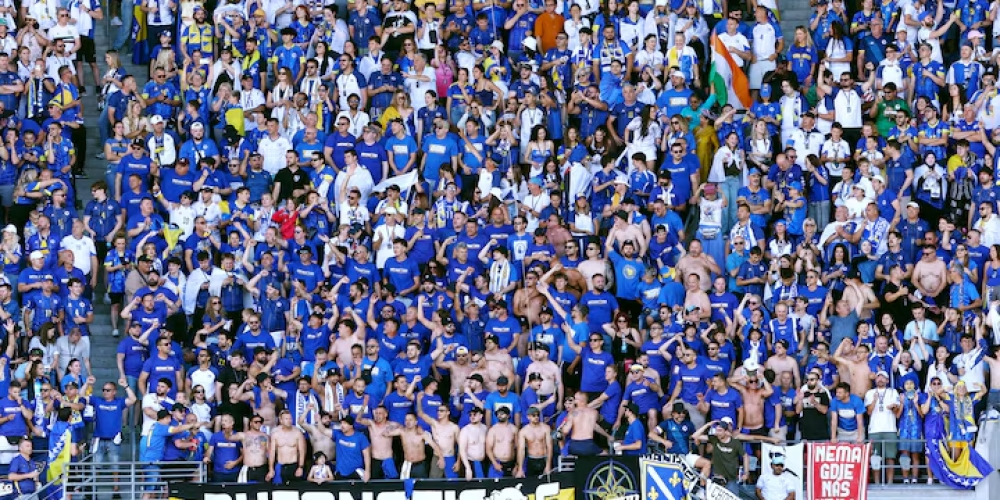
A small, family-owned restaurant in Northern California has transformed into the ultimate epicenter of European soccer culture as the 2026 World Cup reaches its explosive elimination rounds. With traditional folk music playing and traditional sausages sizzling on the outdoor grill, the establishment has become a vibrant sanctuary for thousands of traveling and local supporters. The sudden commercial and cultural boom comes just hours before the Bosnian national team takes the pitch for a monumental showdown against the United States.
What You Need to Know
The tournament’s arrival in North America has unlocked a unique phenomenon where immigrant communities find themselves hosting their ancestral homeland’s team on adopted soil. For decades, major metropolitan areas across the West Coast have welcomed diverse diaspora populations, creating tight-knit communities that preserve their culinary and cultural heritage far from their original borders. When these heritage lines intersect with a major international sports tournament, the result is an intense, localized explosion of national pride.
In the San Francisco Bay Area, the Bosnian diaspora numbers roughly 10,000 residents, many of whom arrived in the region under incredibly harrowing circumstances. During the devastating Balkan conflicts of the 1990s, thousands of families fled the war-torn region to rebuild their lives from scratch in Northern California. Over the past quarter-century, this resilient community has quietly integrated into the local economic landscape while maintaining an fierce devotion to their cultural roots, particularly through a shared love for football.
The World Cup round-of-32 draw created a dream scenario for this community, placing Bosnia and Herzegovina on a direct collision course with the tournament co-hosts in their immediate backyard. This structural coincidence has turned a quiet corner of Silicon Valley into an international soccer hub, drawing visitors from across the United States and Europe who are eager to witness their team challenge the tournament favorites on American soil.
Euro Grill Becomes the Home of the Bosnian Diaspora
At the center of this cultural phenomenon is Euro Grill, the only Bosnian-operated eatery in the South Bay Area. Located in Santa Clara, the restaurant has experienced a massive economic windfall as waves of hungry soccer enthusiasts pack the establishment to capacity. Patrons have consistently lined up down the street, waiting hours for a chance to crowd onto the outdoor terrace and savor traditional delicacies like spicy cevapi sausages and flaky burek pastries.
The venue’s owner, Ramiz Avdic, viewing the sudden influx of customers as a profound validation of a journey that began during the dark days of the late 20th century. Having survived the brutal, multi-year siege of Sarajevo following the fragmentation of Yugoslavia, Avdic took up arms to defend his homeland, suffering severe injuries from a grenade attack that nearly cost him his leg. After relocating to California at the start of the century, he opened his restaurant, which he now fondly describes as an open living room for anyone looking to share in the community’s collective joy.
The electric atmosphere inside the eatery is mirrored by the stories of its patrons, many of whom are reflecting on the surreal nature of the upcoming match. Local residents who arrived in the United States as young refugees with virtually no possessions find it hard to comprehend that their national squad is playing a historic knockout match just miles down the road. This profound sentiment has triggered a massive travel movement, with fans booking expensive flights from major American cities and European nations to ensure they are present for the historic fixture.
Despite the intense competitive stakes of the upcoming match against the United States, the mood remains overwhelmingly celebratory and grateful. Supporters frequently characterize the clash as an emotional meeting between their homeland and their motherland, acknowledging that the United States provided them with safety and a foundation to build successful lives. This dual identity adds a rich layer of complexity to the match, turning a high-stakes sporting event into a profound celebration of immigrant success and cultural survival.
Why This Matters
This localized economic and cultural boom illustrates the immense grassroots impact that the expanded World Cup format brings to host cities beyond stadium gates. While major corporate sponsors and city officials often focus on massive stadium revenues, the true spirit of the tournament is frequently found in small local businesses that cater to specific fan demographics. For independent restaurateurs, a single successful tournament run by a diaspora team can generate a year’s worth of revenue while cementing long-term brand loyalty within the community.
Furthermore, the gathering in Santa Clara highlights how international sports can serve as a powerful therapeutic mechanism for communities that have experienced historical trauma. For a population shaped by the memories of displacement and conflict, the national soccer team offers a unifying symbol of joy, resilience, and international recognition. The tournament provides an elite platform where a small nation can compete on equal terms with global superpowers, offering a sense of collective pride that resonates far beyond the pitch.
NCN Analysis
From an editorial perspective, the festive scene at Euro Grill serves as a reminder that the true magic of a North American World Cup lies in its unmatched domestic diversity. Unlike tournaments held in geographically isolated nations, a World Cup in the United States essentially guarantees a passionate, built-in home crowd for nearly every participating country. The lines between domestic and international support become beautifully blurred, creating an electric, unpredictable tournament atmosphere that corporate planners could never completely script.
Looking forward to the elimination clash at the Bay Area Stadium, the Bosnian squad will likely be buoyed by this massive, unexpected wave of local support. While head coach Sergej Barbarez and his players face a daunting tactical challenge against a highly motivated American team managed by Mauricio Pochettino, the psychological boost of playing in front of a passionate diaspora cannot be overstated. Regardless of the final scoreline on Wednesday night, the Bosnian community in Northern California has already secured a historic victory by turning their shared heritage into a focal point of the world’s biggest sporting event.
The vibrant celebration within a quiet California neighborhood proves that a sports tournament can transform a local business into a historic cultural sanctuary.
Reported by the NCN Editorial Team









