

KEY POINTS
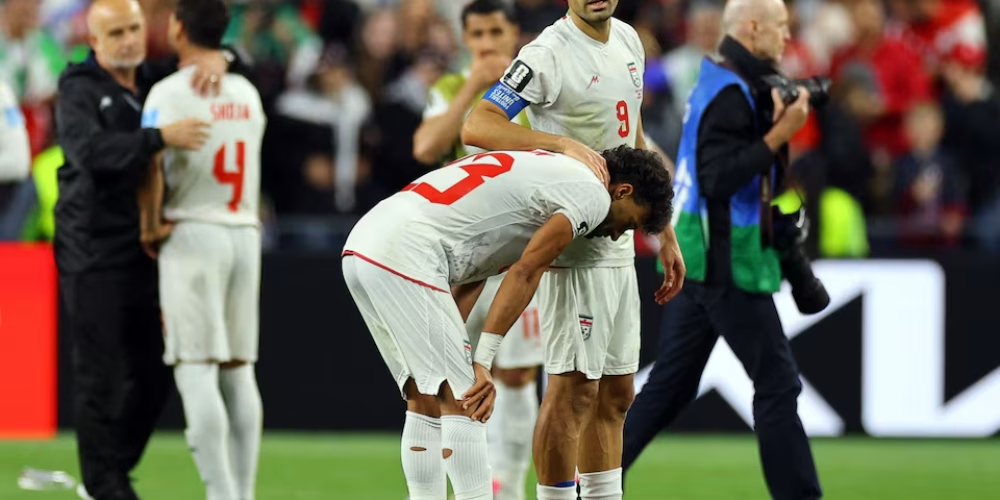
- Iran’s campaign to advance to the knockout stage for the first time ended in heartbreaking fashion.
- A last-gasp equalizer by Austria against Algeria sealed Team Melli’s tournament departure.
- Despite remaining unbeaten during the group phase, Iran missed out on the top eight third-placed spots.
The Iranian national soccer team saw its dreams of a historic World Cup knockout berth crushed on Sunday in agonizing fashion. A dramatic, final-minute goal in a parallel match completely altered the tournament standings, sending Team Melli packing despite a highly resilient showing. For fans tracking the expanded tournament across the United States, the sudden shift underscored the absolute chaos and thin margins of the new format.
What You Need to Know
Entering the 2026 tournament, Iran carried the heavy burden of history, having never progressed beyond the group stage in its previous World Cup appearances. The expanded 48-team format introduced a lifeline for many squads, allowing the eight best third-placed teams across the groups to advance to the newly established Round of 32. This modification meant that every goal scored across different stadiums could directly impact a country’s survival, creating a highly volatile environment for teams on the bubble.
Compounding the pressure on the pitch, the Iranian squad faced significant logistical and diplomatic hurdles before the tournament even commenced. Due to visa issues and complex geopolitical tensions, the team had to alter its preparation plans, setting up camp in Tijuana, Mexico, rather than its intended venue in Arizona. Despite these off-field distractions and complaints from the coaching staff regarding traveling schedules, the players maintained an impressive level of focus once the matches got underway.
Heading into the final slate of group games, Iran had put themselves in a position to dream. Having navigated their matches without suffering a single defeat, including hard-fought draws against New Zealand and Egypt, they were clinging to a spot among the top third-placed teams. However, their ultimate fate was no longer in their own hands, leaving them entirely vulnerable to results in concurrent fixtures.
Austria and Algeria Thriller Sealed Iran’s Fate
The definitive blow to Iran’s aspirations came during a thrilling, high-scoring encounter between Austria and Algeria. As the clock ticked down, a specific set of scorelines was required to keep Iran’s qualification hopes alive. Algeria looked poised to secure a victory that would have favored Team Melli’s statistical standing, but the European side had other plans.
In the dying moments of the match, Austria launched a desperate final attack and managed to find a dramatic equalizing goal, leveling the game at 3-3. The late equalizer proved catastrophic for Iran, as the single point gained by Austria shifted the intricate tie-breaking formulas utilized by FIFA for third-placed teams. When the final whistle blew, the adjusted points total officially pushed Iran outside the top eight wildcard slots.
The emotional fallout was immediate for the Iranian contingent, who watched their historic ambitions vanish without even being on the field. Soccer fans worldwide witnessed the cruel reality of tournament math, where an unbeaten record over three matches is still not a guarantee of progression. The dramatic conclusion concluded a roller-coaster journey for an Iranian squad that felt it had overcome enough adversity just to compete on level terms.
Why This Matters
For soccer enthusiasts and casual sports fans across North America, this dramatic conclusion highlights the sheer unpredictability and entertainment value of the expanded World Cup format. With more teams and intricate wildcard pathways, the group stage final matchdays have transformed into must-watch television where multiple games must be monitored simultaneously. The high-stakes drama validates FIFA’s decision to expand the tournament, proving that late-game heroics in one city can instantly shatter hearts thousands of miles away.
Furthermore, the exit of a prominent Middle Eastern powerhouse like Iran alters the viewer demographics and fan engagement for the remainder of the tournament. Major metropolitan areas across the United States with large diaspora communities, such as Los Angeles, lose a major focal point of cultural celebration and athletic pride. This shifts the local economic and hospitality momentum, as fan festivals and viewing parties adapt to a tournament field that no longer features one of the region’s most resilient underdogs.
NCN Analysis
The heartbreaking exit of Iran leaves a profound sense of “what if” for football analysts. Team Melli demonstrated defensive discipline and tactical flexibility throughout their group stage campaign, remaining undefeated under immense administrative and psychological strain. Their inability to secure a decisive victory rather than multiple draws ultimately left them at the mercy of statistical tiebreakers, a tactical lesson that future tournament hopefuls will study closely.
Looking ahead, the expanded 48-team structure has proven to be a resounding success in terms of generating late-stage drama, but it will undoubtedly face scrutiny regarding fairness and scheduling synchronization. For Iran, the focus must now shift to building upon this resilient foundation for future international cycles. Meanwhile, global soccer fans should prepare for even more chaotic finishes as the tournament moves into the high-stakes, single-elimination knockout rounds.
Unbeaten yet undone by tournament math, Iran departs the world stage knowing they pushed the limits of historical progression further than ever before.
Reported by the NCN Editorial Team









