

KEY POINTS
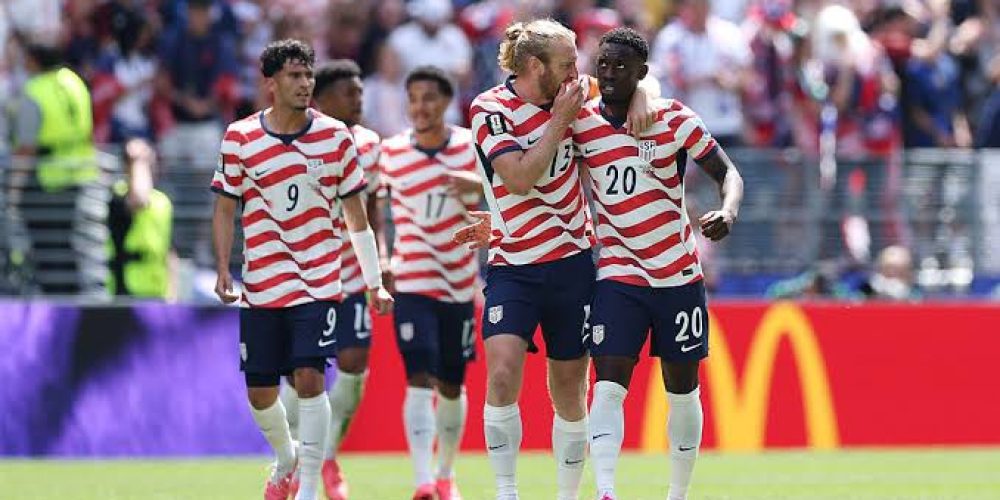
- The United States Men’s National Team defeated Australia 2-0 in Seattle to secure their spot in the next round of the tournament.
- Despite missing star player Christian Pulisic due to injury, the American side delivered a highly efficient and dominant performance.
- An early own goal followed by a header from youngster Alex Freeman sealed the victory before the halftime break.
The United States Men’s National Team convincingly punched their ticket to the prestigious World Cup knockout stage following a commanding 2-0 victory over Australia at a packed stadium in Seattle. Playing under immense pressure and without their primary offensive catalyst, the American squad showcased impressive tactical versatility to systematically dismantle their opponent’s defensive lines. The impressive result guarantees that the host nation will advance beyond the group phase with games to spare, igniting nationwide enthusiasm for the team’s championship aspirations.
What You Need to Know
The path leading up to this high-stakes international fixture was defined by significant anxiety and anticipation across the American sports landscape. Following an impressive 4-1 opening triumph over Paraguay, public expectations skyrocketed, placing immense pressure on the managerial staff to sustain that elite momentum. However, a major pre-match setback surfaced when it was confirmed that talismanic captain and star forward Christian Pulisic would be sidelined due to a lingering calf injury. For a program historically accused of over-relying on individual brilliance, this absence served as a definitive litmus test for the roster’s collective depth and resilience under the bright lights of a global tournament.
Mauricio Pochettino, the newly appointed tactical architect of the American squad, had to pivot quickly, shifting his tactical framework to a classic 4-4-2 system designed to leverage team speed and physical aggression. This strategic adjustment saw young striker Ricardo Pepi inserted into the starting lineup alongside Folarin Balogun, creating a dynamic dual-threat frontline intended to keep the Australian defense constantly off-balance. The Socceroos entered the contest coming off a stunning 2-0 victory of their own against Turkey, meaning both nations were effectively playing for immediate qualification and the right to control their destiny in Group D.
Historically, the American men’s program has endured mixed results when serving as the tournament host. During the iconic 1994 iteration, the squad barely scraped through to the elimination brackets as one of the top third-place finishers before falling to eventual champions Brazil in the round of 16. In 2026, the expanded 48-team format leaves absolutely no margin for tactical errors, meaning that securing early advancement is paramount to managing player fatigue and avoiding catastrophic injuries during the grueling latter stages of the summer campaign.
Overcoming Adversity With Fast Tactical Execution
From the opening whistle, the partisan crowd in the Pacific Northwest created an incredibly hostile environment for the visiting Australian side. The tactical blueprint established by Pochettino paid dividends almost immediately as the Americans pressed high up the pitch, disrupting the Socceroos’ build-up play from the back line. In the 11th minute of play, the relentless pressure broke through when Folarin Balogun executed a brilliant, blistering run down the left flank, leaving his marker trailing behind. Balogun unleashed a sharp, low cross into the six-yard box intended for Pepi, but Australian defender Cameron Burgess tragically deflected the ball into his own net, giving the hosts an early 1-0 advantage.
Rather than sitting back on their early lead, the United States continued to look dangerous, controlling 56% of total possession and dictating the tempo through a highly coordinated midfield partnership featuring Weston McKennie and Tyler Adams. Australia attempted to counter with physical play, leading to a succession of hard fouls and a highly contentious first half that eventually produced seven yellow cards between both teams. Despite the physical toll and an intense head-to-head collision that briefly paused play, the American defensive line, marshaled by Antonee Robinson, completely neutralized the Australian counter-attack, restricting the visitors to minimal sights of goal.
Just moments before the halftime whistle blew, the host nation doubled their advantage off a beautifully executed set-piece routine. Following a tactical foul along the wing, a precise delivery found its way to the edge of the penalty area, where fullback Sergiño Dest unleashed a powerful shot that deflected wildly off the Australian defensive wall. Right-back Alex Freeman, the 21-year-old rising star and son of a former Super Bowl champion, reacted with exceptional instincts, leaping forward to guide a spectacular header past goalkeeper Patrick Beach. Although initially disallowed by the linesman for offside, a lengthy video assistant referee review overturned the decision, sending the stadium into absolute pandemonium.
The second half witnessed a tactical shift, as Australian manager Tony Popovic introduced a trio of attacking substitutions in a desperate bid to rescue a point and preserve their tournament hopes. While the Socceroos applied significantly more physical pressure and advanced their defensive lines, the American backline remained entirely unbroken, displaying a level of maturity and defensive composure rarely seen in past tournament appearances. The match concluded without any further goals, sealing a historic night for American soccer as the squad won consecutive opening matches at a major international tournament for the first time since the inaugural 1930 edition.
Why This Matters
The successful progression of the United States to the World Cup knockout stage delivers a massive boost to the broader commercial and cultural infrastructure of North American sports. For domestic television networks, corporate sponsors, and hospitality industries, a guaranteed extended run for the host team ensures sustained viewer ratings and unprecedented financial windfalls throughout the summer months. Had the American team faltered early in the group stage, casual sports consumers might have tuned out, but this convincing performance guarantees that soccer will remain at the absolute center of the American cultural zeitgeist for weeks to come.
Furthermore, this triumph serves as an invaluable validation of the long-term structural investments made into domestic youth academies and Major League Soccer development pathways. Players like the 21-year-old Freeman, who recently leveraged his domestic success into a high-profile European transfer to La Liga, represent a new generation of American soccer talent capable of competing with elite international opposition. This victory proves to a skeptical global audience that the United States is no longer a developing soccer nation reliant on luck, but a legitimate footballing entity possessing the tactical depth required to challenge the world’s best teams.
NCN Analysis
This dominant display provides a fascinating glimpse into the tactical evolution of the United States under Mauricio Pochettino’s leadership. The ability to seamlessly adjust formations and maintain high-intensity pressing without an elite individual talent like Christian Pulisic demonstrates a profound shift in squad mentality and tactical discipline. By clinching the top spot in Group D early following Paraguay’s subsequent victory over Turkey, the coaching staff now enjoys the luxury of resting key veterans and managing player rotations during the final group fixture, a critical advantage heading into the grueling elimination matches.
However, the road ahead will only become steeper as the tournament shifts into the single-elimination rounds in July. While the defensive compactness and counter-attacking efficiency against Australia were exemplary, the squad must eliminate minor defensive lapses and improve their clinical finishing to deep-tier opponents. Soccer enthusiasts should watch closely to see how quickly Pulisic recovers from his calf injury, as his world-class creativity will be absolutely essential when the United States faces the elite tactical giants of South America and Europe in the round of 32 and beyond.
Securing a spot in the elimination rounds allows the host nation to dream big as they prepare to face the world’s premier footballing powerhouses on home soil.
Reported by the NCN Editorial Team









