

KEY POINTS
- Maximiliano Araujo scored a vital 80th-minute equalizer to rescue a point for Uruguay in their tournament opener.
- Saudi Arabia took an unexpected first-half lead through Abdulelah Al-Amri after capitalizing on a goalkeeping error.
- The draw leaves all four nations in Group H tied on one point each following the opening matchday.
The Uruguayan national football team narrowly avoided an opening-match catastrophe at the World Cup, fighting back to secure a tense 1-1 draw against a disciplined Saudi Arabia side on Monday night. Despite dominating possession and launching an aggressive attacking barrage throughout the second half, the South Americans were forced to settle for a single point after falling behind early. For soccer enthusiasts across the globe, the dramatic stalemate served as another stark reminder of the narrowing competitive gaps in international tournament football.
What You Need to Know
Historically, Uruguay has entered global tournaments carrying the formidable weight of past footballing glories, having secured the ultimate prize in 1930 and 1950. Under the current tactical guidance of manager Marcelo Bielsa, the squad has transitioned toward a high-intensity, fluid pressing system designed to maximize their explosive attacking depth. Despite boasting a roster packed with elite European talent, the South American powerhouse has occasionally struggled with defensive consistency when transitioning from high-intensity attacks.
Saudi Arabia arrived at the competition determined to prove that their historic victory over eventual champions Argentina four years ago in Qatar was no fluke. The Green Falcons have steadily built a reputation for defensive organization, physical resilience, and sharp execution on set-pieces under intense pressure. While often categorized as heavy underdogs against elite footballing nations, their tactical discipline under structural duress makes them a dangerous opponent for any team prone to complacency.
The pre-match expectations heavily favored Bielsa’s side, with many analysts predicting a comfortable victory to establish early dominance in Group H. However, opening fixtures in international tournaments are rarely straightforward, often disrupted by the immense emotional pressure of the global stage and tactical anomalies. With group rivals Spain and Cape Verde playing out a goalless draw earlier in the day, the stakes for securing an early advantage were incredibly high.
Relentless Pressure Breaks Resilient Saudi Defense
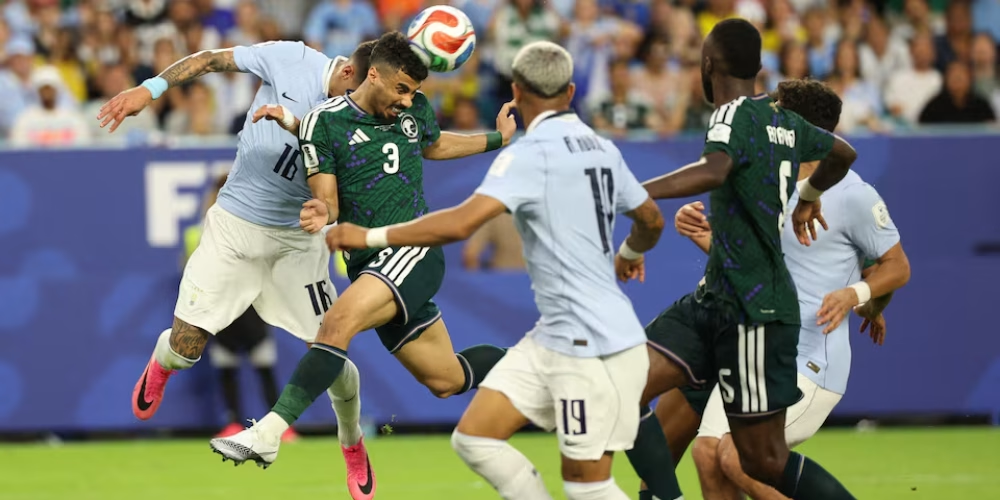
The match opened with Uruguay immediately imposing their technical authority, moving the ball sharply across the pitch to pin the Asian side deep within their defensive half. Left winger Maximiliano Araujo created the first genuine opportunity within the opening five minutes, turning brilliantly on the edge of the box to unleash a fierce strike that forced a sharp save. Despite controlling the tempo and generating several half-chances—including a powerful diving header—the favorites struggled to break down a compact, highly organized Saudi defensive line.
Against the run of play, the Green Falcons stunned the stadium by taking the lead in the 41st minute following a set-piece breakdown. A well-delivered corner kick sparked chaos inside the penalty area, where veteran goalkeeper Fernando Muslera misjudged the flight of the ball and parried a powerful header directly into danger. Saudi defender Abdulelah Al-Amri reacted fastest to the loose ball, prodding it home from close range to send the underdogs into the halftime interval with a shocking one-goal advantage.
The second half witnessed an overwhelming shift in momentum as Bielsa adjusted his midfield structure, demanding a relentless offensive onslaught to salvage the game. The statistics painted a picture of absolute Uruguayan dominance, with the team finishing the match commanding over 57 percent possession and registering a staggering 29 shots. Saudi goalkeeper Mohammed Al-Owais emerged as the definitive star of the night, producing an array of spectacular saves to deny powerful efforts from elite stars like Federico Valverde.
Uruguay’s persistent pressure finally paid dividends in the 80th minute when a high ball into the penalty area triggered another scramble. Al-Owais managed to parry an initial goal-bound header, but the rebound fell perfectly into the path of the tracking Araujo. The winger kept his composure to fire the ball home from a tight angle, rescuing his team from a damaging defeat and setting up a frantic but ultimately scoreless finale.
Why This Matters
For soccer fans and casual viewers in the United States, this dramatic encounter perfectly illustrates why the tournament remains the premier global sporting event. The intense tactical battle and emotional volatility resonate deeply with an American audience that has increasingly embraced the sport’s dramatic narratives. As local viewership numbers continue to break records, matches defined by narrow margins and underdog heroism fuel widespread mainstream interest and digital engagement across North American media markets.
From an analytical standpoint, the competitive parity displayed in this match highlights the modern evolution of global football structures. Tactical discipline, rigorous defensive organization, and elite physical conditioning are enabling historically smaller footballing nations to neutralize star-studded rosters on any given day. This trend makes the tournament highly unpredictable, driving up commercial value for broadcasters and tournament organizers who thrive on competitive drama.
NCN Analysis
Uruguay will undoubtedly view this 1-1 draw as a significant missed opportunity to take control of Group H following Spain’s unexpected dropped points. While Bielsa’s attacking philosophy generated more than enough scoring chances to win comfortably, the team’s lack of clinical finishing and vulnerability on defensive transitions remain major causes for concern. If the South American giants hope to deep-run into the knockout stages, they must quickly rediscover their clinical edge before facing more organized European opposition.
For Saudi Arabia, the hard-earned point represents an immense psychological victory that keeps their qualification dreams highly viable. The coaching staff deserves immense credit for constructing a defensive blueprint that withstood nearly 30 shots from one of the world’s most potent attacks. Looking ahead, sports fans should watch how both teams manage physical fatigue, as the intense physical demands of absorbing sustained pressure could impact squad rotation in the critical upcoming group fixtures.
The battle for survival in Group H remains wide open, guaranteeing high-stakes drama for the remainder of the opening stage.
Reported by the NCN Editorial Team









