

KEY POINTS
- Municipal officials are rapidly adjusting security frameworks in anticipation of an upcoming championship parade through lower Manhattan.
- Clean-up crews worked overnight to clear significant street debris following intense, spontaneous celebrations across Midtown districts.
- City administrators face growing pressure to ensure public safety while accommodating hundreds of thousands of basketball fans.
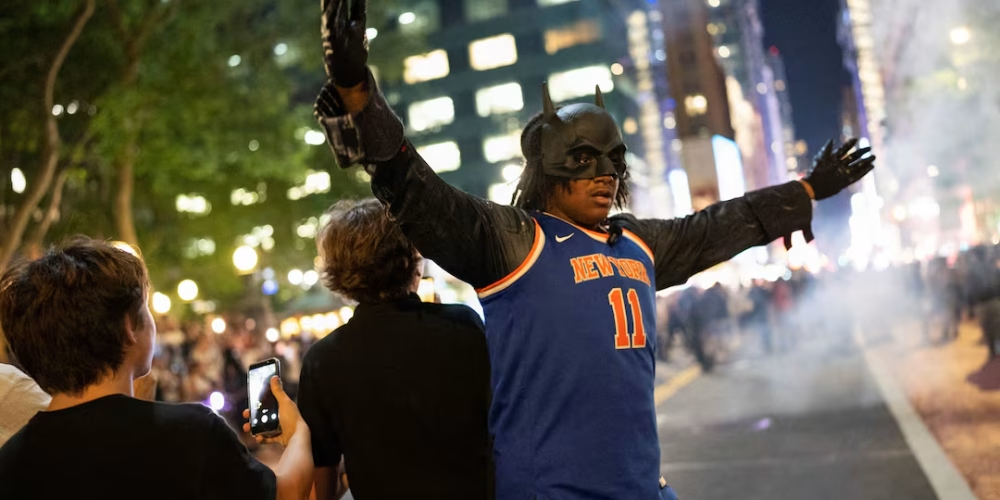
The morning after a monumental championship triumph, New York City is pivoting from immediate crowd control to long-term event coordination. Following a night characterized by both historic fan jubilation and pockets of intense localized unrest, municipal agencies are mobilizing to prepare for a massive civic celebration. Local leadership is tasked with balancing the deep cultural enthusiasm of a basketball-deprived city with the practical demands of securing a sprawling urban parade route.
What You Need to Know
A championship parade in a metropolitan center like New York is a massive logistical undertaking requiring months of theoretical design and days of immediate, physical execution. The route down the Canyon of Heroes in lower Manhattan is historically reserved for the highest achievements in sports, science, and global politics. Transforming this heavily trafficked financial corridor into a secure spectator zone requires seamless cooperation between municipal departments, corporate entities, and regional transit authorities.
The immediate challenge for city planners centers around infrastructure management and crowd density. Unlike regular season events or individual playoff matchups, a victory parade draws millions of people into a highly concentrated area over a short window of time. Managing the safety of these spectators while keeping vital arterial roadways functional for emergency vehicles represents a delicate operational tightrope for the city’s leadership.
Furthermore, the backdrop of the previous night’s disturbances has significantly altered the planning landscape. With property damage and transit disruptions fresh in the minds of local authorities, the upcoming security deployment is expected to be one of the largest for a sporting event in the city’s modern history. Officials are determined to prevent a recurrence of erratic behavior while preserving the festive, historic nature of the milestone.
City Mobilizes Infrastructure for Impending Celebration
By dawn on Monday, teams of sanitation workers had swept through the areas surrounding Madison Square Garden, collecting metric tons of discarded merchandise, beverage containers, and celebratory confetti. The rapid cleaning operation was a critical first step in restoring normalcy to the transit grid before the morning commuter rush. While specialized crews worked to repair damaged street fixtures, city planners met at municipal headquarters to finalize the logistical blueprint for the formal parade.
Steel barricades are already being delivered to key positions along the designated parade route, stretching from Battery Park toward City Hall. Security checkpoints, elevated observation platforms, and specialized medical tents will be deployed to handle the anticipated influx of families, students, and workers. The transit authority has announced comprehensive service adjustments, including increased train frequencies on specific subway lines and extensive bus detours to keep commuters moving around the pedestrian-only zones.
Concurrently, tactical units within regional law enforcement are establishing layered security parameters. Intelligence units are actively monitoring digital forums and crowd communication networks to anticipate potential bottlenecks or gathering points that could pose a safety risk. Plainclothes officers will be integrated into the crowds alongside heavily reinforced uniform details to monitor behavior and intervene swiftly if celebratory actions begin to threaten public safety.
The financial dimension of the event is also taking shape as local businesses prepare for a historic surge in consumer activity. Retail stores, restaurants, and hospitality venues along the parade route are adjusting staff schedules and ordering additional inventory to meet the unprecedented demand. Business improvement districts are coordinating directly with city agencies to ensure that commercial properties remain protected while remaining fully accessible to genuine consumers and tourists.
Why This Matters
The logistics surrounding a massive victory celebration have a profound impact on the daily lives of urban residents and the broader economic health of the region. For everyday citizens, the closure of major thoroughfares and the alteration of public transit schedules require substantial adjustments to daily routines, childcare arrangements, and employment commutes. The successful execution of such an event serves as a critical test of a city’s administrative competence, proving its ability to host global-scale gatherings without paralyzing essential municipal operations.
On an economic level, the parade provides an immediate injection of capital into the local service economy, benefiting small businesses and corporate retailers alike. However, the associated costs of overtime pay for police, sanitation, and emergency medical personnel fall squarely on municipal budgets. Balancing these immediate expenditures against the long-term promotional value of a safe, globally broadcasted celebration is a core consideration for local policymakers and taxpayers.
NCN Analysis
The transition from the chaotic street scenes of Sunday night to a highly structured parade environment underscores the dual nature of modern sports fandom. New York City’s administrative apparatus is highly experienced in handling large-scale events, yet the volatility of spontaneous celebrations remains an unpredictable variable. The upcoming parade will likely serve as a blueprint for how major cities manage high-stakes public gatherings in an era where social media can rapidly alter crowd behavior in real time.
Looking forward, observers should watch how city leadership balances aggressive security enforcement with the desire for a festive atmosphere. If the security presence is felt to be too restrictive, it may dampen the civic pride that a championship is meant to foster; conversely, any lack of oversight could invite a repetition of past property damage. The outcome of this event will influence municipal security strategies for major cultural milestones across North America for years to come.
As the confetti is cleared and the barricades are locked into place, the city stands ready to honor its team under the watchful eye of a historic security apparatus.
Reported by the NCN Editorial Team









