

KEY POINTS
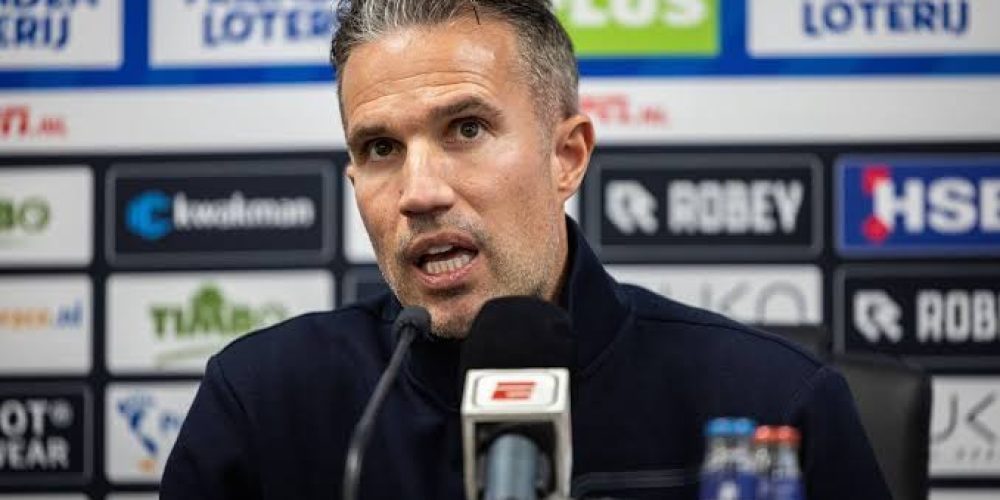
- Former Manchester United and Arsenal forward Robin van Persie has been sacked by Feyenoord after 16 months in charge.
- The surprising managerial dismissal comes despite the club securing a second-place finish in the Eredivisie standings.
- Team executives cited tactical inconsistencies and a decline in performance metrics across domestic and European matches.
Dutch football giants Feyenoord announced the abrupt dismissal of head coach Robin van Persie on Sunday evening following a comprehensive internal evaluation of the team’s operational direction. The 42-year-old manager was relieved of his duties despite guiding the Rotterdam-based outfit to a runner-up finish in the domestic league and securing direct qualification for next season’s UEFA Champions League. The structural decision marks a turbulent conclusion to the former international striker’s first major senior managerial appointment at his boyhood club.
What You Need to Know
Robin van Persie returned to the club where he initiated and subsequently concluded his legendary professional playing career in February 2025, stepping into the high-profile vacancy with massive emotional backing from the local fan base. His arrival was treated as a highly symbolic homecoming, intended to construct a long-term sporting project centered around expansive, modern attacking principles. The club’s leadership initially demonstrated immense faith in his potential by issuing a contract that was structured to run through the summer of 2027.
However, the reality of elite football management quickly tested the boundaries of that sentimentality. While a second-place league finish traditionally guarantees institutional stability and a financial windfall via continental tournament revenue, Feyenoord’s hierarchy grew increasingly detached from the manager’s long-term tactical vision. The club endured a massive 19-point deficit behind runaway Eredivisie champions PSV Eindhoven, a competitive chasm that exposed significant structural issues within the daily football operations at De Kuip.
The decision to sever ties was heavily accelerated by a recent administrative overhaul within the club’s executive boardroom. The newly appointed technical director, Devy Rigaux, alongside sporting director Robert Eenhoorn, initiated an exhaustive performance audit immediately upon assuming power. This corporate evaluation scrutinized not only the raw points accumulation but also the underlying development of the squad’s identity, ultimately concluding that a total structural reset was necessary prior to embarking on the upcoming campaign.
Tactical Shifts and European Struggles Doom Van Persie
The core factors driving the abrupt managerial change extended far beyond the domestic league table. Throughout his 16 months at the helm, the young manager faced persistent criticism from local sports analysts and regional media outlets regarding an ostensibly chaotic management style. The coaching staff struggled to settle on a definitive starting lineup, leading to accusations of excessive squad tinkering and tactical experimentalism that prevented the roster from developing natural chemistry during critical stretches of the calendar.
Internal friction further complicated the squad dynamics, with reports surfacing of notable run-ins between the head coach and key senior players over positional responsibilities. These management issues manifested directly on the pitch, resulting in a highly volatile season marked by a damaging collapse in form during the late autumn months. Feyenoord’s competitive issues were magnified during an incredibly disappointing continental campaign, which began with a painful elimination by Turkish club Fenerbahce in the final qualification stage of the Champions League.
Relegated to the Europa League group phase, the Dutch team failed to establish any semblance of momentum under the former forward’s guidance. The team suffered six defeats out of their eight continental fixtures, only managing to secure solitary victories against lower-tier opposition in Sturm Graz and Panathinaikos. This severe regression in European competition, paired with a premature second-round exit from the domestic KNVB Cup, convinced the newly formed executive committee that the project had reached an irreversible stagnation point.
Why This Matters
This high-profile dismissal illustrates the shifting paradigm of modern sporting expectations for global football clubs and their corporate stakeholders. In the current economic landscape of European sports, qualifying for premium continental competitions is no longer an absolute shield against managerial vulnerability. International club executives and institutional investors now demand sustained tactical progress, consistent squad valuation growth, and competitive excellence that can protect substantial broadcast and commercial sponsorship portfolios.
For global sports consumers and regional fan communities, the situation serves as a stark reminder of the immense difficulty inherent in transitioning from an world-class athlete to a successful top-tier strategist. The natural institutional knowledge and individual charisma that define elite playing careers do not automatically translate into the complex administrative and tactical competencies required to manage multi-million dollar sporting rosters. Elite organizations are increasingly less patient with developmental learning curves at the senior level, prioritizing immediate corporate efficiency over historical sentiment.
NCN Analysis
The dismissal of an iconic figure like Robin van Persie represents an incredibly bold gamble by Feyenoord’s newly established sporting leadership. By casting aside a club legend who met the baseline financial objective of Champions League qualification, Devy Rigaux has set an incredibly high bar for the incoming regime. The administrative team must now move swiftly to secure a successor capable of implementing a structured, predictable tactical blueprint that can close the massive competitive gap separating them from Eindhoven.
Looking forward, the global football market should closely observe how this sudden vacancy impacts the broader European coaching carousel as the summer transfer window approaches. Roster assets will also face a period of intense re-evaluation, as the new tactical system will inevitably alter the playing prospects of specific international depth pieces. While this brief tenure ends in definitive professional disappointment for the legendary striker, his 51 percent winning percentage over 58 matches suggests he possesses the raw foundational tools to eventually rebuild his managerial career in a less volatile environment.
The romantic notion of a returning hero has officially collided with the reality of modern football economics, leaving the Rotterdam institution to chart a brand new course into the future.
Reported by the NCN Editorial Team









