

KEY POINTS
- The Texas franchise announced a mutual separation with its head coach following a sweeping leadership evaluation.
- The decision arrives just two weeks after the organization appointed a new team president to oversee basketball operations.
- The incoming coaching staff will inherit a roster centered around a reigning Rookie of the Year standout.
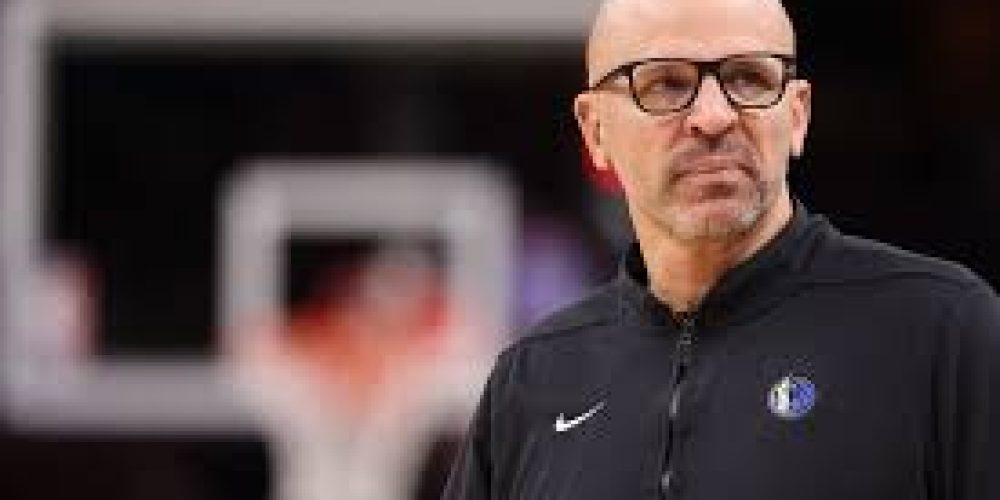
The Dallas Mavericks have entered a comprehensive rebuilding phase after officially parting ways with head coach Jason Kidd. The unexpected leadership change concludes a volatile five-year tenure that included a trip to the league championship series before giving way to severe roster instability and consecutive losing seasons. As the franchise pivots toward a new era, basketball enthusiasts across the United States are closely watching how the front office constructs its next competitive cycle.
What You Need to Know
Jason Kidd’s relationship with the Texas franchise remains deeply rooted in basketball history, highlighted by his instrumental role as the starting point guard during the team’s singular championship run in 2011. Returning as head coach ahead of the 2021-22 campaign, the Hall of Fame playmaker instantly validated his hiring by guiding the roster to the Western Conference finals in his inaugural season. Two years later, he orchestrated an impressive postseason run that culminated in an appearance in the 2024 NBA Finals.
However, the organizational foundations shifted dramatically during the 2024-25 season following a blockbuster trade that sent franchise cornerstone Luka Dončić to the Los Angeles Lakers. The centerpiece of that return, veteran forward Anthony Davis, struggled heavily with recurring injuries, limiting his availability to just a fraction of his initial campaign. The sudden loss of an elite playmaker caused the roster’s competitive floor to collapse, resulting in consecutive seasons without a postseason berth.
The architectural changes accelerated earlier this month when team ownership dismissed the previous general manager and appointed former Toronto Raptors executive Masai Ujiri as team president and governor. During his introductory press conference, the incoming executive remained noticeably noncommittal regarding the coaching staff’s future, indicating that a comprehensive evaluation of all basketball operations would take place immediately. The subsequent decision to change head coaches indicates that the new leadership desires a complete structural reset.
Front Office Fallout Precipitates Coaching Change
The transition of power within the front office reportedly intensified internal friction regarding the roster’s long-term trajectory. League sources indicate that the coaching staff felt increasingly marginalized following the massive personnel changes over the past eighteen months, which drastically altered the competitive identity of the team. The tension culminated in Tuesday evening’s announcement, which team officials categorized as a mutual decision to allow both parties to seek fresh opportunities.
Financially, the separation represents a substantial commitment from ownership, as the departing coach had signed a lucrative contract extension last summer that possessed more than four years and $40 million in remaining guarantees. Despite the heavy financial burden, team president Masai Ujiri emphasized in an official statement that the organization believed the time was right to establish a brand-new direction for the basketball program. The priority now turns toward an exhaustive and disciplined search to fill one of the most intriguing vacancies in the league.
The primary objective for the incoming head coach will be the continued development of rising superstar forward Cooper Flagg. The versatile rookie provided a massive silver lining during an otherwise difficult 26-56 campaign, capturing the Rookie of the Year award by averaging 21 points, 6.7 rebounds, and 4.5 assists per game. The young cornerstone had established strong baseline chemistry with the previous coaching staff, meaning the front office must prioritize finding a teacher capable of maximizing the unique skills of the former number-one overall selection.
In addition to the youthful core, the franchise holds the number nine overall selection in the upcoming amateur draft, providing an immediate avenue to inject premium talent into the rotation. With several standard coaching vacancies already open across the domestic landscape, the presence of a generational young talent like Flagg makes the Texas vacancy one of the most attractive destinations for top-tier coaching candidates searching for structural stability and organizational backing.
Why This Matters
The leadership shakeup in Dallas reverberates far beyond the local sports market, directly affecting media rights holders, corporate partners, and consumer spending patterns across American sports entertainment. High-profile coaching searches involving major metropolitan franchises generate significant digital traffic and television analysis, keeping fan engagement high during the traditional offseason months. The identity of the next hire will dictate how heavily national broadcasting networks feature the franchise on prime-time television schedules in the coming year.
From a business perspective, the direction of the franchise heavily influences regional ticket sales, luxury suite renewals, and localized retail commerce surrounding the downtown entertainment district. A compelling, forward-looking coaching appointment can instantly re-energize a fan base after a heavy losing season, stabilizing consumer confidence and protecting vital local revenue streams. Conversely, prolonged organizational uncertainty can depress ticket demand, impacting hospitality businesses and stadium service workers reliant on robust game-day attendance.
NCN Analysis
The dismissal of a coach just two years removed from a trip to the championship series highlights the brutal, results-driven nature of modern professional sports. While the roster’s decline can be traced directly to personnel gambles that backfired spectacularly, an elite executive like Masai Ujiri rarely operates under sentimentality. By absorbing a significant financial buyout, ownership has signaled that they are fully prepared to fund a comprehensive cultural overhaul to escape the mediocrity of the past two seasons.
Readers should expect the front office to target a progressive, player-development-focused tactical mind who can build a modern system designed explicitly around Cooper Flagg’s defensive versatility and playmaking potential. The days of relying on a single isolation superstar are gone; the next iteration of the franchise must emphasize ball movement, spatial awareness, and elite perimeter execution. The upcoming coaching hire will serve as the true opening statement of the new executive regime.
The franchise faces a critical crossroad where the right cultural leader can accelerate a rebuild, while an incorrect choice risks squandering the early years of a generational talent.
Reported by the NCN Editorial Team









