KEY POINTS
- Jackie Young has reportedly signed a groundbreaking contract extension with the Las Vegas Aces, making her the first WNBA player to cross the $1 million mark in total compensation.
- The deal marks a seismic shift in the financial landscape of women’s professional basketball, reflecting the league’s massive growth in viewership and commercial value.
- This historic agreement secures a foundational piece of the Aces’ championship-winning roster as the franchise looks to continue its era of dominance.
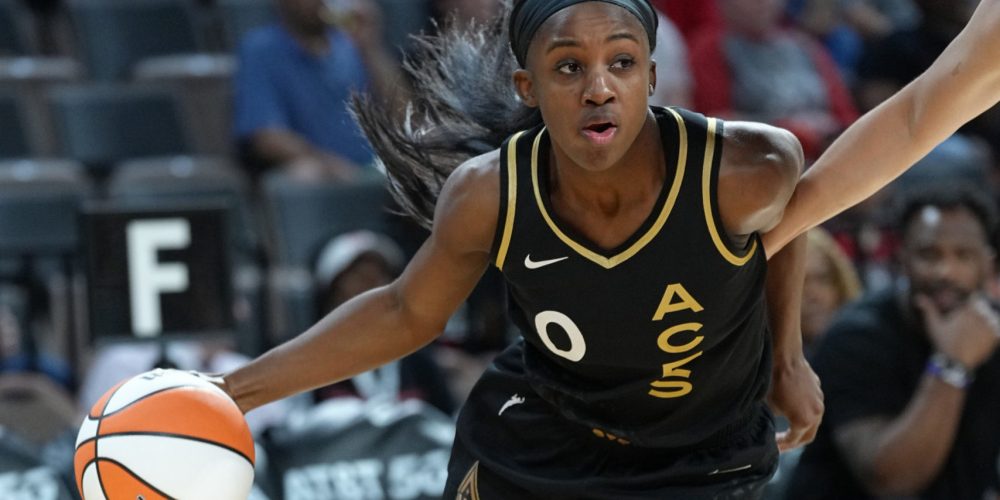
The Las Vegas Aces have reportedly shattered the glass ceiling of professional basketball salaries by signing star guard Jackie Young to a historic contract extension valued at $1 million. This unprecedented move marks the first time a WNBA athlete has reached a seven-figure milestone in total deal value, signaling a new era of financial viability for women’s sports in America. For a league that has long battled for equitable pay and recognition, Young’s new terms represent a definitive turning point in the business of the game.
What You Need to Know
To understand the weight of the Jackie Young $1 million deal, one must look at the rapid evolution of the WNBA over the last three years. Traditionally, player salaries have been capped at levels significantly lower than their male counterparts in the NBA, with many top stars playing overseas during the winter to supplement their income. However, a surge in national media attention, record-breaking attendance, and a fresh wave of superstar talent has forced a recalculation of what these athletes are worth to their franchises.
Jackie Young, a former number-one overall draft pick and a two-time WNBA champion, has been a central pillar of the Aces’ rise to the top. Known for her quiet efficiency, elite defensive skills, and improved perimeter shooting, she has become an indispensable part of a “super-team” that includes A’ja Wilson and Chelsea Gray. By locking Young into a long-term, high-value contract, the Aces are not just protecting their investment on the court; they are making a bold statement about their intent to remain the league’s gold-standard organization.
The financial structure of this deal is particularly noteworthy. While the league’s hard salary cap remains a factor, teams are increasingly finding innovative ways to leverage marketing agreements and team-specific benefits to elevate a player’s total compensation package. Young’s milestone is expected to serve as the blueprint for future negotiations for the league’s elite tier of talent, effectively resetting the market for every other franchise in the United States.
The Financial Revolution of the Jackie Young $1 Million Deal
The reported agreement between Jackie Young and the Las Vegas Aces is the result of months of strategic planning and a clear-eyed assessment of the current sports market. As the WNBA prepares for a new media rights negotiation in the coming years, the value of established, marketable stars like Young has skyrocketed. The Aces’ ownership, led by Mark Davis—who also owns the NFL’s Las Vegas Raiders—has consistently pushed for higher standards in facilities, travel, and pay, making Las Vegas the premier destination for top-tier basketball talent.
From a tactical standpoint, keeping Young in an Aces uniform ensures that the team’s core identity remains intact. She provides a level of versatility that is rare in professional basketball, capable of guarding three different positions while serving as a primary or secondary playmaker on offense. During the Aces’ recent championship runs, Young’s ability to hit big shots in pressure-filled moments was often the difference between a win and a loss. The $1 million valuation reflects her status as a “winning player” whose impact exceeds traditional box-score statistics.
The timeline of this historic deal is also significant. Coming on the heels of a massive surge in women’s college basketball popularity—fueled by figures like Caitlin Clark and Angel Reese—the WNBA is experiencing a “trickle-up” effect. Fans who followed these stars in the NCAA are now tuning into the professional ranks in record numbers. By rewarding Young with this historic contract now, the Aces are positioning themselves to lead the league’s transition into a more lucrative and commercially aggressive future.
For the rest of the league, Young’s contract creates an immediate ripple effect. Star players on other teams will undoubtedly look to this deal as the new benchmark during their own free-agency periods. While not every team has the deep pockets or the market size of Las Vegas, the pressure to provide competitive compensation is higher than ever. The Jackie Young $1 million deal essentially kills the narrative that women’s basketball players cannot earn life-changing money within the domestic borders of the United States.
Why This Matters
For the average American consumer and global reader, this story is about more than just basketball; it is a case study in market correction and gender equity in the workplace. The massive interest in women’s sports is no longer a “trend”—it is a billion-dollar industry. This contract proves that when the quality of the product is met with proper investment and marketing, the financial rewards follow. It serves as an inspiration for young female athletes across the U.S., Ireland, and Sweden, showing that a professional career in basketball can be both prestigious and highly profitable.
Furthermore, this deal has significant implications for the broader sports business world. Sponsors and advertisers who have previously hesitated to commit large budgets to women’s sports are now seeing clear evidence of a high-value, high-engagement audience. When a player like Jackie Young earns $1 million, it changes how brands perceive the ROI of a WNBA partnership. It shifts the conversation from “charity” or “diversity quotas” to a cold, hard business decision based on the massive reach and influence these athletes command in 2026.
NCN Analysis
The Jackie Young $1 million deal is a masterstroke by the Las Vegas Aces front office. By being the first to cross this threshold, they have cemented their reputation as the most player-friendly and forward-thinking franchise in women’s sports. However, this move also puts a massive target on the Aces’ back. The pressure to win another championship is now amplified by the sheer scale of the investment. If Young and the Aces fail to deliver in the postseason, critics will inevitably point to these historic salaries as a potential distraction or an unsustainable financial model.
Looking ahead, the WNBA is approaching a crossroads. The current collective bargaining agreement will soon be up for renegotiation, and Young’s deal will be the primary exhibit used by the Players Association to demand a higher revenue share. We expect to see more of these seven-figure deals in the next 24 months as other franchises scramble to keep pace with the standard set in Las Vegas. Readers should watch for how the league handles the tension between small-market teams and “big-spending” organizations like the Aces, as this could lead to significant changes in how the league is governed and funded.
This contract represents a victory for every athlete who has fought to prove that women’s sports are a premium, high-value entertainment product.
Reported by the NCN Editorial Team