KEY POINTS
- Denmark missed its first major tournament in a decade after a playoff loss to the Czech Republic.
- Veteran star Christian Eriksen confirmed he has played his final World Cup qualifying match.
- Coach Brian Riemer faces pressure to rebuild an aging squad following a series of disappointing results.
The Danish national football team has entered a difficult period of transition following their failure to qualify for the 2026 World Cup. This marks the first time the nation will be absent from a major international tournament since Euro 2016. The setback brings an end to a successful decade that saw the team reach the semi-finals of Euro 2020.
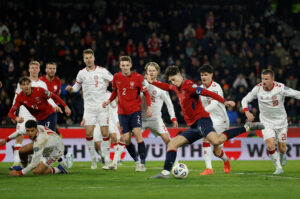
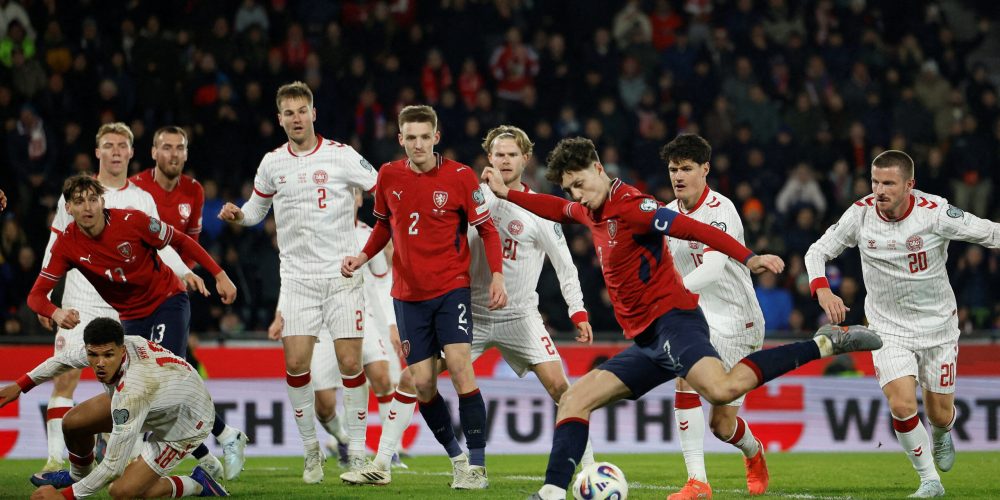
Denmark’s qualification journey ended in heartbreak during a tense playoff final in Prague against the Czech Republic. Despite dominating possession and creating numerous chances, the Danes played out a 2-2 draw through extra time. The match eventually moved to a penalty shootout where Denmark struggled, losing 3-1 as three players failed to score from the spot.
This final defeat followed an inconsistent qualifying campaign that frustrated fans and former players alike. Damage was done earlier in the group stage with a home draw against Belarus and a late collapse against Scotland. Those results forced the team into the risky playoff path where they ultimately fell short.+1
The disappointment is particularly sharp as regional rivals Sweden and Norway both successfully secured their places in the tournament. Former internationals have labeled the campaign a debacle, noting that Denmark failed against teams with significantly lower rankings. The exit highlights a growing gap between the current squad and the elite levels of European football.
A primary concern for the national team is the aging core of its most influential players. Christian Eriksen, now 34, admitted after the Prague defeat that his time in World Cup qualifying has likely ended. While younger talents like Mikkel Damsgaard have shown potential, they have yet to replicate Eriksen’s ability to control matches.
The team also lacks the leadership depth that once defined its success on the global stage. Following the retirement of Simon Kjaer, the burden has fallen heavily on captain Pierre-Emile Hojbjerg. Without a settled veteran spine, the squad appears vulnerable during high-pressure moments in transition and defense.
Coach Brian Riemer currently resists calls for his resignation despite the historic qualification failure. He recently signed a contract extension intended to take the team through the 2028 European Championship. Riemer insists he is the right person to lead the painful reconstruction of the national side.
The upcoming months will require a total reassessment of the Danish footballing philosophy and recruitment. The federation must find a way to maximize its attacking strengths while restoring defensive balance. For a proud footballing nation, the road to recovery starts with finding a new identity without its long-standing stars.